
Audit shows clean opinion; district warns fund balances and contract costs will pinch 2026 budget
Get AI-powered insights, summaries, and transcripts
Subscribe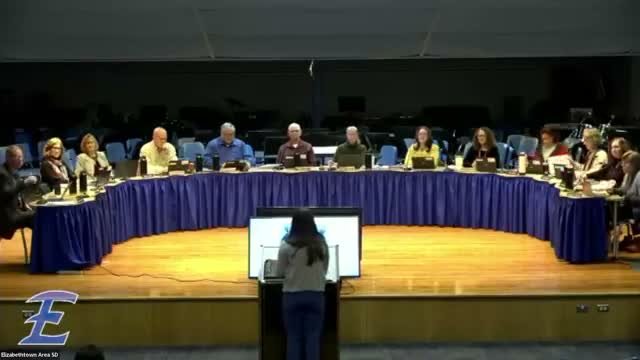
Summary
Auditors issued an unmodified opinion on Elizabethtown Area School District’s 2024–25 financial statements, but district staff warned the board the general and health‑benefit funds are below recommended targets and projected contract increases could reduce fund balance by about $1.1–$1.2 million next year.
The Elizabethtown Area School District on Jan. 27 received a clean independent auditor’s opinion on its 2024–25 financial statements, but district officials told the board that operating reserves are below recommended levels and rising contract costs threaten next year’s fund balance.
Jacqueline Davidson, director with audit firm Boyer & Ritter, summarized the fiscal audit and said the firm issued an unmodified (clean) opinion on the financial statements and that the district’s reporting complied with government auditing standards and uniform guidance for federal programs. Davidson also said the audit included a required management discussion and highlighted a change in accounting (GASB 101) affecting the reporting of compensated absences that increased long‑term liabilities.
Tom Strickler, the district business officer, reviewed key balances and policy targets. He reported the district’s capital projects balance (including remaining bond proceeds) and a general fund balance figure presented in the audit materials. Strickler noted the state’s minimum guidance for an unassigned fund balance is $6.5 million and that the district is “a little bit shy” of that target. He warned the board that unresolved contract increases could create an estimated $1.1–$1.2 million shortfall in 2025–26 that would reduce the general‑fund balance at June 30, 2026.
Strickler also called attention to the district’s internal service (health) fund, which he said stood at about $826,000 and should gradually grow toward a $3–$4 million reserve to guard against sudden spikes in employee medical costs. “If this fund is negative at the end of the year, it has to come out of the general fund somewhere,” Strickler said, noting the board would then need to use tax dollars to reimburse it.
Davidson and Strickler both pointed the board to further detail in the audit report for corrective action reporting: the single significant deficiency recorded was described as a recurring condition related to business‑office turnover and the closing of the books. The district must file a corrective action plan as part of its audit response.
The board was given the audit for review; the administration said it will place the audit on the February agenda for formal approval and invited trustees to contact Strickler or the auditor with questions.
Ending
The board accepted the presentation; auditors and staff said they are available to answer follow‑up questions prior to the February approval vote.