Get Full Government Meeting Transcripts, Videos, & Alerts Forever!
Get email alerts on the Water And Land Use topic
No spam. Unsubscribe anytime.
Bluffdale planning commission forwards integrated water and land use element to city council
Summary
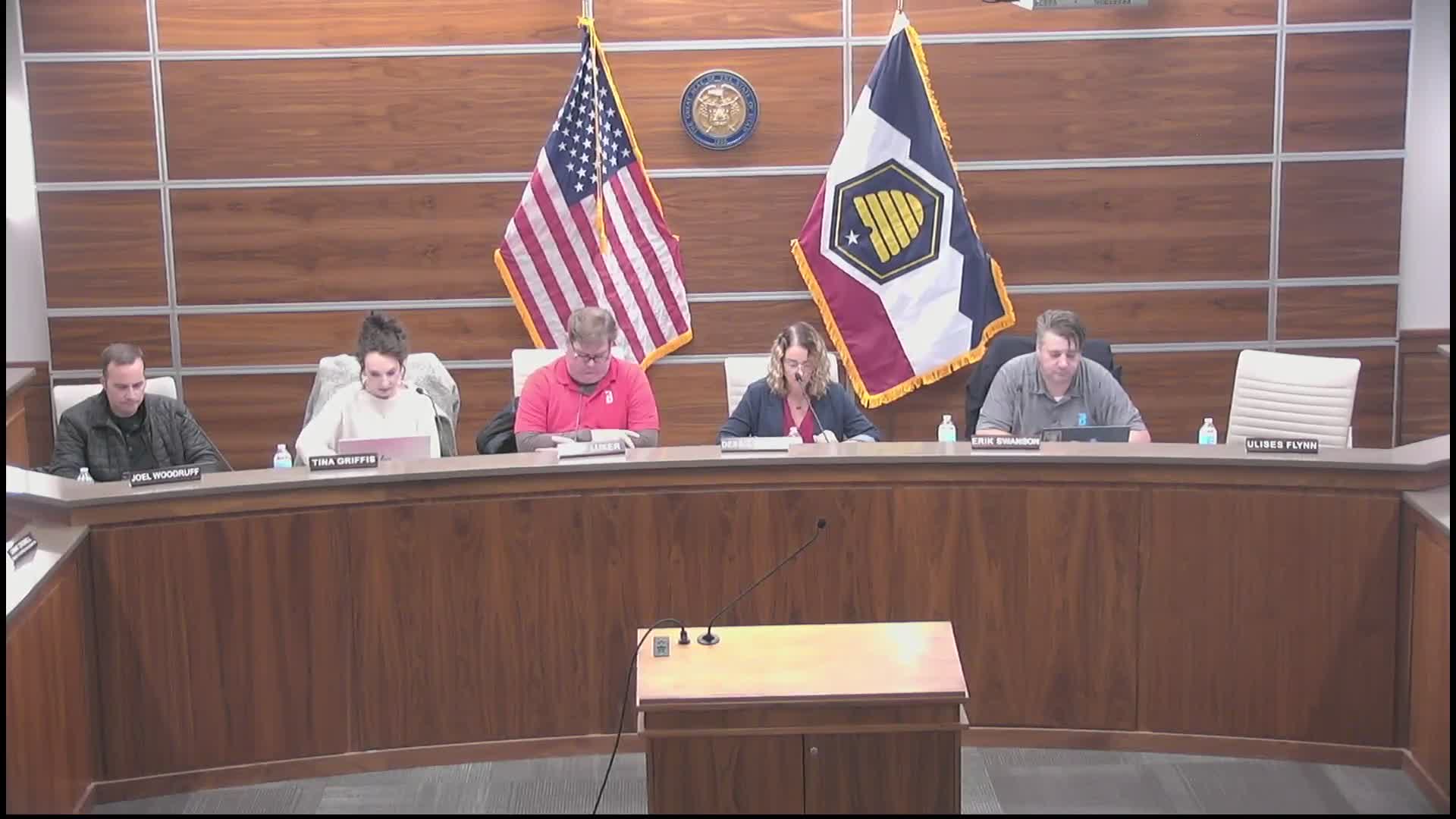
After a staff presentation, the Bluffdale Planning Commission voted unanimously Dec. 3 to recommend the draft integrated water and land use element to the city council, citing state requirements and evidence that current conservation measures meet regional targets.
The Bluffdale Planning Commission voted Dec. 3 to forward a positive recommendation to the City Council on a draft integrated water and land use element, a state-required update tying land-use planning to water supply and conservation goals.
Staffers Caitlin Tubbs and Dan Tracer told commissioners the draft incorporates feedback from the commission and City Council and additional detail requested by the Utah Division of Water Rights. "We are expected to double our population by the time we build out," Tubbs said while describing anticipated growth corridors including Redwood Road, Porter Rockwell Boulevard and areas east of the railroad. Dan Tracer said Jordan Valley Water Conservancy District has secured sources to serve Bluffdale to full build-out under current assumptions and described contract terms that allow the city to use up to 120% of its contracted volume before the price rises (staff presentation beginning at SEG 127 and SEG 191).
Why it matters: Bluffdale staff and the state review teams say the integrated element is intended to align future development with available water supplies and conservation measures. Tracer reported the city used about 97% of its contracted volume in 2024 and is projecting about 110% this year, reflecting a hot summer and higher outdoor irrigation. Staff said residential accounts represent roughly 72–73% of the city's potable demand across more than 5,000 residential connections, while institutional connections use far more water per connection.
Commissioners pressed staff on secondary (pressurized irrigation) water metering and rebate rules. Tubbs and Tracer said the city encourages metering where funding is available; they noted remaining ARPA funds earmarked to install additional secondary meters and reported the city has metered roughly 90% of pressurized connections to date. Tracer also described state metering requirements and the technical challenges of metering gravity-fed canals.
There were no public speakers during the hearing. Commissioner Ulysses moved to forward a positive recommendation; the motion passed with recorded ayes. The element must be adopted by ordinance under state timelines and will be heard by the City Council next week for final action.
Next steps: City Council will consider the element at a noticed hearing next week. If council adopts it, the city will finalize the element and implement the conservation and metering actions described in the staff report.