Get Full Government Meeting Transcripts, Videos, & Alerts Forever!
Get email alerts on the Short Term Rentals topic
No spam. Unsubscribe anytime.
Planning commission approves zoning text amendment to allow short‑term rentals under rules and complaint enforcement
Summary
The commission approved a zoning text amendment to allow short‑term rentals in permanent residential units with standards on residential appearance, parking and building‑code compliance; the draft does not require a new permit and relies on complaint‑based enforcement under current wording.
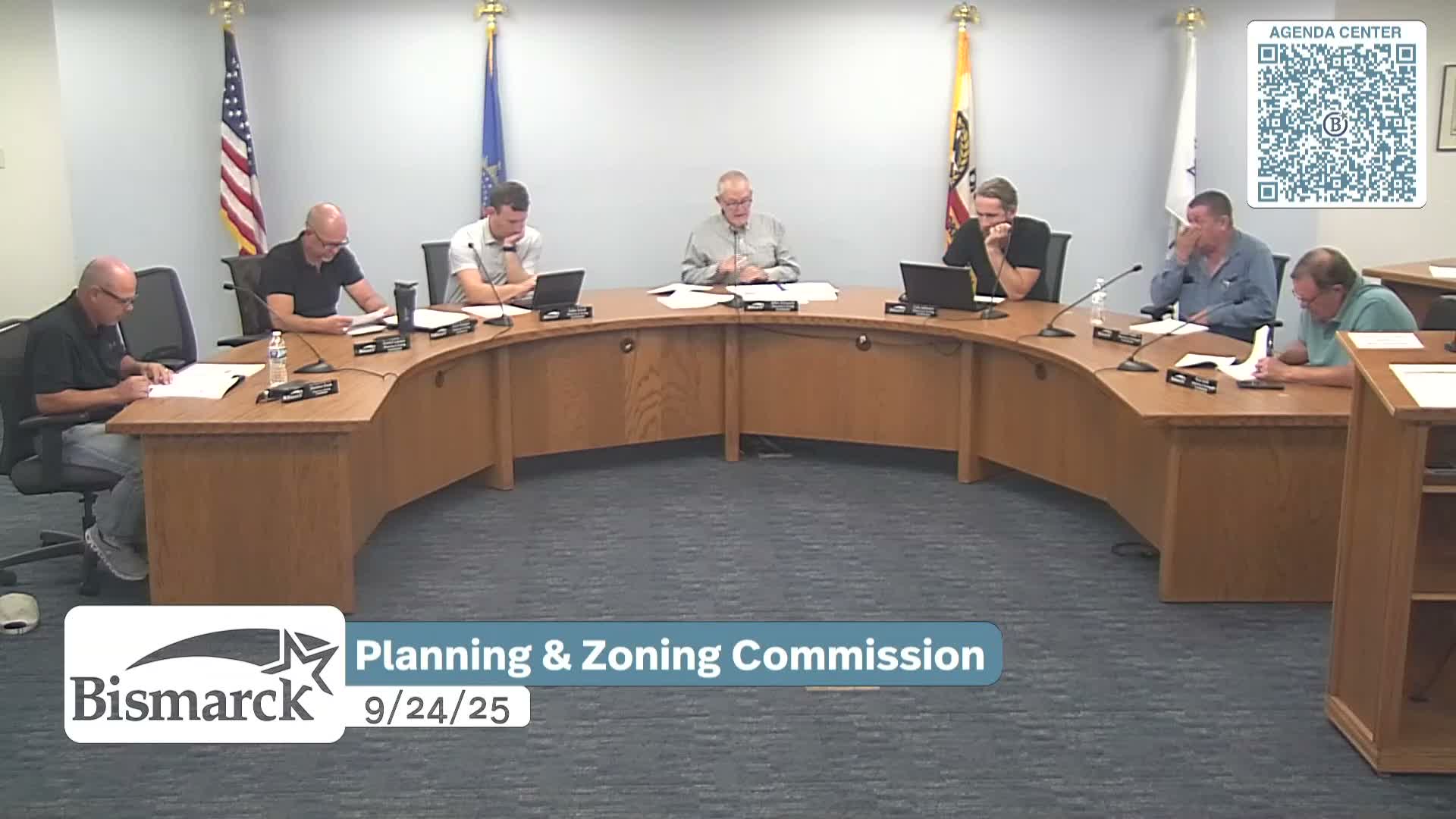
The Bismarck Planning and Zoning Commission voted Sept. 24 to approve a zoning ordinance text amendment that would allow short‑term rentals as a use on residential properties, under a draft that sets minimal zoning requirements and relies on existing enforcement pathways.
Community Development planner Lauren presented the draft ordinance, which adds a definition for short‑term rentals, requires that only permanent residential units qualify, requires maintenance of a residential appearance, and applies existing noise and off‑street parking requirements. The draft also references meeting building‑code requirements where an occupant load or use type would trigger a change of use. Staff compiled the draft after reviewing peer communities, short‑term rental platforms (Airbnb and VRBO), state tax guidance and input from a stakeholder group; an online survey generated 74 responses.
Building official Brady Blaskowski explained the building‑code reference was included as a safeguard: certain occupant‑load configurations or repeated multi‑occupant uses could trigger different building‑code requirements, while small‑scale short‑term stays may remain a single‑family use and not require a change of use.
Commissioner Michelle Schell noted the draft does not require a new permit and that oversight would be complaint‑driven under the ordinance as written; Lauren confirmed that the current draft contains no separate permitting regime and that compliance would be handled through existing municipal codes and enforcement processes. Commissioners discussed parking, unrelated‑person occupancy limits in the zoning code and possible future changes if problems arise.
Staff said one written comment in opposition had been received and that the stakeholder group and survey informed the draft. After discussion the commission moved to approve the ordinance text amendment. The motion passed on a recorded roll call.
The commission’s approval advances the draft through the city’s normal legislative channels for further consideration and any subsequent steps required by the city code.