Get Full Government Meeting Transcripts, Videos, & Alerts Forever!
Get email alerts on the Finance Roads topic
No spam. Unsubscribe anytime.
Bismarck staff recommend two separate ballot measures: extend half‑cent sales tax and add a street utility fee
Summary
City staff proposed sending two separate 2026 ballot measures to voters: one to extend the half‑cent sales tax for arterial (and selected collector/local) road projects and another to create a street utility fee to replace street maintenance special assessments; commissioners gave staff consensus to begin public outreach.
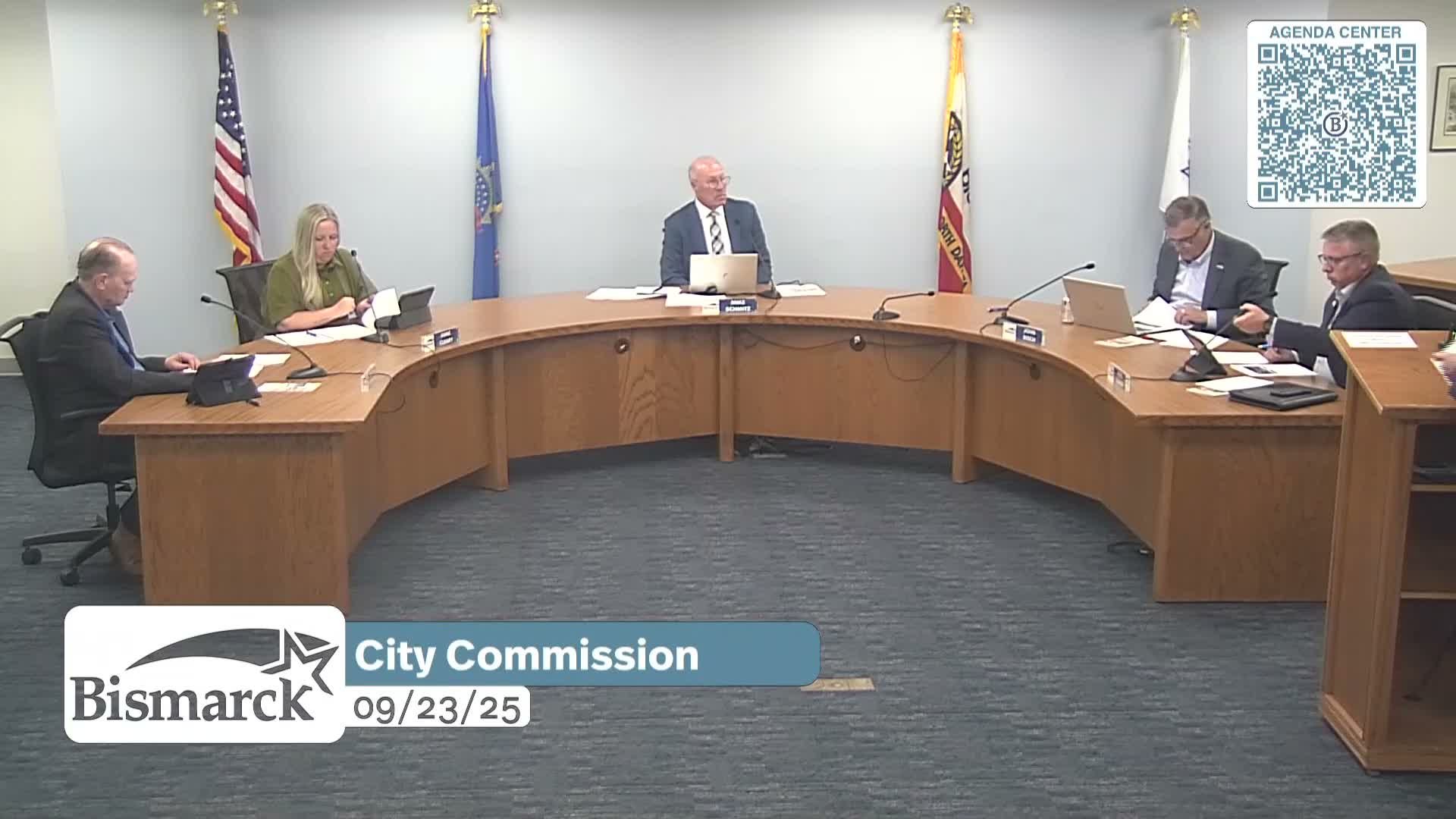
City staff briefed the Bismarck City Commission on Sept. 23 about two related funding proposals for roads: a renewal and update of the half‑cent sales tax and a proposed street utility fee to replace special assessments.
Gabe (public works/engineering staff) told the commission the half‑cent sales tax passed in 2018 "sunsets in 2029," currently brings in about $10,000,000 per year and to date has been paired with roughly $18 million in state and federal aid to support about $67,000,000 in projects. He said staff are considering a refreshed, unprioritized project list that could add selected collector and local road projects to the program so the package better matches current needs.
On the street utility fee, Gabe described a proposal that would place a modest monthly charge on utility bills to replace special assessments historically used for chip seals, crack sealing, milling/overlays and full‑depth pavement rehabilitation. Staff presented a target program revenue need of roughly $17,000,000 and illustrative residential rates in the $30–$35 per month range. The proposal includes policy options still under consideration: basing commercial charges on impervious square footage (using the city’s existing impervious dataset) or on parcel area, treating apartment units and manufactured‑home units on a per‑dwelling basis, and a potential policy to have the new fee pay off existing special assessment debt so property owners would not remain on legacy assessment schedules.
Gabe said the two proposals would likely be presented as separate Home Rule Charter ballot questions so one measure’s unpopularity would not sink the other. He recommended broad public engagement this fall, refinement of project lists over the winter and submission of Home Rule Charter language in March 2026 if the commission chooses to proceed.
Commissioners asked about federal and state matching opportunities, the program’s time horizon, and renter impacts if landlords shift costs to tenants. Commissioner Connolly asked whether long‑discussed corridors such as East Main would be included; Gabe said the half‑cent program historically prioritized creation or expansion of facilities but that maintenance needs could be considered as part of a revised project list. Commissioners expressed support for further analysis and public outreach, with several endorsing a relatively simple residential rate structure to make the fee easier to understand.
Next steps: staff were directed to continue targeted stakeholder engagement, prepare public‑facing materials showing likely household and commercial impacts, and return with recommendations and draft ballot language for the commission’s consideration in early 2026.