Get Full Government Meeting Transcripts, Videos, & Alerts Forever!
Get email alerts on the Eta Permitting And Representation topic
No spam. Unsubscribe anytime.
Residents across Bismarck area press commissioners to shrink or end extraterritorial area
Summary
Rural residents told the Bismarck–Burley joint committee that ETA rules make local building costly and inconsistent, urged commissioners to end the extraterritorial area, and demanded clearer, faster permitting and representation.
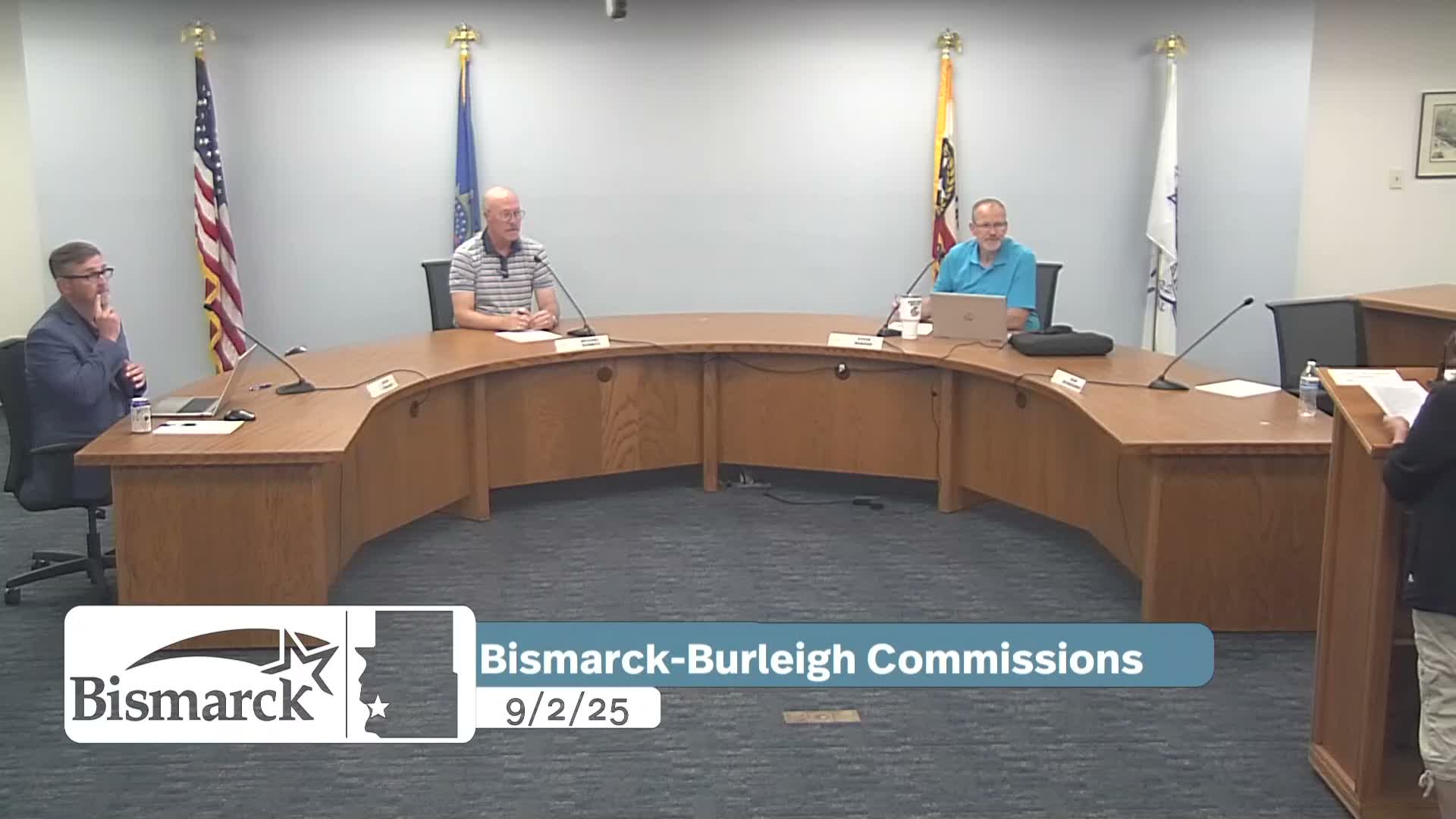
Public commenters at the Bismarck–Burley joint committee meeting on Sept. 2 urged elected officials to reduce or eliminate the city’s extraterritorial area (ETA), describing lengthy permitting, uneven enforcement and large out-of-pocket costs for routine projects.
Tamara Hunter, a rural property owner, said it took her a year and a half to get approval to split land and build an accessible home, and that staff shortages and inconsistent enforcement forced her to hire paid professionals. “In my opinion, this is government overreach by even the best of standards,” Hunter said, citing a required North Dakota engineer sign-off that prevented her from installing a FEMA‑approved above‑ground tornado shelter without an additional $3,000 engineer review.
Several speakers echoed Hunter’s experience. Nancy Jackson, who lives in the Ashwood subdivision, said she opposes the ETA and worries about special assessments and costs if properties are moved under city services. “If we’re gonna be in city, then you should provide sidewalks,” she said while arguing she does not want extra charges or services forced on her rural property.
Matt Schwab said ETA residents have no voting representation and no accountability from city officials: “We don’t get to elect you,” he said, summing up a common complaint that ETA landowners cannot influence decisions that affect their property.
Travis Jensen told the committee he felt residents were being treated as “simply dollar amounts” and urged the mayor to make clear what city leaders actually think of ETA residents. “We are simply dollar signs,” Jensen said, adding that if officials do not act, some residents may proceed with development regardless of legal costs.
Burley County Commissioner Wayne Munson encouraged those in the audience to give the commissions specific, actionable items — for example the pole‑barn permitting issue — instead of broad complaints so staff and elected officials can work on ordinance alignment.
The mayor and other officials acknowledged the concerns but stressed the city’s role in providing services. After public comment, Mayor Schmidt said he did not view ETA residents as a burden and noted sales tax dollars support regional services, including the airport and the Veterans Memorial Public Library.
Next steps: commissioners scheduled a joint meeting with all five city commissioners and county representatives and directed staff to provide more education about the practical impacts of ETA changes, including a utility capital charge briefing.