Get Full Government Meeting Transcripts, Videos, & Alerts Forever!
Get email alerts on the Local History topic
No spam. Unsubscribe anytime.
Long Branch lecture traces New Jersey shipwrecks, from grounded sailboat to wartime submarines
Summary
A packed Long Branch City lecture explored coastal shipwrecks and diving discoveries, covering a recent grounded sailboat, historic wrecks such as the Andrea Doria and U-869, and local shallow dive sites including the Adonis and Rustling dual wrecks.
A public lecture in Long Branch City drew a large audience Tuesday as local speakers recounted decades of shipwreck history along the New Jersey coast and the risks of deep wreck diving.
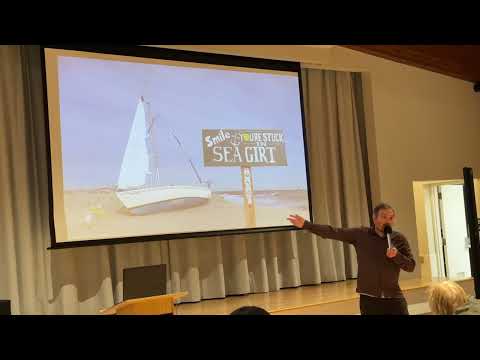
The presenter opened with a recent local incident: a Florida man, identified in remarks as Larry Koehler, grounded a small sailboat near the Seagirt area after navigating by cellphone. Under New Jersey law, which the presenter cited, an unattended vessel may be considered abandoned after 30 days; the owner obtained a court extension and was given another 30 days to remove the boat.
The talk moved through a series of historical cases. The presenter described the discovery of ribs from a wreck at Island Beach State Park and credited the New Jersey Maritime Museum as a cataloguing source. He recounted stories ranging from a schooner that wrecked at Cedar Creek on March 21, 1890, to the 17th-century Spanish galleon Atocha, whose recovery in the 20th century by treasure hunter Mel Fisher revealed large caches of silver and emeralds.
Speakers also addressed wartime losses. The presenter described the discovery of the German submarine U-869 off the New Jersey coast in the early 1990s. Deep-sea recovery efforts around that wreck cost several divers their lives; presenters recounted how artifacts and a shipyard marker eventually confirmed the sub’s identity.
Local wrecks that serve as recreational dive sites were a recurring theme. Long Branch-area wrecks such as the Adonis and the Rustling were introduced as accessible shallow dives, while speakers emphasized that deeper wrecks can require compressed bottom time, staged decompression and specialized training. Don Clark, a longtime diver and former teacher, advised conservative dive profiles and described the short bottom times typical at depths approaching 120–130 feet.
Rich Fernicola, a local diver and artifact researcher, described recovered items including copper sheathing, millstones and porthole parts, and said some material is intended for future museum exhibits. Presenters said discoveries are ongoing and previewed a short video of artifact recovery and of a restored fog horn sounded for the first time since the Andrea Doria sank.
The event closed with an invitation to future talks and a brief question period; organizers said they may host another lecture in the summer.
The presentation combined local anecdotes, historic research and diver testimony to illustrate both the cultural interest in shipwrecks and the hazards associated with exploring them. No formal actions or policy proposals were made at the event; speakers framed their remarks as history, personal experience and museum-focused preservation efforts.