Get Full Government Meeting Transcripts, Videos, & Alerts Forever!
Get email alerts on the Ej Martinez Consolidation topic
No spam. Unsubscribe anytime.
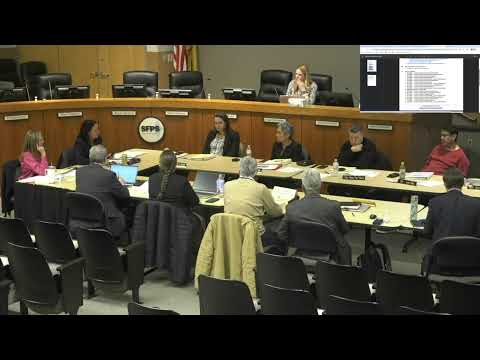
Santa Fe school board votes to combine EJ Martinez and Chaparral after study session
Summary
After a lengthy study session on rebuild, shared campus and temporary relocation options for EJ Martinez Elementary, the Santa Fe Public Schools Board voted 4–1 to combine EJ Martinez and Chaparral into a single school and directed the CRC to work on a Midtown strategy.
The Santa Fe Public Schools Board of Education voted to combine EJ Martinez Elementary and Chaparral Elementary into a single school after a multi-hour study session focused on short- and long-term options for the aging EJ Martinez facility.
Superintendent Griffin opened the presentation by outlining the facility’s condition: EJ Martinez was built in 1959, portions of the building were closed in 2023 and district plans in 2021 and 2025 reduced program capacity from 333 to about 301 as systems failed. Griffin said initial repair estimates to restore basic function were roughly $9 million to $11 million, with an added $9 million to $10 million to reach code compliance. Design changes and rising costs later pushed rebuild estimates higher; Griffin summarized that a fully reimagined rebuild had reached roughly $35 million in district estimates once program needs and additional square footage were included.
Why it mattered: Griffin and facilities staff said the district’s 2025 Facilities Master Plan, built with demographic projections from ARC using University of New Mexico population data, shows continuing districtwide enrollment decline. The superintendent told the board that the plan forecasts a drop of just over 3,000 students from the 2014 peak, a trend that the district has already exceeded and that factors into decisions about investing in or closing individual campuses.
What the board considered: Staff presented three broad pathways: rebuilding EJ at varying scales (four plans A–D, ranging from renovation to a full modern facility), keeping EJ and Chaparral on a shared campus with partial or full renovation and temporary portables, or a temporary relocation of EJ to the Milagro middle‑school 200 wing while a permanent solution is developed. Staff described program trade‑offs, disruption timelines and cost drivers for each option, and noted the board previously approved a $2.5 million reallocation in December 2025 to address immediate needs at Chaparral and EJ (furniture, phase‑1 HVAC work, turf and kitchen upgrades).
Board members pressed staff on cost-per-square-foot assumptions, timing and the effects of school transitions on student performance. Deputy Romero and other staff warned that extended interruptions can harm attendance and learning, and that moving high‑needs programs (Kiva, Zia and other highly structured classrooms) would require careful placement to preserve access to age‑appropriate peers and services. The discussion also covered rezoning mechanics, transfer numbers and the district’s policy (board policy 5‑34) that provides enrollment priority to students from a school subject to closure.
Motion and outcome: Near the end of the meeting a board member moved that the district combine Chaparral and EJ Martinez into a single school and immediately engage the CRC (Community Reinvestment Committee) to develop a longer‑term Midtown plan. The motion was seconded and passed by voice vote, 4 in favor and 1 opposed. The board did not adopt a final facility construction plan that night but approved consolidation as the near‑term direction and asked staff and the CRC to return with implementation details, timelines and budgetary implications.
Next steps and implementation notes: Board members and staff emphasized several follow‑ups: a detailed implementation plan for combining the two school communities with options for portables or targeted renovations; specific plans to protect high‑needs programs and IEP services; transportation and McKinney‑Vento compliance for students experiencing homelessness; and a CRC work plan to study midtown options and sequencing of capital investments. Staff said some of the short‑term work funded in December will proceed, and larger renovation or rebuild projects would require additional planning, contractor scheduling and likely bond or reallocation decisions.
The board adjourned after scheduling the CRC and advancing planning conversations between board meetings.