Get Full Government Meeting Transcripts, Videos, & Alerts Forever!
Get email alerts on the Homelessness Response topic
No spam. Unsubscribe anytime.
County‑commissioned team outlines 11 recommendations to reform DeKalb homelessness services
Summary
A county‑convened collective‑impact team presented 11 prioritized recommendations including a 501(c)(3) funding collaborative, a single access line for crisis response, regional service hubs and a priority to create low‑barrier, non‑congregate family crisis housing.
A nine‑month, collective‑impact effort convened by DeKalb County presented a final set of recommendations Dec. 1 aimed at improving how the county serves residents experiencing housing insecurity.
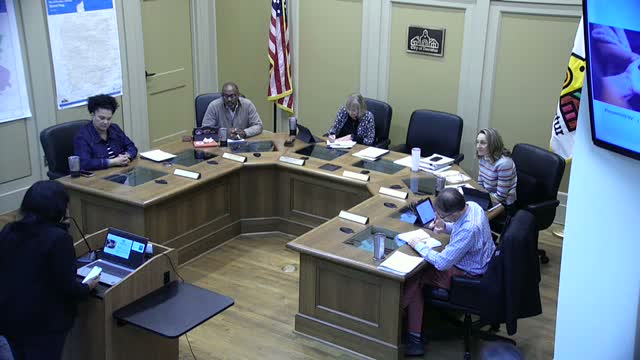
Carol Watson, convener from Intelligi Corporation, told the Decatur City Commission the project emphasized ground‑level listening to service providers and people with lived experience and engaged about 40 organizations in work groups that developed 11 prioritized recommendations.
One major funding proposal is to create a 501(c)(3) funding collaborative to attract private philanthropic capital and provide structured oversight for flexible, non‑HUD funding that can support system‑level changes. "They are putting together a proposal to put together a 5 0 1 c 3 funding collaborative," Watson said.
The report also recommends a client‑experience overhaul: a DeKalb housing and services access line, a single access point (phone/web) that would provide problem‑solving, warm handoffs and appointment scheduling instead of directing callers to multiple organizations. "Imagine a phone number," Watson said, framing the access line as a simpler first step for people in crisis.
Work groups identified other priorities: consolidating and improving the accuracy of public resource guides (secret‑shopping showed many listings are out of date and fewer than 40% of phone numbers answered), creating three regional service hubs to provide basic needs and pathway services, expanding coordinated entry capacity beyond the Continuum of Care where legally permissible, and investing in low‑barrier, non‑congregate family crisis housing as the highest near‑term priority.
On data and measurement, the team argued HMIS (the HUD‑mandated system) is limited to HUD‑funded programs and proposed a business requirements analysis to identify needed add‑ons or integrations so different providers can share case information and track client progress.
Watson said the team plans to return with a full report and to invite municipalities and community partners to listening sessions in December and January before delivering the final plan to the DeKalb County Behavioral Health Coalition and the county commissioners.
Commissioners asked for data and implementation details; Watson referenced an upcoming Georgia State University census of motel‑based families in DeKalb that may add context for targeting family crisis housing. The work groups also recommended stronger oversight of existing shelter spending and better transparency on bed counts before new investments proceed.
If adopted and funded, the plan’s combination of private fundraising, coordinated access and regional hubs seeks to fill gaps in crisis response and make it easier for residents to navigate services across the county.
Next steps include sharing the detailed recommendations with municipal partners, returning to community listening sessions and refining governance and funding proposals for the 501(c)(3) collaborative and shelter oversight structures.