Get Full Government Meeting Transcripts, Videos, & Alerts Forever!
Get email alerts on the Affordable Housing topic
No spam. Unsubscribe anytime.
Georgia Conservancy urges Decatur to bolster housing trust fund, track NOAH clusters
Summary
A Georgia Conservancy team presented an updated inventory of naturally occurring affordable housing (NOAH), identified clusters at Scott Boulevard, Church Street and East of Downtown, and recommended continued funding of Decatur's housing trust fund plus acquisition and policy tools to preserve affordable units.
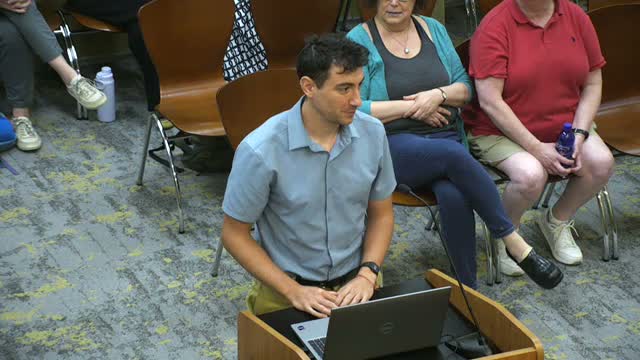
Representatives from the Georgia Conservancy presented findings and recommendations on preserving naturally occurring affordable housing (NOAH) in Decatur at the June 2 meeting.
Lubin Raichev of the Georgia Conservancy said the project, funded through a Community Development Assistance Program (CDAP) grant from the Atlanta Regional Commission, updated the city's NOAH inventory to identify where unsubsidized units affordable to households at about 80%–120% of area median income remain.
"This is the largest source of affordable housing in the nation," Raichev said, describing NOAH as unsubsidized rental and for-sale units that are nevertheless more affordable than the broader housing stock. He told commissioners that prior inventories and demolition-permit reviews informed the update; over the past five years staff identified nine unique demolition permits in decatur, some of which were NOAH properties.
The Conservancy flagged geographic clusters where preservation strategies could focus: the Scott Boulevard corridor (including Scott Court and Pines on Scott), the Church Street corridor, Lenox Place, Olympic Place in Oakhurst, and areas east of downtown. Raichev said an updated, ongoing inventory is critical to identify triggers — for example, when demolition permits are issued or listings appear — so the city and partners can act quickly.
On funding, the presenters noted Decatur already maintains a housing trust fund (one of four in Georgia). The Conservancy recommended continuing general-fund contributions and increasing the housing trust fund appropriation where possible, while explaining the legal limits in Georgia on establishing dedicated local revenue streams without General Assembly approval. They listed options for using a housing trust fund such as grants, low-interest loans or a revolving loan structure and recommended exploring seed funding sources (ARPA, bond proceeds or targeted grants) to grow the fund.
Other recommended preservation tools included acquisition by trusted public or nonprofit entities (Decatur Land Trust, Decatur Housing Authority), use of a development authority to structure tax-favored ownership arrangements, preferential assessment pilots conditional on state action, right-of-first-refusal tied to inventory flags or demolition permits, and training and capacity-building for condominium associations to limit forced sales.
Commissioners and residents asked detailed questions about AMI bands and price ranges (presenters said a 2-person household at 80%–120% AMI would be about $68,800–$103,200), data sources (the Conservancy used local sales data for ownership units in the last five years), and program mechanics. One commissioner noted the city's rehab program through the Decatur Land Trust currently requires a right of first refusal on participant agreements.
Presenters recommended five top actions: continue and increase funding for the housing trust fund, strengthen interagency partnerships for acquisition and incentives, keep an ongoing NOAH inventory, build a focus for multifamily NOAH properties, and advocate at the General Assembly for tools such as local rental registries or dedicated trust-fund revenue.
The Conservancy said it will deliver a final report with the inventory, funding mechanisms research and case studies for the commission to use in future policy decisions.