Get Full Government Meeting Transcripts, Videos, & Alerts Forever!
Get email alerts on the Streetscapes topic
No spam. Unsubscribe anytime.
Decatur staff propose updated streetscape standards, expanded tree wells and green infrastructure
Summary
City staff presented updates to the Unified Development Ordinance and streetscape design guidelines, proposing larger tree wells (from 9x6 to 16x6), modular suspended pavement (Silva cells), new bioswale layouts and dark‑sky LED pedestrian lighting for downtown Decatur.
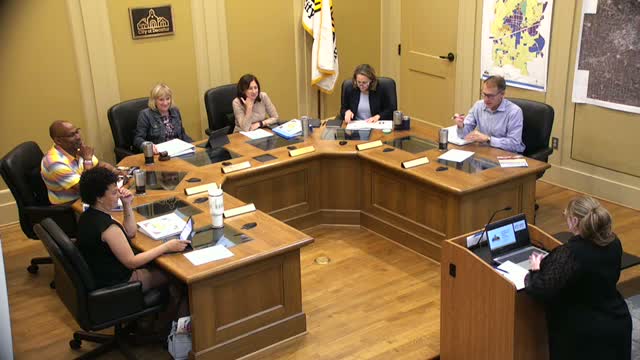
City planning, engineering and urban-forest staff presented a package of revisions to Decatur's streetscape rules and design guidelines at a June 2 work session, proposing changes intended to improve pedestrian space, tree health and stormwater management.
"I am Casey Curzick with your planning and zoning staff," Curzick said, introducing two documents: the Unified Development Ordinance section that governs streetscapes and a companion streetscape design guidelines handbook. She told the commission the guidelines had not been updated since 2014 and needed "housekeeping" as well as new technical guidance.
Senior engineer Julie Choriza described engineering changes that would add stormwater management and green infrastructure to the typical layouts. Choriza said the guidelines would add three optional typical layouts: a modular suspended pavement system (Silva cells), a permeable pavement system, and a bioswale layout. "All of these measures will be maintained only in the landscape zone," she said, and described perforated underdrains that would tie back to the city's stormwater system.
City arborist Kaye Avovich summarized arboricultural updates tied to the layout changes: increasing surface tree-well dimensions from the current 9-by-6 feet to 16-by-6 feet, using structural or civil soil cells under sidewalks to increase rooting volume, and replacing full canopy strap staking with root-ball staking. Avovich said the larger surface area plus structural soil would allow healthier, longer-lived street trees and recommended a mix of species to avoid single-species loss.
The staff presentation also covered street furniture and lighting. Curzick said the downtown pedestrian light will be replaced with a dark-sky–compliant LED fixture (one demonstrator is installed at City Hall) while East Decatur and Oakhurst Village keep existing fixtures. Benches and trash receptacles would be selected for durability and graffiti resistance; staff are exploring smart-sensor trash cans to improve maintenance efficiency.
The proposed rules retain a clear-access sidewalk minimum (5 feet in zones with outdoor dining) while differentiating landscape and clear zones across street types: local residential (2-foot landscape, 5-foot clear), collector/urban thoroughfares (6-foot landscape, 8-foot clear), and the downtown pedestrian district (6-foot landscape, 10-foot clear).
Staff emphasized these are options and that review during site plan and building permit review will continue to allow site-specific decisions. Choriza said the measures may not be feasible at every site but "when feasible, this is what we're liking to see." Avovich noted planting lists for bioswales are still being finalized and will be included in the guidelines.
Next steps discussed included continued refinement of the planting lists, coordination with developers during plan reviews, and incorporating the new typical layouts into the guidelines. Staff did not propose immediate regulation changes to existing two-foot landscape zones in residential areas; instead, they framed the materials as updated guidance to be used in review and future development projects.
The presentation drew questions from commissioners and residents about maintenance responsibilities, whether businesses understood the rules, and how the new details would be inspected during installation. Staff said public works and contracted ambassadors will continue maintenance work and that the city will inspect bioswale and permeable-paver installations during construction to confirm correct layering and underdrain connections.
The work session portion ended with staff saying they will return with final guideline language and planting lists for the commission's review.