Get Full Government Meeting Transcripts, Videos, & Alerts Forever!
Get email alerts on the Transportation Safety topic
No spam. Unsubscribe anytime.
Decatur consultants press Vision Zero, 25 mph baseline and targeted Right-on-Red limits in Safe Streets plan
Summary
Consultants presented a Safe Streets action plan to the Decatur City Commission that prioritizes Vision Zero goals, a data-driven 25 mph baseline where feasible, targeted prohibitions on right turns on red in high‑pedestrian downtown locations, and a high‑injury/high‑risk network to guide near‑term projects and grant applications.
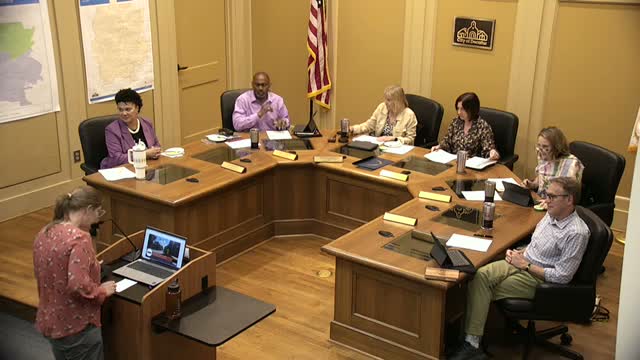
Consultants working with Decatur staff presented a Safe Streets action plan on April 21 that aims to reduce fatal and serious‑injury crashes and position the city to pursue federal Safe Streets funding.
Kara Scherer, assistant city manager for public works, introduced the project team and said the plan will help Decatur compete for the next round of USDOT Safe Streets funding and guide near‑term project requests.
Byron Rushing of Tool Design Group, who led the presentation, summarized nine months of data review and public engagement and urged the commission to adopt stronger safety policy goals. “We are looking at the smallest percentage of roads that contribute to the most number of fatal or serious injury crashes,” Rushing said, describing a mapped high‑injury network that includes Scott Boulevard, Commerce Drive, Claremont and the State Route 155 corridor.
The presentation emphasized three primary contributors to fatal and serious‑injury crashes in Decatur over the last five years: intersection collisions, travel speeds, and pedestrian and bicycle collisions. Rushing said four fatalities in the past five years were on state routes, and that keeping a close partnership with GDOT is essential when interventions involve state‑owned roads.
Key recommendations include drafting a Vision Zero resolution, pursuing a consistent 25‑mph speed limit where feasible, and creating a data‑driven speed‑management program that uses aggregated mobility data (for example, StreetLight) to program traffic‑calming projects proactively rather than responding only to resident petitions. Rushing framed the 25‑mph recommendation as a step that requires coordination with GDOT on state routes and careful site‑by‑site analysis elsewhere.
On intersection safety, the consultant proposed a hybrid approach to limiting right turns on red: prohibiting the maneuver at about a dozen high‑pedestrian locations around the square while studying other city‑controlled signals individually. He recommended a mix of treatments for left‑turn risk — from leading pedestrian intervals to protected lefts or roundabouts — depending on the intersection typology.
Commissioners pressed staff and the consultant about mapping detail, sidewalk gaps, Safe Routes to School alignment, and coordination with DeKalb County signal timing. Rushing said staff expect to return with a final plan and proposed resolutions that the commission can consider ahead of federal funding deadlines in June.
Next steps: staff will finalize the report, prepare recommended policy language (including Vision Zero and Complete Streets statements), and present an adoption packet to the commission in time to meet Safe Streets funding deadlines.