Get Full Government Meeting Transcripts, Videos, & Alerts Forever!
Get email alerts on the Short Term Rentals topic
No spam. Unsubscribe anytime.
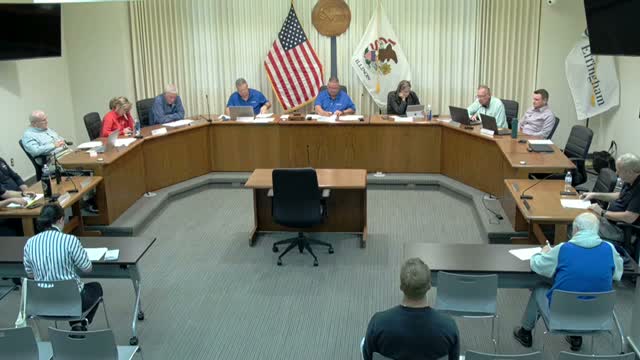
City Council weighs allowing short-term rentals by special use permit after mixed public testimony
Summary
Council discussed amendments to allow vacation/short-term rentals in selected non-urban and residential districts by special use permit, drawing testimony from operators and neighbors. Council directed staff to research licensing models, limits and enforcement and to return with draft language.
The City Council debated whether to permit vacation or short-term rentals in parts of Effingham by special use permit and under what conditions.
City planner presented a proposed amendment that would allow vacation short-term rentals in certain non-urban (NU) and other districts by special use permit, with suggested safeguards: a minimum 2-acre lot size in NU areas, mandatory notification of residents within 300 feet, annual inspections and registration on listing platforms such as Airbnb and Vrbo. Staff also recommended occupancy and parking minimums and suggested stricter limits in lower-density residential zones.
Three residents who operate short-term rentals urged the council to allow a pathway via special use permits. Andrew Blumker, who said he operates a small mother-in-law cottage outside the core area, told the council: "We just enjoy doing that ... and we want to be safe for the people that would stay with us." Ed Emrick described rehabilitating a 100-year-old house and using a short-term rental as part of his retirement plan; Jacob Volk said platforms and guest reviews provided additional protections and that many of his guests were family visitors or wedding attendees.
Councilors expressed mixed views. Some members raised concerns about transient traffic and neighborhood disturbance and emphasized that subdivision restrictions also apply and could prohibit short-term rentals even if zoning allows them. Several councilors suggested licensing with annual inspections and the ability to revoke permissions for complaints; the city attorney warned that a licensing regime can raise legal complexity and potential litigation risks if not carefully drafted. One councilor proposed limiting the number of short-term rental permits per owner to avoid commercialization through shell LLCs. The planner noted the city already regulates some short-term rentals in business/industrial zones by special use permit and that nonconforming uses would need specific handling under revised language.
Next steps: Staff will research other municipal licensing limits, the interaction with subdivision restrictions, and enforcement mechanisms and return to council with draft ordinance language and options for caps or annual licensing.