Get Full Government Meeting Transcripts, Videos, & Alerts Forever!
Get email alerts on the County Assistance District topic
No spam. Unsubscribe anytime.
Guadalupe County weighs sales-tax county assistance district to fund roads, fire and law enforcement
Summary
Commissioners discussed placing a sales-tax–based County Assistance District on the November ballot to raise up to 1.5 cents in unincorporated areas, with staff estimates of roughly $1.5M–$1.8M annually; the court directed more study and legal review before any election call.
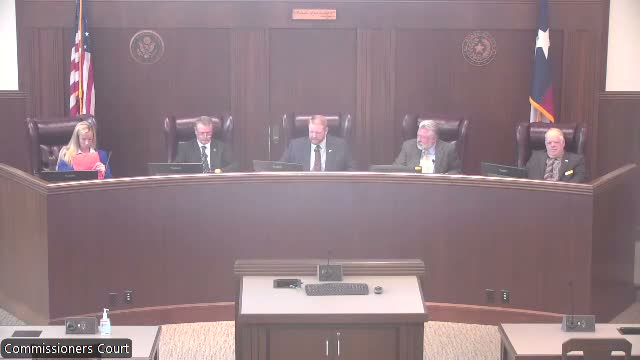
Guadalupe County commissioners on July 1 opened a discussion about creating a County Assistance District (CAD) that would use a sales-tax increment in unincorporated areas to pay for road and bridge work, fire protection, law enforcement facilities and related capital needs.
Commissioner Carpenter, who put the item on the agenda, said the mechanism would raise the countywide sales tax in unincorporated areas by as much as 1.5 cents to reach the statutory maximum of 8.25 percent. "It is sales tax based, so it is a consumption tax rather than a property tax," Carpenter said, noting that nonresidents who make purchases in the unincorporated county would contribute to the revenue stream.
Carpenter and county staff cited independent estimates from the comptroller’s office and a staff review that, using 2024 figures, put potential annual revenue somewhere in the neighborhood of $1.5 million to $1.8 million. "It's an educated guess," Carpenter said, "not a guarantee, but the numbers are pretty close." He added that the district would require a ballot measure and that the deadline to place it on the November ballot is Aug. 18.
Members raised both policy and process questions. One commissioner said residents in cities such as Cibolo who already pay for city fire protection should not be made to subsidize services for newly built subdivisions in unincorporated areas, calling the situation "not fair" to established residents. Another commissioner said the benefit of a ballot measure is that the voters would instruct the court directly on priorities.
County staff and the auditor cautioned that early years of budgeting would be challenging because sales tax receipts fluctuate; the court heard that taxes collected under the district would be remitted through the Texas comptroller and would appear in a separate fund or as a component unit in financial statements. Commissioners asked the county attorney to review permissible outreach because state law restricts how local officials may communicate about ballot measures.
No vote was taken on establishing a district; instead the court directed staff to gather additional information, asked the county attorney to prepare a legal review, and discussed the timeline for a possible election. If approved by voters in November and certified, taxes under the district would not be collected until after the second full quarter following the vote (commissioners cited April 1 as a practical start date for collections).