Get Full Government Meeting Transcripts, Videos, & Alerts Forever!
Get email alerts on the Community Survey topic
No spam. Unsubscribe anytime.
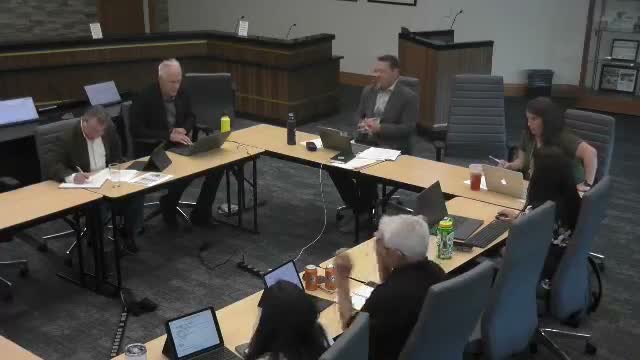
Erie council signs off on community survey after extended debate over housing, amenities and funding
Summary
After a lengthy discussion on housing language, amenities and funding trade‑offs, Erie council agreed June 17 to send the revised community survey forward for implementation, with council leaders to review remaining edits and the condition that nothing substantive will be removed without full council approval. The meeting recorded key facts about the Cheeseman attainable housing pilot and funding.
Erie — The Erie Town Council voted June 17 to move forward with a revised community survey after several hours of discussion over question wording, the length of the questionnaire and how to present trade‑offs on housing and discretionary town amenities.
Council members and staff spent substantial time refining the survey’s housing block: whether to label questions “affordable housing” or “housing diversity,” how to display images for different housing types, whether to include accessory dwelling units (ADUs), and whether the survey should educate respondents with facts drawn from the town’s housing needs assessment. Multiple council members urged caution about leading language; staff proposed matrix formats and fact‑based context for some items.
On Cheeseman (the town’s attainable housing project), housing staff provided funding details the council requested. Program staff said the town’s direct general‑fund contribution to the Cheeseman project was about $155,000, federal grant funding was roughly $2.1 million and a state grant contributed about $1 million. Housing staff noted most purchasers so far have household incomes nearer to the mid‑range of the program’s targets and that applicants who qualify at lower AMI levels often bring additional down payment help or other resources.
Council members discussed non‑capital approaches such as time‑limited stipends or targeted subsidies to help local workers (teachers, public safety and retail workers) afford to live near their jobs. Staff cautioned that such stipend programs require policy design and that stipends typically do not count as newly created restricted units for certain state grant formulas.
Parks, recreation and large amenity questions (including an outdoor aquatic amenity and a performing arts facility) prompted debate about whether high‑cost items should appear on the survey without associated cost context. Members discussed funding options to present in the survey — general fund over time, voter‑approved sales or property tax increases, new development‑related fees (impact fees), and public‑private partnerships — and agreed to remove open space and trails from funding comparisons because the town already has a dedicated revenue source for those programs.
After staff proposed edits requested by council, Mayor (speaker 1) moved to proceed with the revised survey and to authorize Mayor and Council Member Dan to work with staff on final edits; a friendly amendment that “nothing will be removed without approval of the council” was accepted. The motion carried by voice vote.
What’s next: Staff will make the agreed changes, prepare the resolution and survey materials for distribution, and return any items that cannot be resolved by the mayor and council designee for full council action. Council indicated staff should aim to mail postcards and deliver the survey schedule so that results can feed into budget discussions and the August meeting timeline staff described.