Get Full Government Meeting Transcripts, Videos, & Alerts Forever!
Get email alerts on the Water Policy topic
No spam. Unsubscribe anytime.
Colorado Springs Council votes to opt out of statewide graywater reuse rule
Summary
Council voted 9-0 to adopt an ordinance prohibiting on-site graywater reuse in Colorado Springs, citing inspection capacity and water-quality protections while staff evaluates a long-term, cross-agency reuse plan before January 1 state deadline.
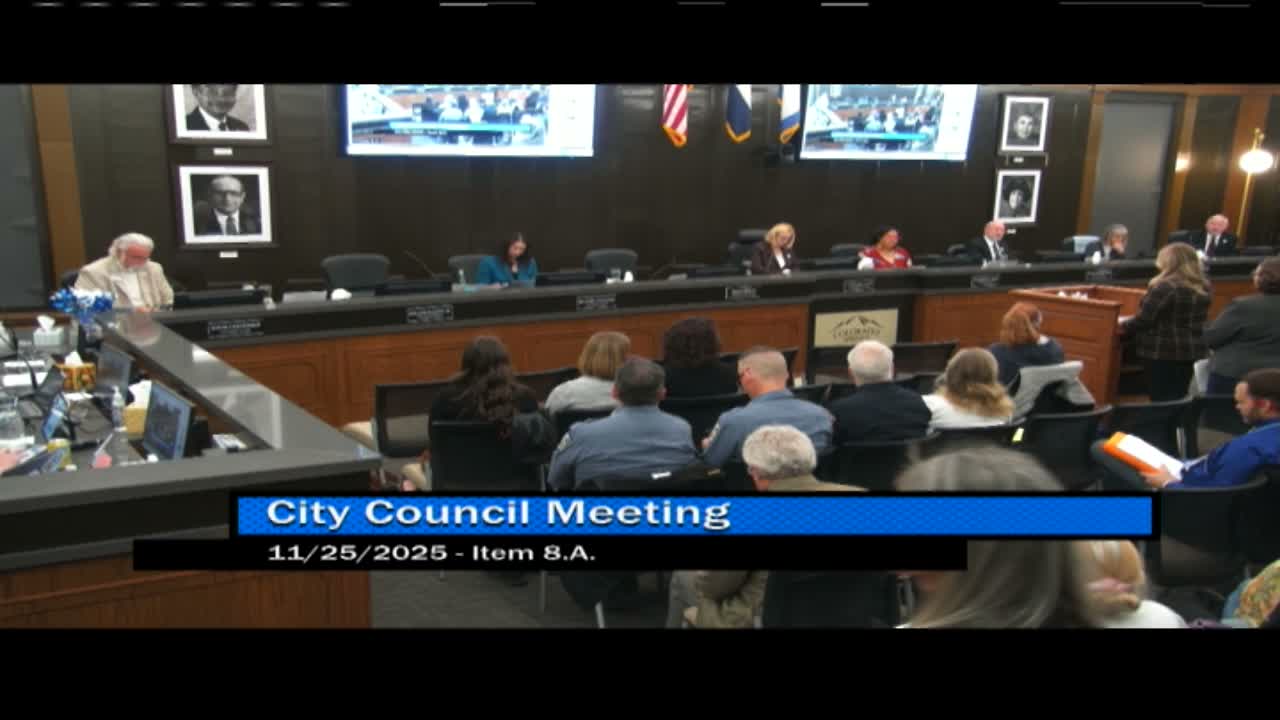
Colorado Springs City Council voted unanimously on Nov. 25 to adopt an ordinance opting the city out of a state law that would otherwise make household graywater reuse the default. The ordinance keeps graywater reuse prohibited in the city while staff develops a coordinated, long-term program with Pikes Peak Regional Building Department and El Paso County Public Health.
Environmental Services Manager Lauren Swenson told the council that the states change shifts reuse from an opt-in to an opt-out model beginning Jan. 1 and would require Colorado Springs either to allow graywater and implement a local graywater control program or to opt out in order to delay adoption. Swenson said Colorado Springs Utilitiesprimary concern is protecting the drinking water system through required backflow prevention and tracking of installations.
Jenny Bishop, a water resources engineer with Colorado Springs Utilities, outlined water-rights and operational concerns, saying graywater decentralizes reuse to individual homes rather than increasing the communitys total reusable water supply through centralized treatment. Bishop said retrofitting existing housing is expensive and that graywater systems are most feasible in new construction; she recommended pausing adoption to evaluate water quality safeguards and how roles would be shared among utilities, the regional building department and county public health.
Several council members raised implementation concerns. Councilman Risley, noting his role with the regional building department, said PPRBD currently lacks staff and funding to inspect and track the additional plumbing systems that decentralized graywater would require and warned the added construction cost could worsen housing affordability. Other members thanked staff for the presentation and urged learning from other municipalities before allowing graywater systems.
Councilman Gold moved to adopt the ordinance to opt out, Councilman Williams seconded, and the motion passed 9-0. Staff said the opt-out must be filed before Jan. 1 to prevent automatic adoption; officials emphasized the city can opt back in later but cannot undo the opt-out once that state deadline has passed.