Get Full Government Meeting Transcripts, Videos, & Alerts Forever!
Get email alerts on the Behavioral Health Treatment topic
No spam. Unsubscribe anytime.
Planning commission approves Colorado Springs Recovery Center at former Holiday Inn after heated public comment
Summary
The Planning Commission approved a major modification to convert 1855 Aero Plaza Drive into a long‑term drug and alcohol treatment center, citing code compliance and program safeguards despite neighbors’ objections about proximity to Panorama Park and local schools.
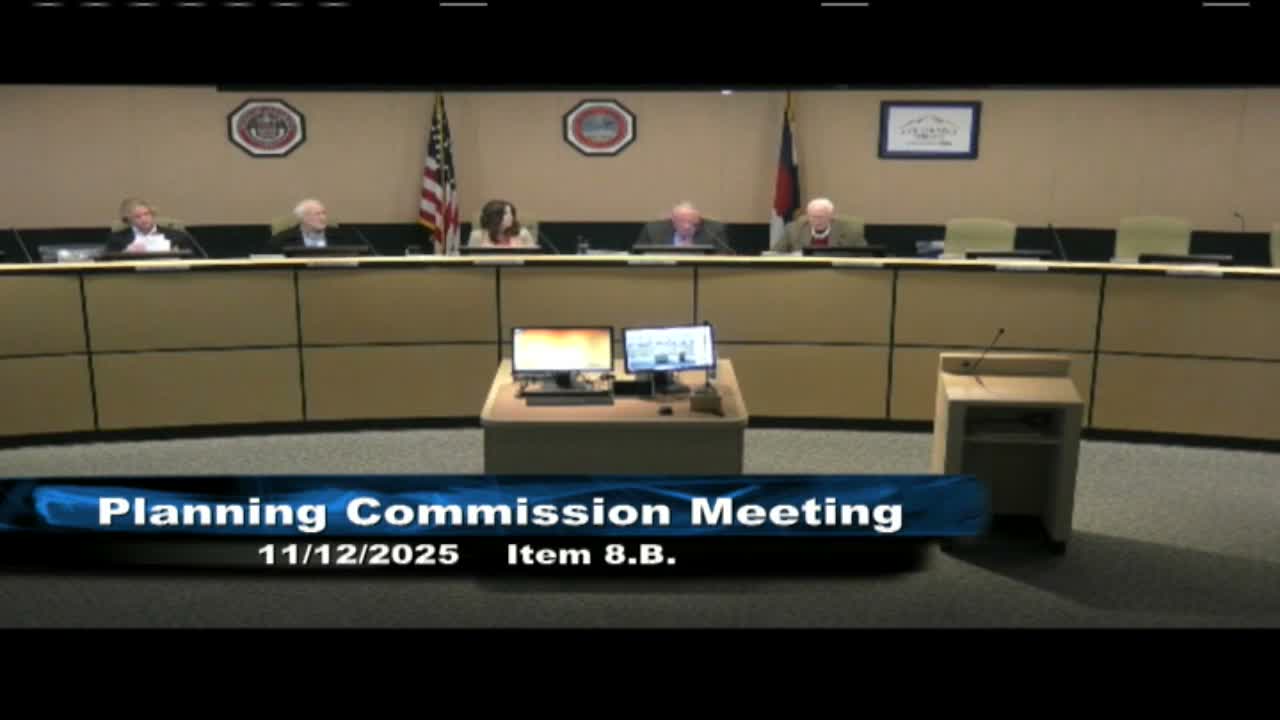
The Colorado Springs Planning Commission on Nov. 12 approved a major modification to a development plan that will convert the Holiday Inn at 1855 Aero Plaza Drive into the Colorado Springs Recovery Center, a long‑term drug and alcohol treatment facility run by Aspen BHC.
The commission voted unanimously to approve the administrative development plan modification after more than two hours of presentation, public comment and commissioner questioning. Staff said the MXM (mixed‑use medium) zone permits a large human‑service establishment as a use by right and that the application met city review criteria and Plan COS policies. The final action at the hearing was binding unless appealed to City Council within 10 days.
Supporters, including recovery peers, nonprofit leaders and a neighboring hotel owner, told commissioners the facility would expand scarce treatment capacity and provide a continuum of care. Derek Legrana, a peer coach in recovery, said: "Having a recovery center right here in Southeast Springs is so important…When people have a safe space to heal and rebuild, our neighborhoods heal too." Applicant representatives said the program would primarily serve Medicaid‑eligible residents and create local jobs.
Opponents — including residents and community organizations — urged denial or delay, citing safety, the site’s proximity to Panorama Park and nearby schools, and requests for independent, site‑specific impact data. Renee Gonzalez, who lives within 100 feet of Panorama Park, said the proposal “fundamentally conflicts with how this neighborhood is used and what it was intentionally built to support.”
Applicants and staff answered questions about operations, oversight and safety. Aspen BHC said the center will provide ASAM level 3.1 clinically managed low‑intensity residential care (about 86 beds) and transitional living for mental health (about 44 beds), with 24‑hour staffing, security cameras, a perimeter fence, delayed‑egress alarms and screening procedures that exclude people with violent criminal histories. The applicant also cited peer‑reviewed studies and local police data, and the city attorney reminded the commission that the Fair Housing Act bars decision‑making that discriminates against people with disabilities — which the law includes addiction.
Commissioners asked for clarity on oversight and conditions for more intensive services: staff confirmed that if the operator seeks detoxification or higher acute medical care in the future that would be a conditional use requiring another review. The applicant said it would hold monthly community meetings and continue coordination with the Colorado Springs Police Department.
The commission’s approval is a final action; an interested party may appeal to City Council within 10 days and must pay a $176 filing fee.