Get Full Government Meeting Transcripts, Videos, & Alerts Forever!
Get email alerts on the Performance Dashboards topic
No spam. Unsubscribe anytime.
Chief data officer lays out multi‑step plan for dashboards, warns sustained funding and governance needed
Summary
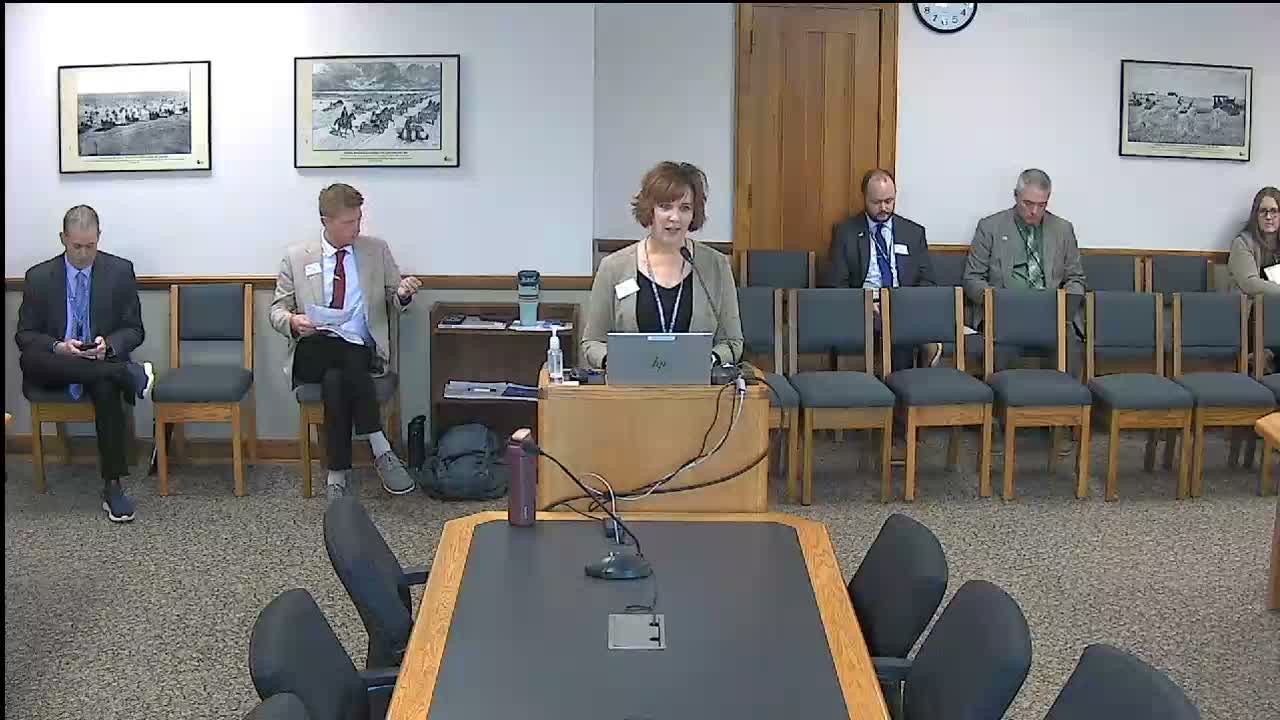
Kim Wise, the state chief data officer, told the task force that dashboards can improve oversight but only if agencies adopt data governance, consistent metrics and funding; Wise recommended a phased approach, data stewardship and agency ownership before public dashboards are built.
Kim Wise, chief data officer for the state of North Dakota, told the task force that dashboards are a tool in a broader performance‑management process and listed eight steps leaders must follow: define program goals, identify key questions, select measurable KPIs, document measurement methods, build technical pipelines, create dashboards, analyze trends and communicate results to stakeholders.
"Performance measurement gives us a clear data driven picture of how well programs are working," Wise said, adding that dashboards are only valuable when data are accurate, complete and governed. She warned that dashboards without governance become "pretty tools" that can mislead decision‑makers.
Wise emphasized that data readiness, clear ownership and sustained operational funding are prerequisites to public dashboards. The state has established a statewide Data Governance Council and launched a 'lighthouse' roadmap to build standards, playbooks and data-literacy learning paths for agencies; however, she acknowledged the work will be incremental without additional resources.
Committee members raised three recurring concerns: (1) why the CDO sits within NDIT rather than in a central policy office, (2) whether dashboards should be public by default, and (3) whether smaller agencies have the staff to implement governance and analytics. Wise responded that while dashboards are business‑led (owned by program agencies), IT provides pipeline and platform support; some services are offered fee‑for‑service (dashboard development, data pipelines) while governance frameworks, training and playbooks are provided centrally without per‑project charges.
Wise said the state has pockets of analytic maturity — for example epidemiology and HHS analytics — but stressed the need for standardized definitions (master data management) so the same question returns consistent answers across agencies. She described the desired outcome as a single source of truth: agreed definitions, consistent transformations and a modern data platform that reduces duplicated effort and supports public transparency when appropriate.
The presentation concluded with a candid assessment: establishing enterprise data governance, master data management and a modern analytics platform will require multi‑year investment and cultural change, but incremental gains are possible by starting with high‑value metrics and building agency capacity with central guidance and shared tools.