Council tables license for Union Oil Building after months of negotiation and public comment

Santa Paula City Council · January 21, 2026

Get AI-powered insights, summaries, and transcripts

Subscribe
AI-Generated Content: All content on this page was generated by AI to highlight key points from the meeting. For complete details and context, we recommend watching the full video. so we can fix them.

Summary

Council paused a proposed five‑year license and MOU with the Responsible Energy Council to steward artifacts from the former oil museum after tenant LeapLab raised concerns about shared space and contract terms; staff will mediate tenant amendments and bring the item back for council consideration.

Santa Paula — The City Council on Wednesday voted to table a proposed five‑year license and memorandum of understanding with the Responsible Energy Council (REC) that would let the nonprofit catalog and steward artifacts stored in the Union Oil Building.

Staff described the REC proposal as a partnership to archive and preserve city‑owned oil and gas artifacts that Chevron previously donated to the city. The agreement would have licensed roughly 3,048 square feet upstairs for REC’s curatorial work and included a proposed monthly rent of $1,524 for that licensed area, plus commitments to catalog and digitize collections and to help clear items from the building’s ground floor to allow co‑tenants to occupy assigned spaces.

REC representatives and a long line of local speakers — museum professionals, former museum staff and residents — urged council to approve the arrangement to protect fragile archival materials and make them available for research. Olivia Simonson, identified as REC’s president, described the group’s nonprofit status and mission: “We’re a 501(c)(3) nonprofit organization, founded in 2022,” she said, and said REC would work with university partners and museum advisors to catalog and stabilize items.

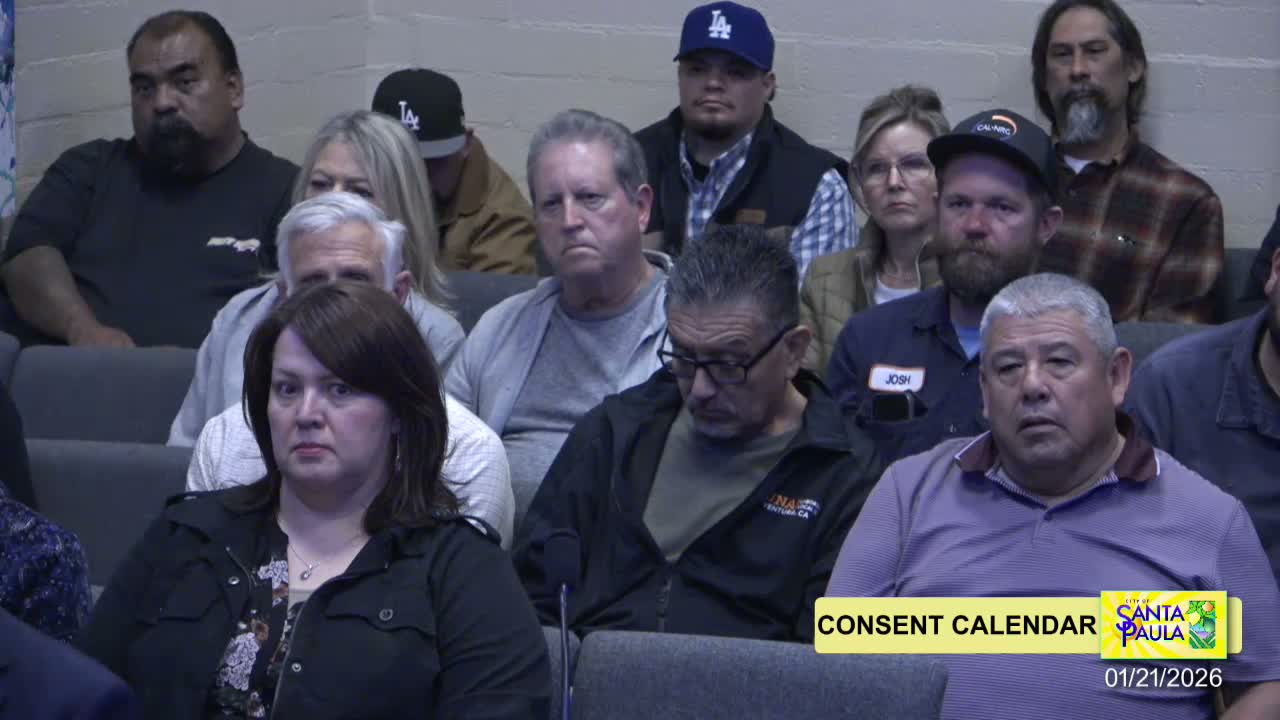
But council members and other tenants raised procedural and operational concerns. LeapLab (a proposed classroom/science tenant in the building) submitted written amendment requests and asked for clearer assurances about shared utilities, calendared public access to common rooms, restrictions on REC programming, and explicit funding‑disclosure provisions. Council members emphasized they wanted all tenants’ arrangements to align, cited utility‑cost and exhibit‑access details that remain unresolved, and asked staff to negotiate with LeapLab and other stakeholders before returning the item to council.

Councilmember Chavez moved to table the item to give staff time to seek amendments and resolve outstanding concerns; the motion passed on a council vote to table (majority approval). Staff said they will attempt to return the item with negotiated language and a package of tenant agreements by the February study meeting window, and made clear that any future amendments could require additional council review. Staff also noted the city received red‑lined edits to the draft license after the packet was published and exchanged revised pages with REC during the meeting.

In the public record, city staff emphasized that REC would not acquire ownership of city artifacts; the agreement gives REC first rights to items only if the city later chooses to divest them. City officials also stressed that the proposed REC arrangement is meant to complement, not displace, LeapLab or the Historical Society, and that the ground floor remains public‑facing space for future programming if tenants agree.

The council’s tabling leaves the collection’s stewardship unresolved for now; staff will mediate between the parties and return to council with either a revised agreement or, if the parties do not reach consensus, a staff recommendation on next steps.