Get Full Government Meeting Transcripts, Videos, & Alerts Forever!
Get email alerts on the Civil Rights topic
No spam. Unsubscribe anytime.
Chula Vista adopts 'Good Neighbor' resolution directing immigration‑related protections and outreach
Summary
The council adopted a Good Neighbor resolution directing staff to align city practices with state/federal protections, develop multilingual know‑your‑rights materials, create public procedures on federal immigration requests, limit disclosure of personal data in city contracts, and explore legal‑aid partnerships; vote was 4 yes, 0 no, 1 abstention (mayor).
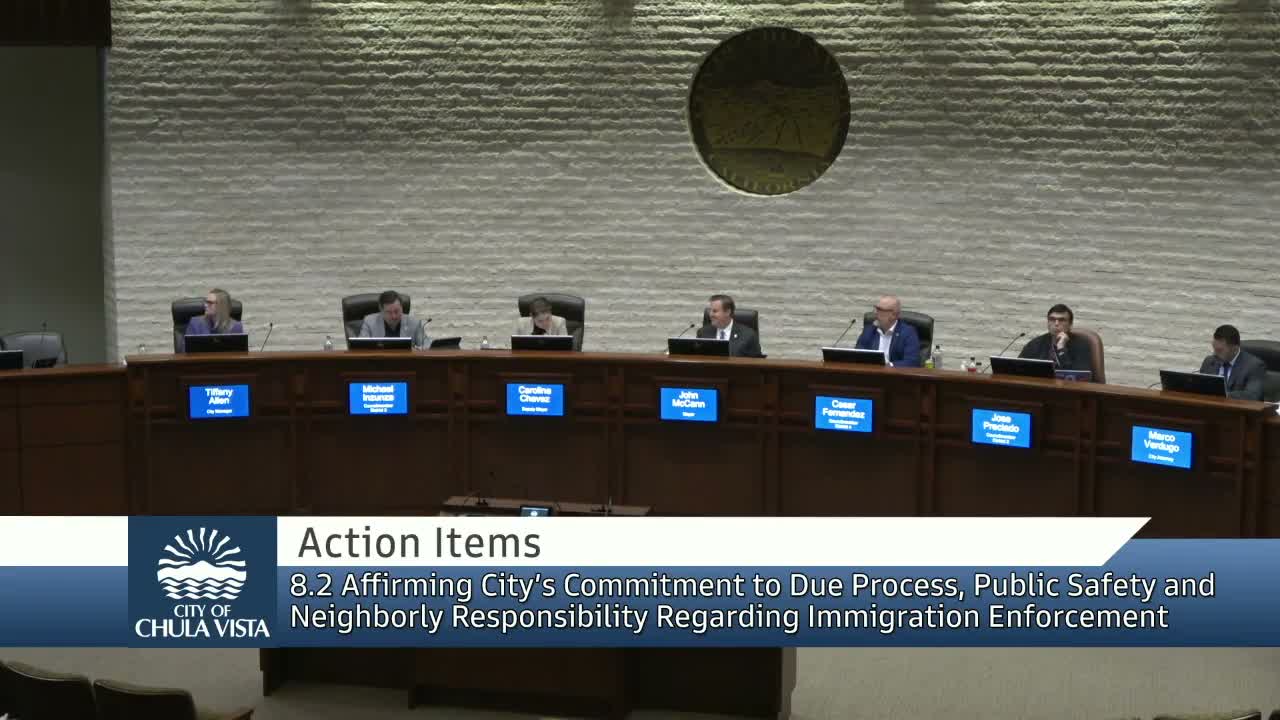
Chula Vista — The City Council voted 4–0–1 on Nov. 18 to adopt a Good Neighbor resolution intended to strengthen protections, transparency and due‑process safeguards for residents during interactions with enforcement and partner agencies.
Councilmember John (first name in transcript: Fernandez) introduced the resolution, which directs the city manager to take six actions including: ensuring city policies and partnerships comply with state and federal protections; creating a multilingual “know your rights” public education campaign; establishing procedures for how local police respond to federal or out‑of‑state immigration enforcement requests; prohibiting disclosure of personal data by city contractors for discriminatory enforcement actions; restricting access to nonpublic city facilities without a warrant or statutory authority; and exploring nonprofit partnerships for crisis case management and legal aid.
Councilmember Fernandez moved the resolution: “I move that city council adopt a good neighbor resolution as presented,” he said. The proposal drew both support and vocal opposition at the podium. One public commenter called the measure “virtue signaling” and warned of federal supremacy issues; another urged more objective fact‑finding before adoption. Supporters — including councilmembers who described the item as reaffirming the city’s values and compliance with state law — said the resolution clarifies practices and helps vulnerable residents feel safe using city services.
Mayor John McCann announced he would abstain from the vote, saying he is a naval officer and felt unable to participate on a matter he described as implicating federal law: “I am a naval officer, with The United States, so legally, I'm unable to oppose or potentially oppose federal law, so I will be abstaining,” he said.
The city attorney advised that the abstention would be recorded and the measure could carry; the clerk recorded four affirmative votes and one abstention and the resolution carried. The resolution directs staff to return with implementing language, outreach materials, and suggested contract language and procedures.
Staff and council members stressed the measure is intended as a policy directive consistent with state law and with the city’s practice of keeping services available and nondiscriminatory. Implementation will involve coordination among the city attorney’s office, police department and finance staff on vendor language, and the communications team for public outreach materials.