Get Full Government Meeting Transcripts, Videos, & Alerts Forever!
Get email alerts on the Tax Credits And Economic Incentives topic
No spam. Unsubscribe anytime.
Committee adopts H‑2 substitutes for HB 5168 and HB 5169; Bridal amendment to cap tax credits fails
Summary
The House Committee on Economic Competitiveness adopted H-2 substitutes for HB 5168 and HB 5169 and reported both as substituted; Representative Bridal's amendments to cap tax credits on each bill were offered and failed on roll call.
The House Committee on Economic Competitiveness adopted H-2 substitutes for House Bill 5,168 and House Bill 5,169 and subsequently reported both bills with recommendation after floor debate on amendments.
For HB 5,168, Representative Bonak moved to adopt the H-2 substitute and the clerk recorded the motion prevailing. Representative Bridal offered an amendment to impose a cap on total tax credits per company or facility (Bridal proposed the first $50 million tax-free, with a cap thereafter). The amendment was moved and failed on roll call (3 ayes, 6 nays, 1 pass). The committee then voted to report HB 5,168 as substituted H-2; the clerk recorded the motion prevailing.
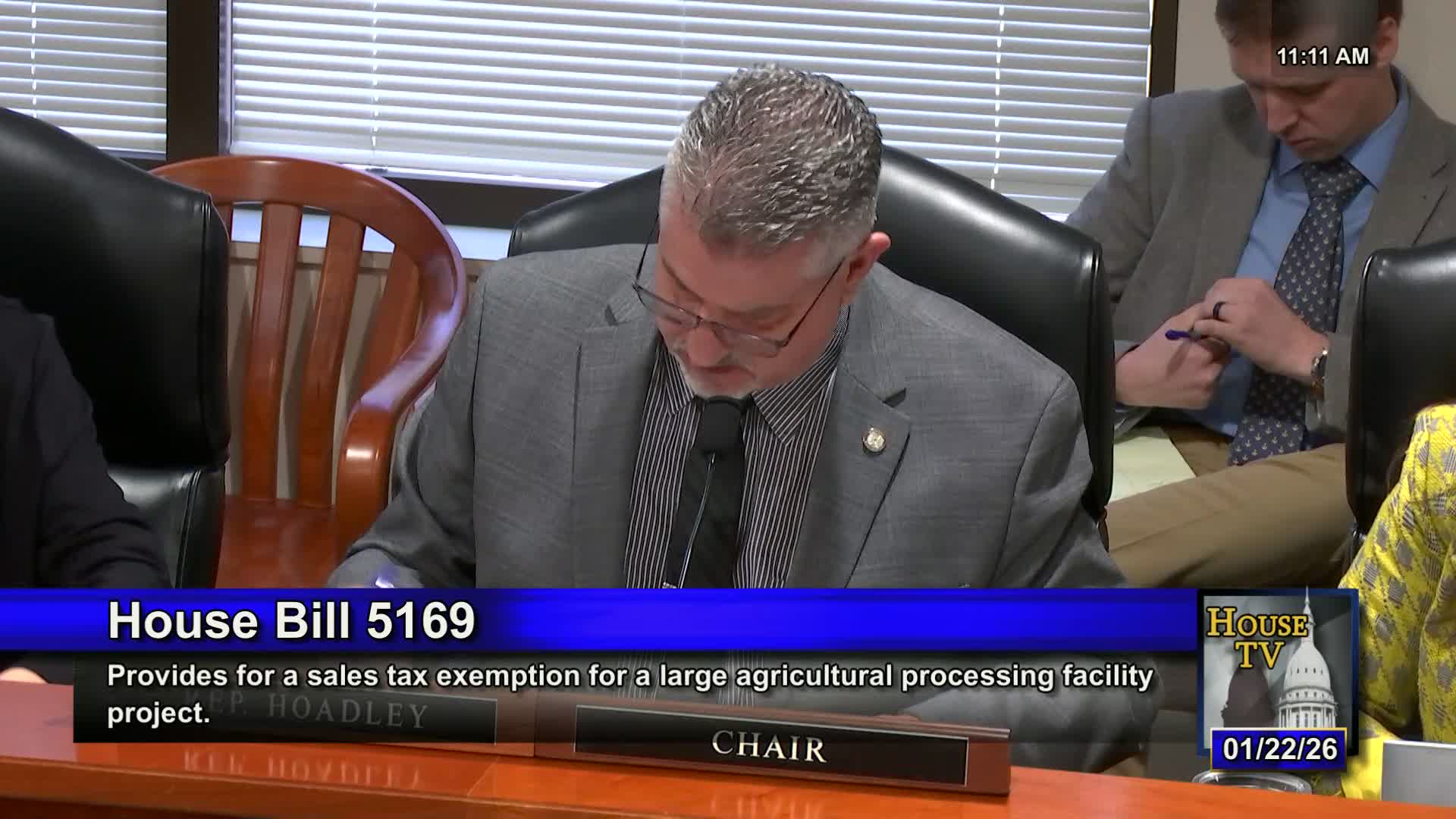
For HB 5,169, Representative Harris moved to adopt the H-2 substitute; the motion prevailed unanimously on roll call (10 ayes, 0 nays). Representative Bridal offered a similar cap amendment to HB 5,169; that amendment also failed on roll call (3 ayes, 6 nays, 1 pass). The committee then voted to report HB 5,169 with recommendation as the H-2 substitute.
Committee discussion around Bridal's amendment emphasized concerns about the fiscal effects of tax credits and the ripple effects on entities that rely on tax revenue such as schools and local governments. Representative Bridal said the cap was intended to address potential downstream impacts of large tax incentives and noted she was open to further discussion on the correct cap level. Committee roll calls for the amendment and reporting motions were recorded by the clerk on the committee record.