Get Full Government Meeting Transcripts, Videos, & Alerts Forever!
Get email alerts on the State Budget Revenue topic
No spam. Unsubscribe anytime.
Michigan agencies adopt revised consensus revenue estimates, projecting modest growth and policy‑driven shifts
Summary
The January 2026 Consensus Revenue Estimating Conference adopted updated revenue and pupil membership estimates. Agencies project modest nominal revenue growth over 2026–28 but note policy changes (fuel tax exemption and other decoupling decisions) that lower net GF+SAF totals in FY26–27.
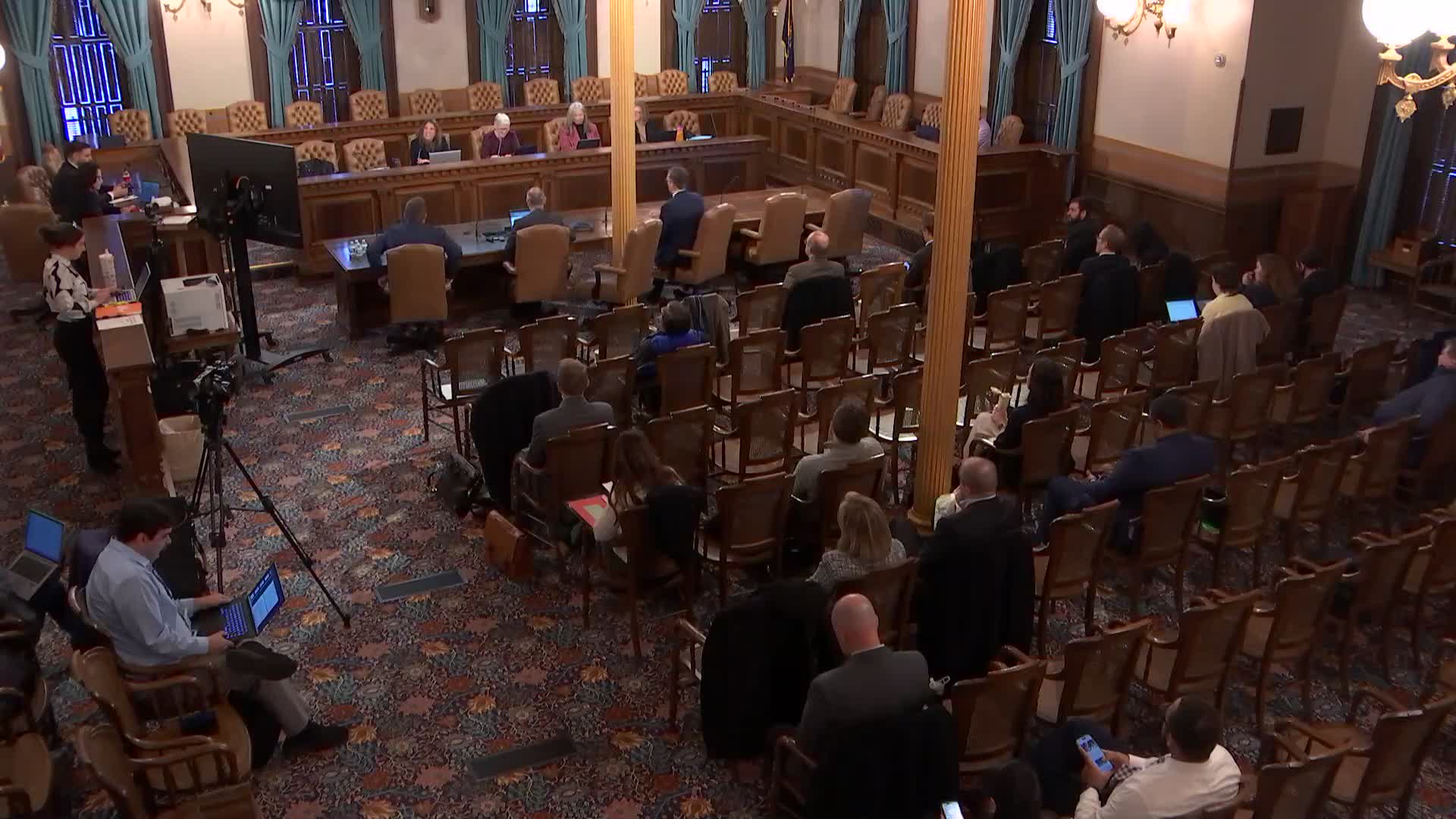
State fiscal leaders on Jan. 15 adopted updated revenue forecasts and K‑12 pupil membership estimates after presentations from university and agency economists.
The consensus proposal put FY2026 general‑purpose revenue at $14.1 billion and School Aid Fund receipts at $19.1 billion, a combined total the panel described as about $1.1 billion below the May projection after accounting for enacted policy changes and fund‑shifting: “we see revenue impacts that we’re building in here of about $800,000,000 in fiscal 26 and … $1,100,000,000 in fiscal 27,” Treasury staff said during the presentation.
Why it matters: the revised forecasts will be used as the baseline for the upcoming state budget process and reflect both economic conditions and recent legislative changes — notably a motor fuel sales tax exemption in the roads package that reduces net sales and use tax collections by an estimated $800–900 million on a full fiscal‑year basis.
Agencies’ reasoning and differences
Treasury and the legislative fiscal agencies explained that preliminary FY25 collections trended slightly below the May consensus, driven primarily by corporate income tax volatility. Eric (Treasury) said combined shortfalls across five major tax lines tracked about $328 million below the May consensus, with corporate income tax the largest contributor.
House and Senate fiscal agencies and the administration continue to present a range of estimates. Officials noted that volatile items — corporate income tax payments, refunds and non‑tax receipts such as interest and common cash transfers — account for most inter‑agency spread in near‑term years. The agencies projected nominal growth in combined general fund and School Aid Fund receipts of roughly 1–3% across their forecasts in the 2026–28 window, but all stressed that average real (inflation‑adjusted) revenues would be essentially flat or declining.
Votes and procedure
After hearing presentations from RSQE, Treasury, and the two fiscal agencies, the panel moved and approved the pupil membership estimates and then adopted the consensus revenue projections by voice vote. The motions were approved with an oral “Aye” on both items; no roll‑call tally was recorded in the public transcript.
What’s next
Officials identified several near‑term risks to the forecast: benchmark revisions to payroll data that may reduce reported job growth; corporate earnings timing; potential changes in trade policy (notably USMCA negotiations), and shifts in non‑tax receipts. They also noted that the School Aid Fund was largely held harmless for several policy changes, limiting immediate impacts to school operations funding.
The panel adjourned after adopting the estimates.