Get Full Government Meeting Transcripts, Videos, & Alerts Forever!
Get email alerts on the Deepfakes topic
No spam. Unsubscribe anytime.
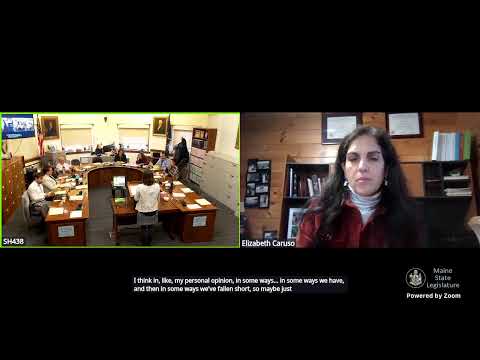
Maine committee hears bill to require disclosure of AI-generated campaign ads
Summary
The Joint Standing Committee on the Judiciary heard LD 517, introduced by Representative Amy ****, proposing disclosure requirements and civil penalties when campaign media has been materially manipulated by synthetic means; supporters called it a narrow transparency measure, while the ethics commission urged careful drafting to avoid constitutional problems.
Representative Amy **** presented LD 517 to the Judiciary Committee, calling it an act "regarding synthetic material in campaign advertising" and warning that high-quality AI-generated "deep fake" media poses a growing threat to elections.
The sponsor told the committee the bill would not ban AI content but would require disclosure when an image, audio or video used in public communication has been "materially manipulated" and is intended to injure a candidate's reputation or deceive voters. "These deep fakes are increasingly common, convincing, and easy to produce," she said, and argued that disclosure lets "voters consider the content with eyes wide open." The amendment text in committee would create a civil-penalty enforcement path and allow the attorney general to seek injunctive relief, she said.
Proponents urged action. Craig Holman, government affairs lobbyist for Public Citizen, praised the proposal as narrowly focused and protective of free-speech rights while giving voters transparency. "It focuses just on when artificial intelligence produces what we call deep fakes," Holman said, and pointed the committee to Public Citizen's deep-fake tracker as a resource for state laws.
Industry and regulatory witnesses urged clarifications. Kate Gore of Charter Communications thanked the sponsor but asked the committee to resolve conflicts with federal law and to clarify exceptions for broadcasters and distributors, saying "we're distributors, not creators." Jonathan Wayne, executive director of the Maine Commission on Governmental Ethics and Election Practices, said the Ethics Commission had received a draft from the attorney general's office and urged caution: laws that condition speech must be narrowly tailored to withstand constitutional review and the commission has practical concerns about timely investigations and identifying responsible parties.
Committee members pressed the sponsor on the bill's reach — whether it applies only during campaign periods, how a "material" change would be defined, how a "reasonable person" standard would be applied, whether wholly synthetic persons would be covered, and how penalties (including the proposed percentage-of-expenditure multiplier) would operate. The sponsor said many of those questions will be addressed at the work session and acknowledged she expects to offer amendments.
The chair closed the public hearing and scheduled a work session and additional materials, including a statute link and state examples, to be provided to members.
Next steps: the committee will hold a work session to refine definitions, the disclosure rulemaking process, and to review any Attorney General language and stakeholder amendments.