Get Full Government Meeting Transcripts, Videos, & Alerts Forever!
Get email alerts on the Climate Survey topic
No spam. Unsubscribe anytime.
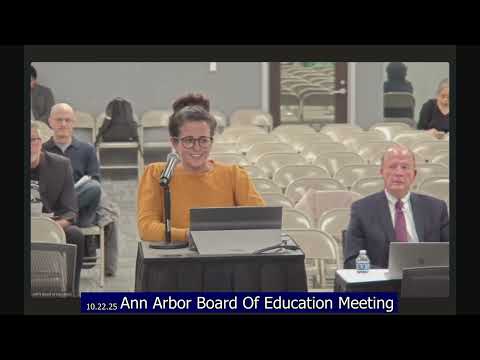
Ann Arbor Public Schools presents 2024-25 climate survey: high student belonging but low parent response rates
Summary
District leaders presented results from the 2024-25 climate and culture survey showing high self-reported school quality and student belonging, but noted low parent response and underrepresentation of some demographic groups; the district outlined next steps including restorative-practices training and a universal screener rollout.
Dr. Hayward and Miss Austin presented the results of the 2024-25 Ann Arbor Public Schools culture and climate survey, administered May 14 to June 8, 2025. They reported 2,229 parent/guardian responses, 5,098 secondary student responses (grades 6'12), 2,720 elementary student responses, and 742 staff respondents (69% of staff respondents were teachers).
Key findings included high ratings of overall school quality (for example, 88% of elementary students rated school quality positively) and strong student sense of belonging (presenters cited figures such as 92% of secondary students reporting a sense of belonging at school when "somewhat" and "agree" are combined). Presenters also noted improved perceptions of safety compared with prior years and strong family-involvement measures, while flagging that certain demographic groups (notably Black and multiracial respondents) were underrepresented in responses.
Trustees pressed for clarity on response rates and disaggregation. Several trustees and presenters emphasized that aggregating "agree" and "somewhat" responses can obscure important differences; trustees also asked for raw invitation counts and the percentage of total teachers who responded. Presenters said they will provide raw data and explore outreach steps to improve representation, including QR-code access in community centers, inviting families to use district devices, and keeping the survey window open longer.
Planned next steps announced by presenters include restorative-practices training for administrators beginning in November, rollout of the SABRE social-academic-emotional screener for grades 6'12 (parents may opt out), strengthened reporting channels for bullying and discrimination concerns, and continued work to diversify curricular materials (English and social-studies initiatives). Presenters framed the findings as baseline data that will inform spring recommendations to the board.
Why it matters: The survey provides district leaders with perception data from multiple stakeholder groups; trustees said they want more disaggregated and representative data before large-scale policy changes.
What's next: Presenters will provide further raw data and demographic disaggregation, refine survey wording for 2026, and pursue outreach measures to increase response rates among underrepresented groups.