Get Full Government Meeting Transcripts, Videos, & Alerts Forever!
Get email alerts on the School Finance topic
No spam. Unsubscribe anytime.
WISD presents 2025–26 proposed budget; districts plan scenarios in case of federal funding cuts
Summary
Washington Intermediate School District officials presented their proposed 2025–26 general fund budget and explained contingency plans for potential federal funding reductions, noting WISD receives about $29 million annually (roughly $12 million flows through IDEA for special education) and that the ISD maintains scenario plans and a modest fund balance to manage short-term uncertainty.
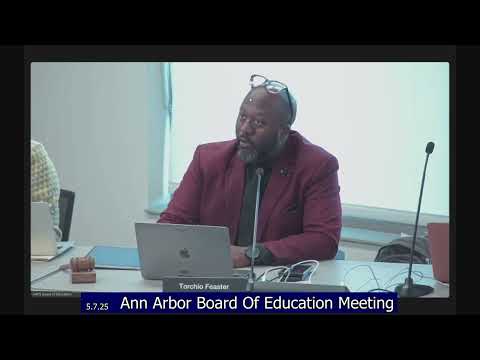
Washington Intermediate School District representatives presented the proposed 2025–26 general fund budget during the Ann Arbor Public Schools board meeting, and trustees used the opportunity to ask detailed questions about special education transfers and contingency planning if federal dollars decline.
Naomi Norman (WISD) said the ISD receives about $29 million in federal funding and typically flows a substantial portion to local districts; roughly $12 million is related to special-education IDEA flow-through. She said the ISD builds scenario plans into its budget process (for example, modeling 10% or 50% cuts) and maintains a modest fund balance to carry programs for short periods if funding changes occur.
Trustees pressed for clarity about a dip shown in the ISD's outgoing transfer and fund balance for special education in 2025; a WISD staff member (Brian) explained the dip was a consequence of conservative budgeting practices and the mechanics of reimbursements — if local districts do not spend to earn a calculated reimbursement amount, the unspent portion remains in ISD fund balance rather than being redistributed.
Board members asked for more detailed scenario information and expressed interest in seeing worst-case projections and how specific programs (for example, Head Start, Perkins career-education dollars) would be handled if reductions occurred. Norman said the ISD has scenario plans and would brief local districts as contingency planning evolves; she cited an example that $450,000 in Perkins dollars would be backfilled this year using a separate state consolidation grant if needed, and that Head Start is particularly complex as some students could be shifted to state-funded GSRP classrooms in a constrained scenario.
No formal board action was taken on the ISD budget at this meeting; trustees were reminded that the ISD election is scheduled for June 2 and the district asked local boards to review and, if desired, adopt a resolution expressing support or objections before the ISD board adopts a final budget.