Get Full Government Meeting Transcripts, Videos, & Alerts Forever!
Get email alerts on the School Discipline topic
No spam. Unsubscribe anytime.
AAPS data show rising suspensions and stark racial, disability disparities; district outlines supports
Summary
A six‑year district analysis presented April 23 shows overall suspensions are up since the pandemic, with Black students, students with disabilities and economically disadvantaged students overrepresented. District leaders outlined MTSS, restorative practices and a work group to reduce disparities.
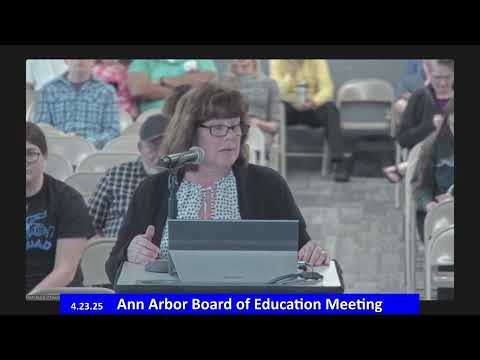
Ann Arbor Public Schools trustees received a six‑year analysis April 23 showing district suspensions have risen since the pandemic and are disproportionately borne by Black students, students with disabilities and economically disadvantaged students.
The presentation, delivered by Executive Director Roberta Hayward and Executive Director Melida Austin, said the district reviewed PowerSchool records from 2018–19 through Feb. 2025 (with projections for interrupted COVID years) and found a post‑COVID uptick in suspensions across elementary and middle grades. Hayward said fighting and physical aggression remain the leading reasons for suspension, with alcohol/drug activity, disruptive conduct and insubordination also common.
"Suspensions are disproportionate in over a 6 year analysis period, impacting our Black and African American students, our male students, students with disabilities, and students who are economically disadvantaged," Hayward said during the presentation.
Community members had foreshadowed the findings. Stacy Ebron of ASPIRE said the district’s public release confirmed what parents and advocates suspected: "Suspension rates for black and Latino students, economically disadvantaged students, and students with disabilities remain disproportionately high." She urged the board to convene a diverse task force to develop a plan and to make school‑level suspension data public.
Administration described work already underway to reduce suspensions and address disproportionality. The district highlighted universal, targeted and intensive tiers of support under a Multi‑Tiered System of Supports (MTSS); a new districtwide SEL curriculum (TRAILS); pilot alternatives to suspension such as the American Lung Association’s InDepth vaping program at Foresight; and partnerships for clinical supports.
Miss Lewis, speaking to special education safeguards, explained procedures for students with IEPs: school teams track removal days and, upon reaching 10 days, conduct a manifestation determination review to determine whether behavior was a manifestation of disability. If so, the student must be returned and supports revised.
Trustees asked staff to provide more granular analyses — for example, days lost per student, average suspension length by group, and per‑student incidence rather than count of suspension events. Data staff said the presentation counted suspension incidents (for example, one student can account for multiple incidents) and committed to follow‑up with disaggregated and per‑student metrics.
Trustees and staff said next steps will include forming a multi‑stakeholder work team (district leaders, school staff, students, parents and community partners) to develop measurable goals, systematize successful local programs such as peer mediation and restorative circles, and identify recommended policy or budget adjustments to address staffing gaps such as behavior interventionist positions.
The board did not take action on policy during the meeting; presenters said an annual suspension report will return to the board and staff will incorporate requested analyses.
The presentation and discussion concluded with district leaders reiterating a commitment to data‑driven change and scaling proven alternatives to exclusionary discipline.