Get Full Government Meeting Transcripts, Videos, & Alerts Forever!
Get email alerts on the Education Policy topic
No spam. Unsubscribe anytime.
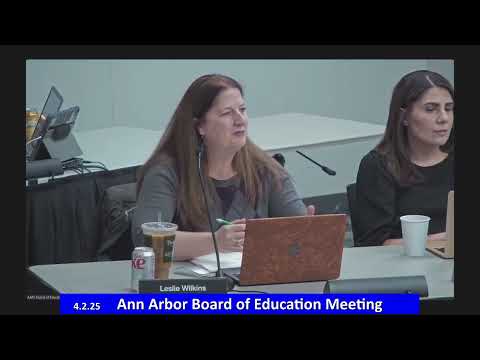
Ann Arbor school board adopts change to designated‑groups policy after heated public outcry
Summary
After hours of public comment and trustee debate, the Ann Arbor Public Schools Board adopted a revised Policy 1.300 governing board participation by community groups. Opponents said the draft would silence marginalized groups; supporters said revisions broaden access and preserve urgent access to the agenda.
The Ann Arbor Public Schools Board of Education on Monday adopted revisions to Policy 1.300, which govern how community organizations and former “board‑designated” groups request time on the board agenda, after extended public comment and a daylong debate.
The measure, approved by roll call, changes how groups will be added to agendas and removes the policy language that listed specific named groups. Supporters said the edits expand access beyond an annual approval process and permit the board president or the executive committee to place community groups on the agenda when needed; opponents said removing the listed groups was a symbolic cut that would further marginalize families already raising concerns.
The debate drew large public turnout: speakers at the meeting — including parents, teachers and representatives of parent advisory groups — urged trustees to preserve a clear, ongoing place on the agenda for affinity and parent‑led groups. “This is the only clearly designated time when board members can regularly hear from students,” said a public commenter during the board’s public‑comment period. Randa Ajloni, representing the Arab American Parents Advisory Group, told the board the group has partnered with the district since 2018 and asked the board to “Keep policy 1 3 0 0 intact.”
Trustee Mohammed, chair of the Equity & Inclusion Committee, said the committee had asked governance to pause and develop a policy with more direct input from affected groups before the board acted. “We heard that the groups felt this was restricting access and that we should be building policy to support them,” she told colleagues during the meeting. Trustee Wilkerson and other board members said draft edits were intended to reduce barriers by allowing groups to request time at any meeting rather than only once a year.
The board considered but then rejected a motion to table the policy to allow additional public briefing (the motion to table failed on roll call). After further edits debated at the table, the board voted to adopt the revised policy. The roll call for adoption recorded affirmative votes from President Feaster, Trustee Wilkerson, Trustee Schmidt, Trustee Wilkes, Trustee Basquiat and others; Trustee Mohammed and Trustee Wilkins voted no. The official vote record on the motion is in the board minutes.
Practically, the policy will now allow community groups to request speaking time for matters that fall within the district’s purview and authorizes the board president or the executive committee — in consultation with the superintendent — to add those requests to an agenda when timing is urgent. The board also debated whether the policy should keep a historical list of groups as a nod to longstanding partnerships; no final language preserving a labeled “designated” list was retained in the body of the policy adopted at this meeting.
Board documents distributed with the adopted policy direct administration to continue listing parent and community associations on the district web resources, and trustees said they expect the administration to coordinate with groups to make clear how to request time. The board’s governance committee said it will continue to refine implementation details and consider whether additional guidance or criteria are needed.
The board is scheduled to revisit some process issues in future committee meetings; in the meantime, district staff said they will work to ensure forms and sign‑up links are available earlier so groups have practical access to the new request process.