
Plymouth‑Canton presents expansion of early‑childhood and wraparound services, reports major gains in health and mental‑health supports
Get AI-powered insights, summaries, and transcripts
Subscribe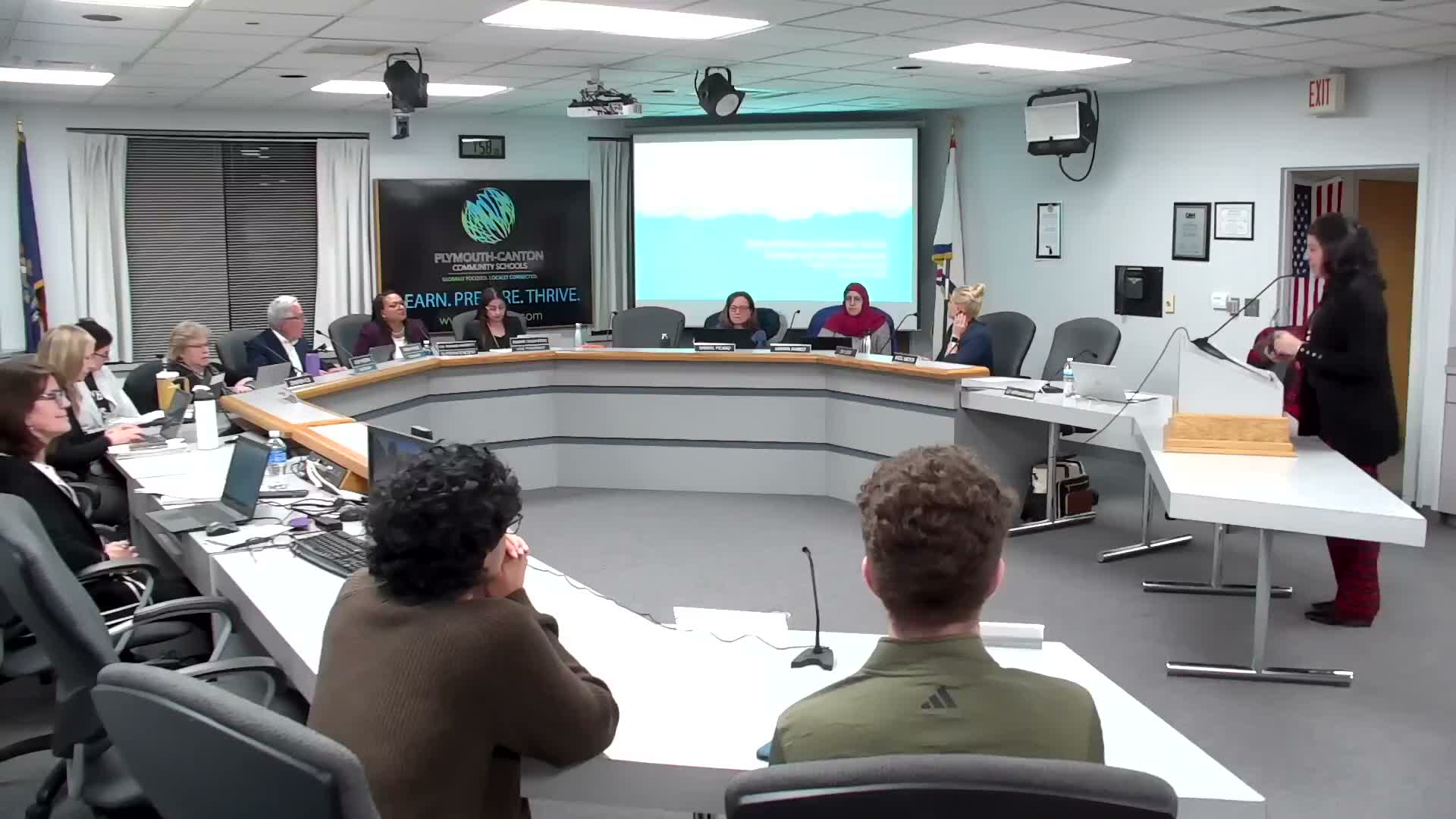
Summary
Assistant Superintendent Liz Vartanian Gibbs told the board GSRP expanded from 8 to 18 classrooms with plans for 20 next year; the district reported 22,000 clinic visits this year, 65 AEDs across buildings, 400+ CPR‑certified staff, and growing family‑academy programming serving ~2,400 participants annually.
Assistant Superintendent Liz Vartanian Gibbs and her team presented an overview of student and family engagement programs, emphasizing early‑childhood expansion, family academies and wraparound services that connect families to health and social supports.
"We have expanded from 8 classrooms last school year to 18 GSRP classrooms this school year, and we are looking to add 2 more in the 2627 school year with a total of 20 GSRP classrooms in our school district," Gibbs said, describing the Great Start Readiness Program expansion.
Eric Stanford summarized family academy programming, noting the district moved from roughly 50 sessions to more than 77 last year and expects to offer over 80 this year, reaching about 2,400 participants annually. "When we support a parent or a caregiver, we're giving a child their best possible advocate," Stanford said.
Nurse manager Patrice Williams provided clinic and safety statistics: "Since the start of the school year, we have recorded over 22,000 clinic visits," and the district "currently maintain[s] 65 AEDs across the district, up ... from 39 units just 3 short years ago." Williams added the nursing team has helped certify more than 400 employees in CPR and trained 120 CTE students this year.
The presentation also covered mental‑health partnerships and programs, including a suicide prevention coalition and a district mental health and wellness fair that drew more than 3,800 attendees last year. The district described its Care Solace partnership, a 24/7 multilingual care coordination service, and demonstrated a therapy‑dog program; the district said Charlie the therapy dog has "supported more than 5,000 students in meaningful interactions."
Board members asked about transportation, funding sources and outreach to immigrant families; Gibbs said the department uses general fund dollars and grants, connects families to community partners for transportation or gas cards, and can provide language support via language line and referrals to Care Solace for counseling.
Next steps: staff agreed to prepare an "impact" slide summarizing program outcomes and metrics for board and public dissemination.