
Dearborn board hears pitch for statewide VIP registry to help reunite missing people with disabilities
Get AI-powered insights, summaries, and transcripts
Subscribe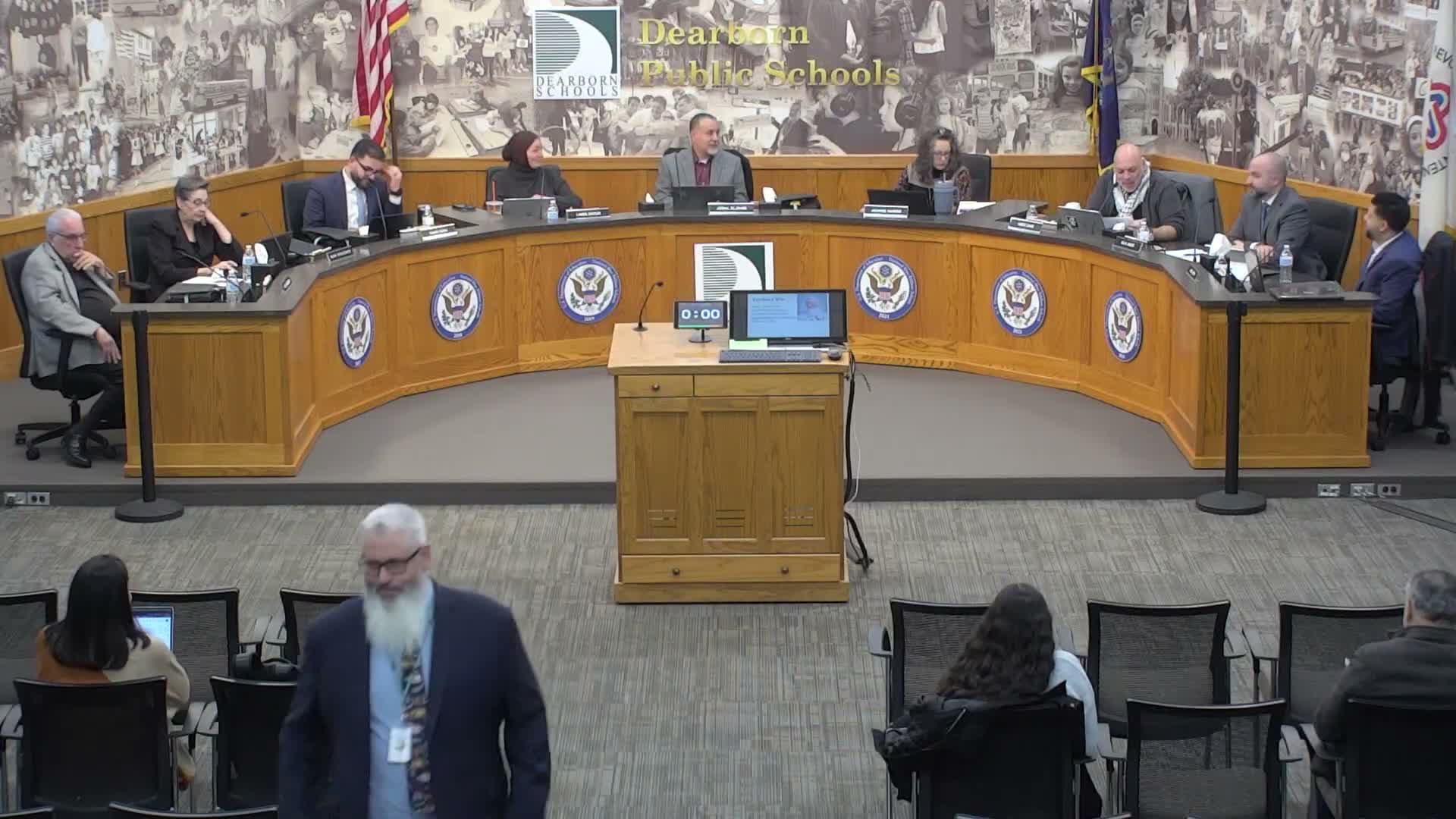
Summary
County and city officials described a voluntary state VIP (vulnerable/impaired person) registration that uses fingerprints and photos to help law enforcement identify and reunite missing or wandering people with disabilities; Dearborn trustees discussed outreach, language access and school-based enrollment options.
County and local officials told the Dearborn Board of Education on Jan. 12 that a statewide program could speed reunions when people with cognitive impairments go missing.
"This is great because this is for the entire state of Michigan," said Muna Alawi, introducing the VIP program and explaining it complements Dearborn’s existing special-needs registry. The program stores a fingerprint and photograph and makes the information accessible to Michigan law enforcement when officers encounter an individual who cannot identify themselves.
Corporal Brent King of the Dearborn Police Department said the program is voluntary and free, and described a practical workflow: parents or guardians complete a two-sided enrollment form, staff take a fingerprint and photograph, and the record is uploaded to the Michigan State Police VIP database. King said officers have mobile fingerprint scanners that can read a single fingerprint in the field and immediately surface emergency contact information.
"We only ask that they bring in the registration form, which is a two-sided form filled out with basic demographic information, signed by the parent, guardian or caregiver," King said.
Chief Tim Mautz of Wayne County Public Health Preparedness and Response said the county can provide portable fingerprint equipment and a secure connection to the state database at school or community events. He said the county will also help submit caregiver paperwork when events are held on-site so families do not need to mail the forms themselves.
Trustees asked several operational questions: which agencies may access the records, how long a registration event takes, and whether materials exist in languages other than English. Mautz and other presenters said the VIP database is available only to Michigan law enforcement agencies and that community events typically processed appointments in three-hour blocks. Presenters said the state webpage (MSP-VIP) has information; county staff offered to work with the district on Arabic and Spanish outreach.
Trustee comments linked the program to a recent local tragedy: trustees recalled Yousef Naim, a 30-year-old man with autism who went missing and was later found deceased, and urged that the district partner with county organizers to register students and families who opt in.
The presenters and trustees agreed to explore school- and community-based enrollment events and to share a February 7 "Discover and Play" community date as a potential outreach venue. No formal board action was taken; presenters said events would be voluntary and require opt-in consent from parents or guardians.