Get Full Government Meeting Transcripts, Videos, & Alerts Forever!
Get email alerts on the Consumer Protection topic
No spam. Unsubscribe anytime.
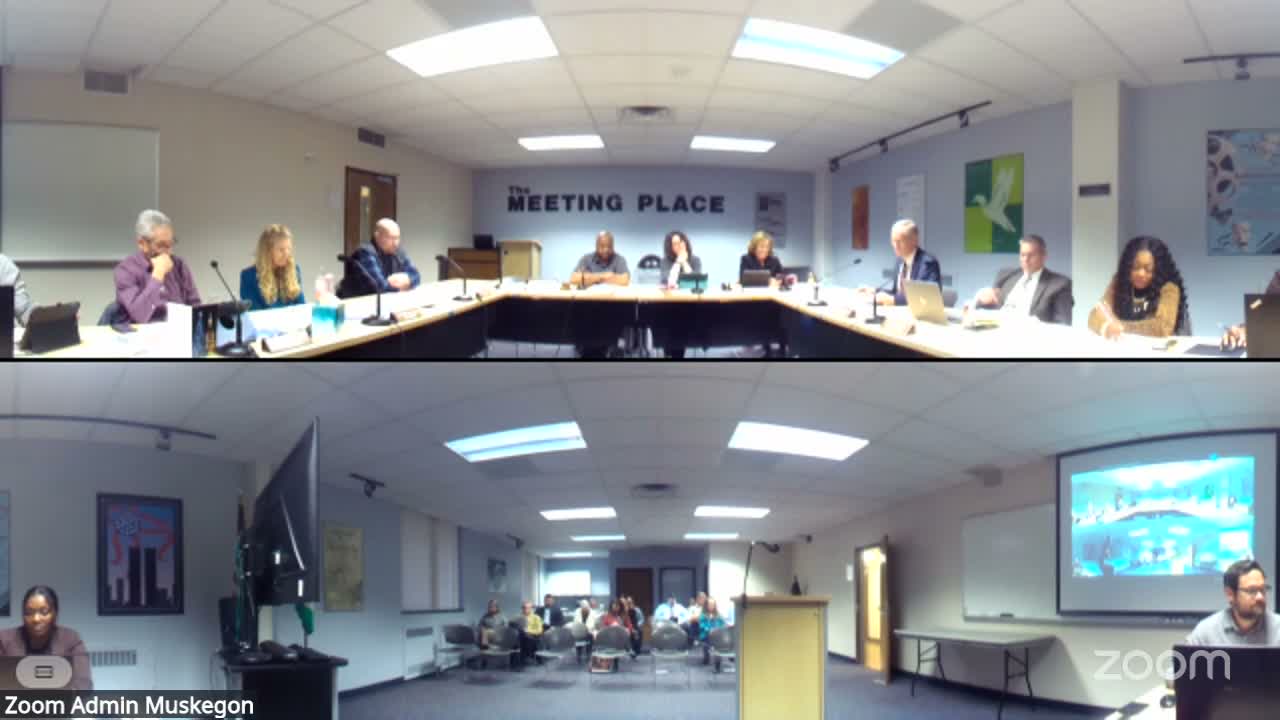
Muskegon County adopts resolution backing three Michigan bills to curb foreclosure-related scams
Summary
The board unanimously adopted a resolution supporting Michigan House Bills 51, 52 and 53, which local register of deeds staff said would block schemes that strip equity from homeowners via quick-claim deeds, post-auction surplus fraud and deceptive probate filings.
The Muskegon County Board of Commissioners voted to adopt a resolution supporting three Michigan House bills aimed at curbing foreclosure-related scams that county officials say have caused harm locally.
Bill Blasio, register of deeds, presented several examples of what he described as exploitation of homeowners in foreclosure and probate cases. He described schemes in which homeowners sign quick-claim deeds for small sums, which — according to his presentation — may strip them of rights such as redemption and the ability to collect surplus proceeds after a foreclosure sale. He also described post-auction surplus-money schemes and ghost probate filings that have, he said, targeted vulnerable heirs.
Blasio characterized House Bills 51–53 as a package: one bill would make the right to surplus proceeds and right of redemption nonassignable, another would require clear notice to homeowners before any post-foreclosure sale becomes effective, and the package also seeks to limit fraudulent probate-driven transfers. He recommended the board adopt the resolution; the board approved it by roll call.
The resolution directs county officials to support the bills and communicate backing to state legislators. The county’s action does not change state law but signals local support for the proposed statutory changes and asks state lawmakers to act to protect homeowners.