Get Full Government Meeting Transcripts, Videos, & Alerts Forever!
Get email alerts on the Open Records topic
No spam. Unsubscribe anytime.
Muskegon County commissioners uphold fee and redaction decision, deny FOIA appeal
Summary
Muskegon County commissioners voted unanimously to deny a FOIA appeal challenging an upfront deposit and potential redactions to legal invoices tied to a drain project; county counsel said attorney-client privilege can justify redactions and estimated the review fee at $187.20 with a $93.60 deposit.
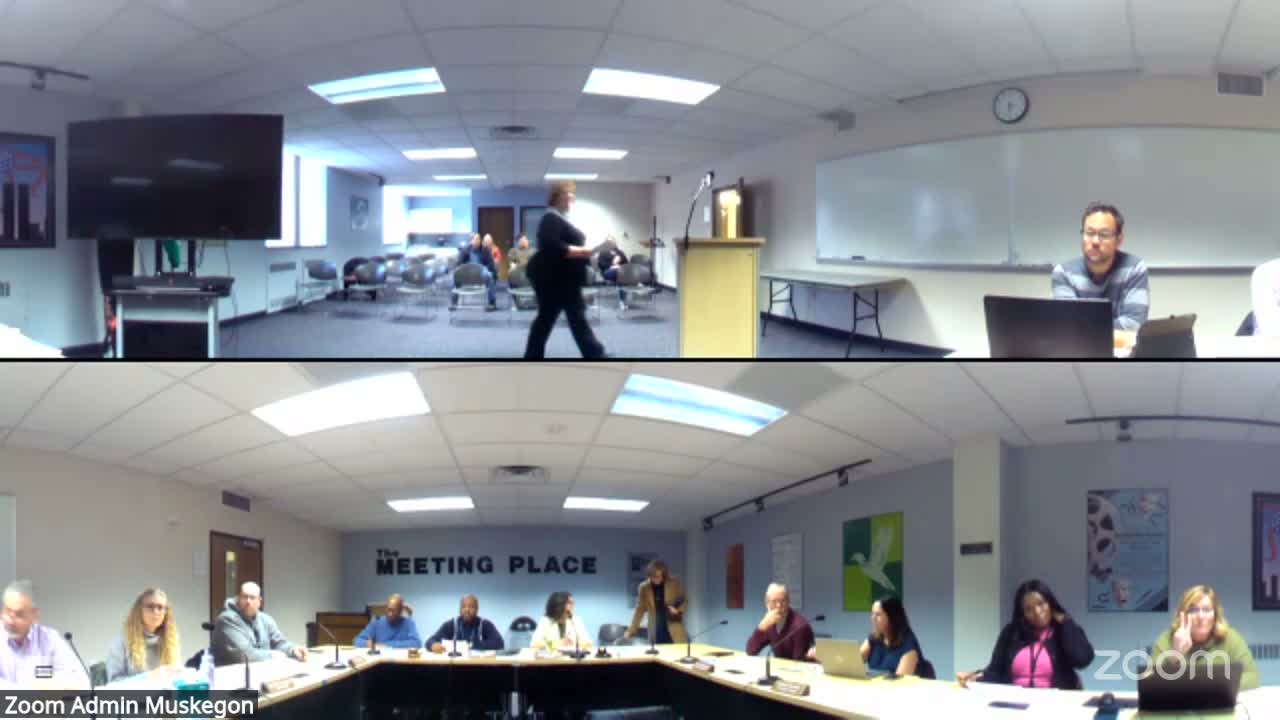
MUSKEGON, Mich. — The Muskegon County Board voted unanimously to deny an appeal challenging the county’s decision to require a deposit and to potentially redact portions of legal invoices tied to a drain project.
County legal counsel told the board that attorney-client privilege can require redaction of parts of legal bills and that it is routine under FOIA procedures to request a deposit when estimated review fees exceed $50. Counsel said the county’s estimate for reviewing the invoices was $187.20 and the requested deposit was $93.60.
The recommendation to deny the appeal came after public comment from residents who urged greater transparency. An unidentified commenter alleged repeated misinformation from former Drain Commissioner Brenda Moore about the availability of project documents and raised an apparent easement discrepancy — saying a recorded easement on her parcel listed an 8-foot width while project plans presented days earlier showed a 40-foot construction easement for the same parcel. "It causes distrust," the commenter said. "I do not take being lied to very well."
Appellant Ryan Lovers, who identified himself at the meeting as a resident of Benjamin Lake Township and the appellant in the case, told commissioners he "stands behind every part" of his FOIA appeal and that the board’s decision "matters" because the board had authority over the matter that day.
Counsel (identified in the meeting as Oya Peel) told commissioners the county had provided a retention letter showing the law firm hired to review invoices was contracted by the Water Resources Commissioner and that firm would be in the best position to identify which portions of invoices are privileged. Counsel said redactions would be limited to privileged subject matter (for example, the topic line of a legal opinion or the subject of a privileged telephone discussion) while leaving non-privileged invoice details intact.
Counsel explained FOIA fee rules: deposits may be requested only when estimated total fees exceed $50; in this case the estimate was $187.20 with a requested deposit of $93.60. Counsel also said that attorney-review rates for redaction under FOIA can be calculated at up to six times the state minimum wage for the relevant classification.
Board members conducted a roll-call vote to adopt counsel's recommendation. Commissioners Seager, Hayescamp, Herman, McAligin, Paige and Chair Nash each answered "yes." The board’s vote upheld the county’s response and denied the appeal, meaning the appellant must pay the required deposit before the county proceeds with the review and any redactions.
Counsel said the explanatory letter and the county’s formal response would be sent to Mr. Lovers as the appellant; Mr. Lovers may share those materials with other interested residents. The meeting was adjourned following the vote.
What happened next: The board did not vote to release the invoices without payment of the deposit; the appeal was denied and the county will not proceed with invoice review or production until the deposit is paid.