Lifetime Citizen Portal Access — AI Briefings, Alerts & Unlimited Follows
Bureau of Senior Services outlines $119.3 million 2027 budget, seeks spending authority and a $266,000 move supplemental
Loading...
Summary
The Western Bureau of Senior Services told the West Virginia Senate Finance Committee its proposed FY27 budget totals $119.3 million, with a 55% Medicaid pass-through and new spending authority from casino license fees to address deferred maintenance; the governor will seek a $266,000 supplemental to fund an office move.
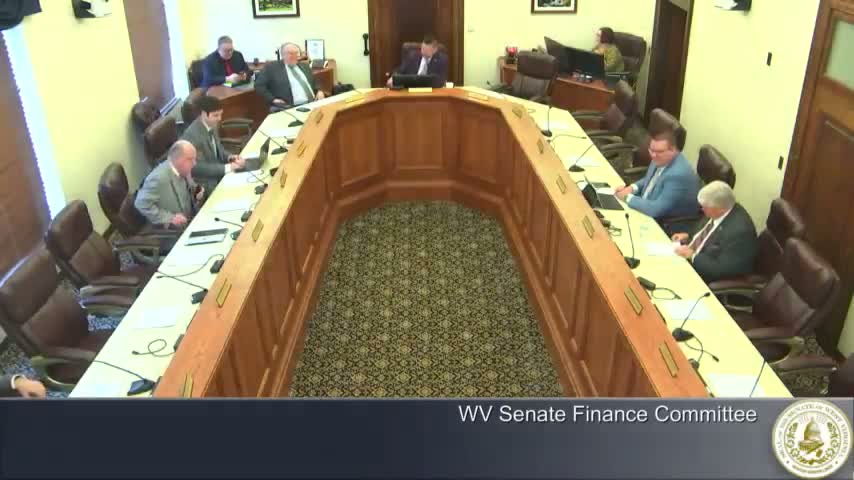
CHARLESTON, W.Va. — The Western Bureau of Senior Services presented a $119.3 million fiscal 2027 budget to the West Virginia Senate Finance Committee, saying most funding comes from dedicated lottery and casino license revenues and that more than half of the bureau's budget is a pass-through Medicaid match.
Commissioner Graves told the committee the bureau's total FY27 budget is $119,300,000 and that lottery funds account for $66,600,000 (56 percent). "Our number 1 expense is our Medicaid match. That's 55% of our budget," she said, adding that roughly $65.7 million is transferred to the Department of Human Services to fund the age-and-disabled waiver and Medicaid personal care programs.
Graves said direct services — meals, in-home personal care, respite, transportation and ombudsman services — make up about 45 percent of the bureau's budget. Program-by-program figures included a $17 million meals program (including a $9.6 million legislative initiative to support senior centers), $8.6 million for Lighthouse in-home personal care, about $4.5 million in Older Americans Act supportive-services funding and $3.3 million for Alzheimer's respite (FAIR). She said recent service volumes (2024 data) include roughly 1.45 million home-delivered meals, 548,000 congregate meals and 513,000 Lighthouse personal-care units.
On proposed changes, Graves said the bureau has an increased spending authority in its community-based services account, funded from casino license fees, to address deferred maintenance at senior centers and to phase in replacement of an obsolete federal reporting system. "As I save money in this account ... I'm gonna try to replace their very antiquated reporting system," she said.
Graves also said the governor plans to introduce a fiscal year 2026 general revenue supplemental appropriation to cover the bureau's move out of its current mall location. The supplemental request is capped at $266,000, which Graves said reflects an estimate from the real estate division; the move, she said, will reduce rent burdens and improve accessibility and parking for seniors. "We're gonna save money by moving out of the mall," Graves said, while acknowledging the legislature's long-standing operational funding constraints.
On administrative details, Graves said the bureau has 34 positions with 29 filled and administrative costs of about $1,550,000 (approximately 1.3 percent of the total budget). She described a $417,000 fund shift from lottery to general revenue to preserve federal matching dollars and a $781,000 reappropriation in fund 5405, of which $350,000 went to additional nutrition programming and $431,000 to in-home services.
Committee members questioned the bureau on nutrition-program cuts that followed federal reductions. The senator for Randolph asked how the bureau could offset a roughly $600,000 federal cut; Graves said $350,000 was identified through careful in-year spending and had been earmarked for area agencies on aging. She cautioned that local senior-center impacts vary because area agencies disperse funds according to formulas and local factors.
Senators also pressed Graves on the office move and rent savings, noting the bureau currently pays roughly $16,000 a month at the mall while the move was projected to save about $10,000 a year; Graves said she was comfortable with the new lease terms because of proximity, parking and accessibility concerns for seniors. She reassured the committee that programs such as the Silver Haired Legislature and the Alzheimer's hotline will continue at full funding, though some line items were consolidated into current expenses to realize operational efficiencies.
There were no fiscal-year 2027 improvement requests from the bureau. After questions, the committee approved the previous meeting's minutes and later adjourned.
The committee did not take any formal votes on the bureau's FY27 budget during the hearing. The governor's supplemental request to fund the move is to be introduced by the governor's office and would proceed through the normal appropriation process.