Get Full Government Meeting Transcripts, Videos, & Alerts Forever!
Get email alerts on the Health Insurance topic
No spam. Unsubscribe anytime.
House advances bill on mental-health parity, step therapy and facility-fee transparency
Summary
The House debated substitute Senate Bill 10, expanding reporting and enforcement for mental-health parity, removing step-therapy for MS and rheumatoid arthritis, protecting anesthesia coverage and applying Connecticut's unfair trade practices act to facility-fee violations; the chamber adopted amendments and advanced the bill.
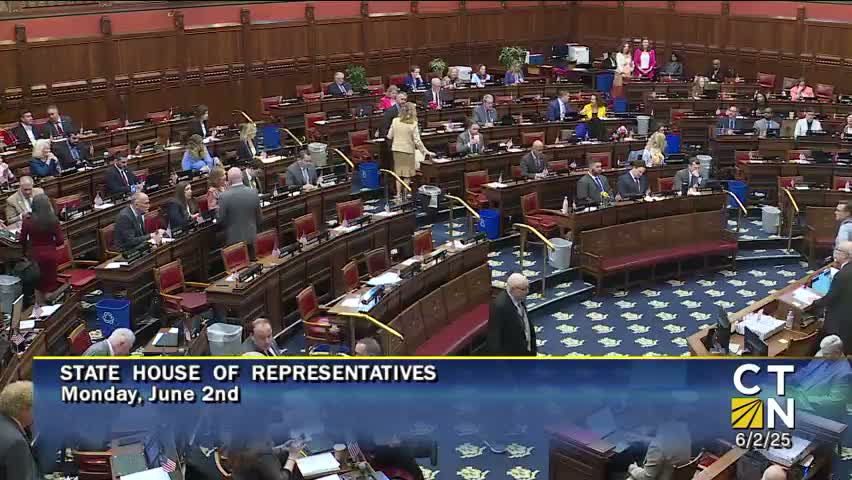
The House considered substitute for Senate Bill 10, a broad health-insurance package. Representative Wood, chair of the Insurance and Real Estate Committee, said the measure strengthens mental-health parity by requiring additional reporting to the Department of Insurance and creates new penalties for carriers that deny parity protections. "We are making sure health carriers are in compliance with our very important mental health parity laws here in Connecticut," she said on the floor.
Key provisions discussed on the floor included:
- Mental-health parity reporting: carriers would file additional data with the Department of Insurance and certify compliance; penalties up to $100 per member capped at $625,000 were discussed as new fines for noncompliance.
- Step therapy changes: the bill removes step-therapy requirements for multiple sclerosis and rheumatoid arthritis treatments and removes sunset dates for certain mental-health medications. Lawmakers debated anticipated cost impacts for state employee plans and municipal partnership plans. Representative Wood said the state had heard testimony that the process was “cumbersome” for patients in urgent need.
- Anesthesia protections: language would prevent carriers from imposing time limits on anesthesia coverage; sponsors said testimony showed providers had raised alarm over recent carrier practices.
- Facility fees and COPTA enforcement: the bill would treat certain off-campus facility-fee violations as unfair trade-practice (CUPTA) violations, enabling the attorney general to pursue enforcement as well as OHS fines.
Members offered a house amendment that would strike two sections giving the insurance commissioner discretion to reduce proposed rate increases in certain benchmark-triggering circumstances; the amendment failed on a roll-call vote. After extensive discussion, the chamber adopted an amendment from the floor and moved the bill forward in concurrence with the Senate.
What happens next: The measure advanced out of the House after amendment votes and will proceed to the Senate for final action.