Get Full Government Meeting Transcripts, Videos, & Alerts Forever!
Get email alerts on the State Budget topic
No spam. Unsubscribe anytime.
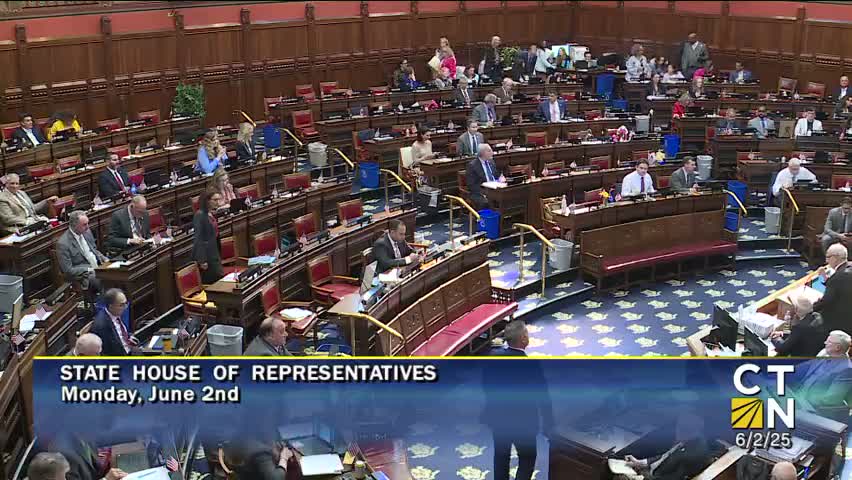
Connecticut House passes emergency-certified biennial budget after hours of debate
Summary
The Connecticut House passed an emergency-certified biennial budget after extended debate and multiple roll-call amendments. Supporters said it increases investments in children, Medicaid rates and special education; opponents warned it weakens long-term fiscal guardrails and shifts volatile revenue into ongoing spending.
The Connecticut House voted to pass an emergency-certified biennial budget that the majority’s leaders said preserves key investments in children, Medicaid and special education while making adjustments to fiscal rules to free up revenue for near-term priorities. Representative Walker, chair of the Appropriations Committee, framed the bill as “the single greatest investment in children that I have seen since I’ve been up here in Hartford,” and urged colleagues to approve the package.
The bill contains increases in Medicaid support, including an item labeled by advocates as “Medicaid rate increases” and targeted funding for federally qualified health centers. It also adds roughly $221 million over the biennium for special-education excess costs and a seed grant to expand special-education services, funding for early-childhood programs and new supports for nonprofit providers.
Opponents pressed the majority on fiscal sustainability. Ranking members said the package substantially alters the state’s volatility rules and uses one-time and volatile revenue as recurring spending. Representative Paletta said the changes would “bring us back” from the bipartisan fiscal progress of recent years because they reduce the amounts available to pay down pension and other long-term liabilities.
Lawmakers debated many amendments on the floor. Members from both parties offered changes that would reallocate funds among priorities; the House rejected a number of roll-call amendments that would have redirected Medicaid funding to other programs. Budget leaders defended choices as necessary to protect vulnerable residents in light of federal uncertainty and to keep core programs funded.
The legislature’s finance officers and committee chairs repeatedly told the chamber the bill remains under the current spending cap in year one and year two arithmetic shown in the document, but several members said the net effect of revenue shifts and contingency language created long-term risks.
The bill passed in the House with the required emergency-certified majority and will go to the Senate for its action. Supporters said implementation and oversight provisions in the bill will guide further program design; critics said the state should preserve the guardrails that drove recent fiscal gains before expanding recurring spending.
What happens next: the Senate must consider the measure and any changes it makes could prompt further reconciliation before a final enacting package is agreed and sent to the governor.