Get Full Government Meeting Transcripts, Videos, & Alerts Forever!
Get email alerts on the Public Safety topic
No spam. Unsubscribe anytime.
Sheriff urges county to fund substations, 911 center and training; board backs regional 911 planning
Summary
Yavapai County Sheriff David Rhodes told supervisors the sheriff’s office has had no capital investment in decades and requested substations in Seligman/Ashfork, Oak Creek and Congressional areas, a new 911/dispatch center and technology upgrades. The board directed staff to pursue a regional 911 approach and consider funding options.
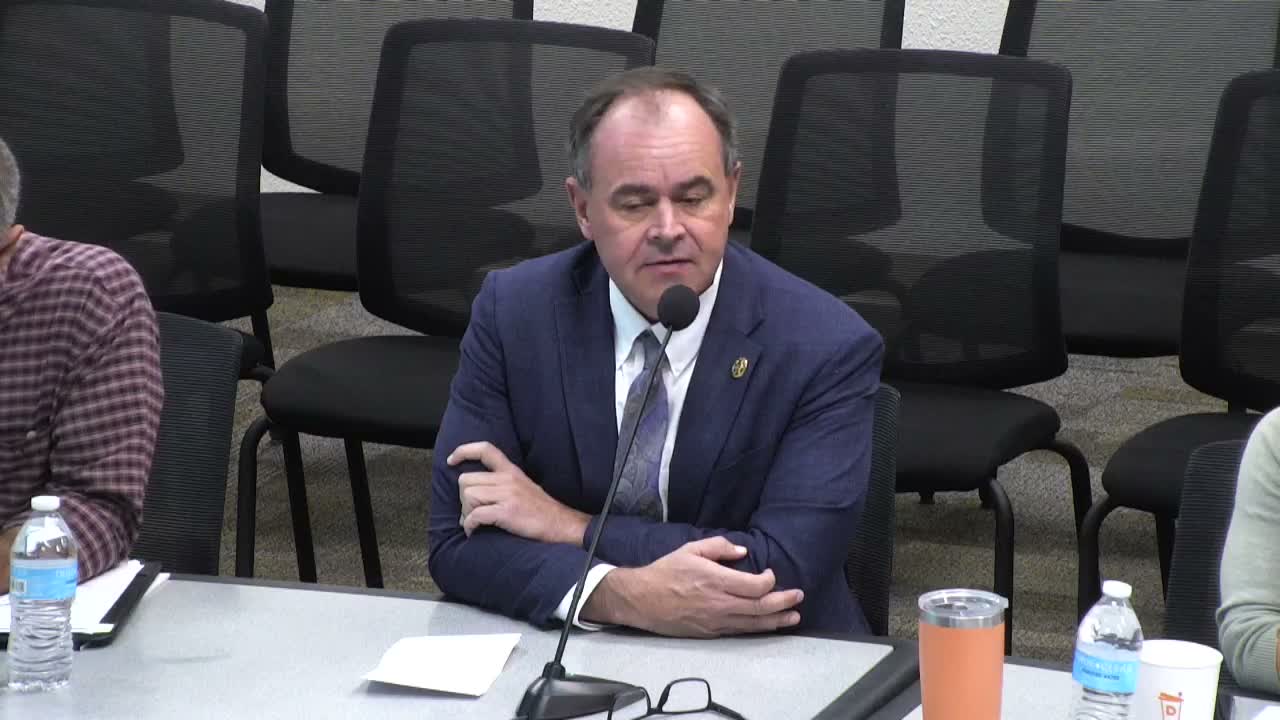
PRESCOTT — Sheriff David Rhodes told the Yavapai County Board of Supervisors that law‑enforcement capital and technology needs have gone unmet for 31 years and urged the board to accelerate investments.
“The sheriff’s office has not had any capital improvements in the law enforcement division in my career,” Rhodes said, and asked the board to prioritize several projects: rural substations (Seligman/Ashfork, Oak Creek, southwestern areas such as Congress/Peoples Valley), a secure Gurley Street public‑safety facility with a regional 911/dispatch center, co‑located training capacity (a larger regional academy) and an updated emergency operations center. He also recommended county‑wide radio and records system upgrades.
Rhodes framed substations as both a service and a civic signal — tangible “safe places” where residents and deputies meet — and said better local facilities would reduce response times and strengthen community trust. He also described high rates of 911 call transfers in rural areas and argued for consolidation and interoperability to ensure callers reach the right dispatcher without repeated transfers.
Board members agreed regional 911 and improved emergency communications should be a strategic result. Vice Chair Compton and others said rural substations could be relatively low‑cost, near‑term projects and suggested co‑locating county services with fire or other local partners to improve efficiency.
The board asked staff to include public‑safety capital and communications in the forthcoming implementation roadmaps and to work with municipal and tribal partners on regional dispatch and redundancy plans. The board also instructed staff to include public‑safety priorities in the county’s capital improvement planning so projects can be sequenced and tied to financing options.
What’s next: staff will develop implementation timelines, estimated costs and funding options for the requested substations, a new Gurley Street/911 facility and technology upgrades; these will be presented to the board during the implementation planning phase in September.