Get Full Government Meeting Transcripts, Videos, & Alerts Forever!
Get email alerts on the Economic Development Auto Center topic
No spam. Unsubscribe anytime.
Cathedral City weighs financing options to support Auto Center businesses
Summary
Council members reviewed a strategic framework for supporting the Cathedral City Auto Center — from low-cost beautification to larger financing tools such as assessment districts, CFDs and EIFDs — and asked staff to return specific project options and price estimates at the strategic planning session.
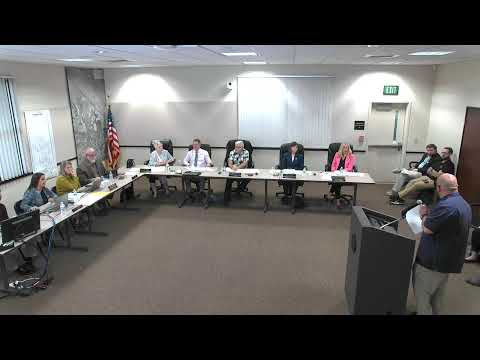
Cathedral City council members spent the study session probing ways the city can protect and grow the Cathedral City Auto Center, a long-standing cluster of dealerships the chamber described as a major local revenue source.
The council examined whether city investments should focus on retaining existing dealers or attracting new ones and how much of the up-front cost should fall to the city versus private industry. Presenter staff described the SWOT analysis as "a guiding document to look at what the returns are on those investments and really look at what the community benefit is that's coming out of those investments," and said detailed benchmarks and cost estimates will be developed as part of the upcoming strategic planning session.
Much of the discussion centered on the types of infrastructure projects that might deliver visible returns: signal improvements, monument and entryway signage, hardscape and landscaping along Highway 111 and adjacent corridors. Staff cautioned that projects vary in scale and financing: stoplights and safety projects are typically capital investments while repainting and signage can be low-cost, short-term actions. Council members asked for specific price tags and cost scenarios so the city can weigh general-fund impacts against potential increases in sales tax and tourism.
Council members also discussed financing mechanisms. Staff outlined two paths: creating an internal assessment district for the auto dealers to fund marketing and common landscaping, or pursuing a larger financing vehicle — a community facilities district (CFD) or an enhanced infrastructure financing district (EIFD) — to capture tax increment for high-cost hardscape improvements. "With the CFD or EIFD you could actually utilize the money to really do a lot of the hardscape improvement," a staff speaker said during the presentation.
Public comment from Andy Jessup, speaking for the Cathedral City Auto Center, stressed the district's economic role and urged beautification measures to preserve first impressions along 111. "You're the biggest revenue, source of any city, with this auto center," Jessup said, urging collaboration so dealers do not lose sales to neighboring cities. Council members complemented that appeal and asked staff to provide 3–4 prioritized project options with estimated costs (an example for what the city could do with $50,000 versus larger sums) so the council can make informed tradeoffs.
The council did not take formal action. City Manager confirmed staff has enough direction to incorporate the Auto Center priorities and requested cost and return-on-investment data into the February strategic planning session, where council will be asked to prioritize a short list of projects and funding approaches.