
Nevada revenue panel probes Vegas Loop’s hybrid operations and tax treatment
Get AI-powered insights, summaries, and transcripts
Subscribe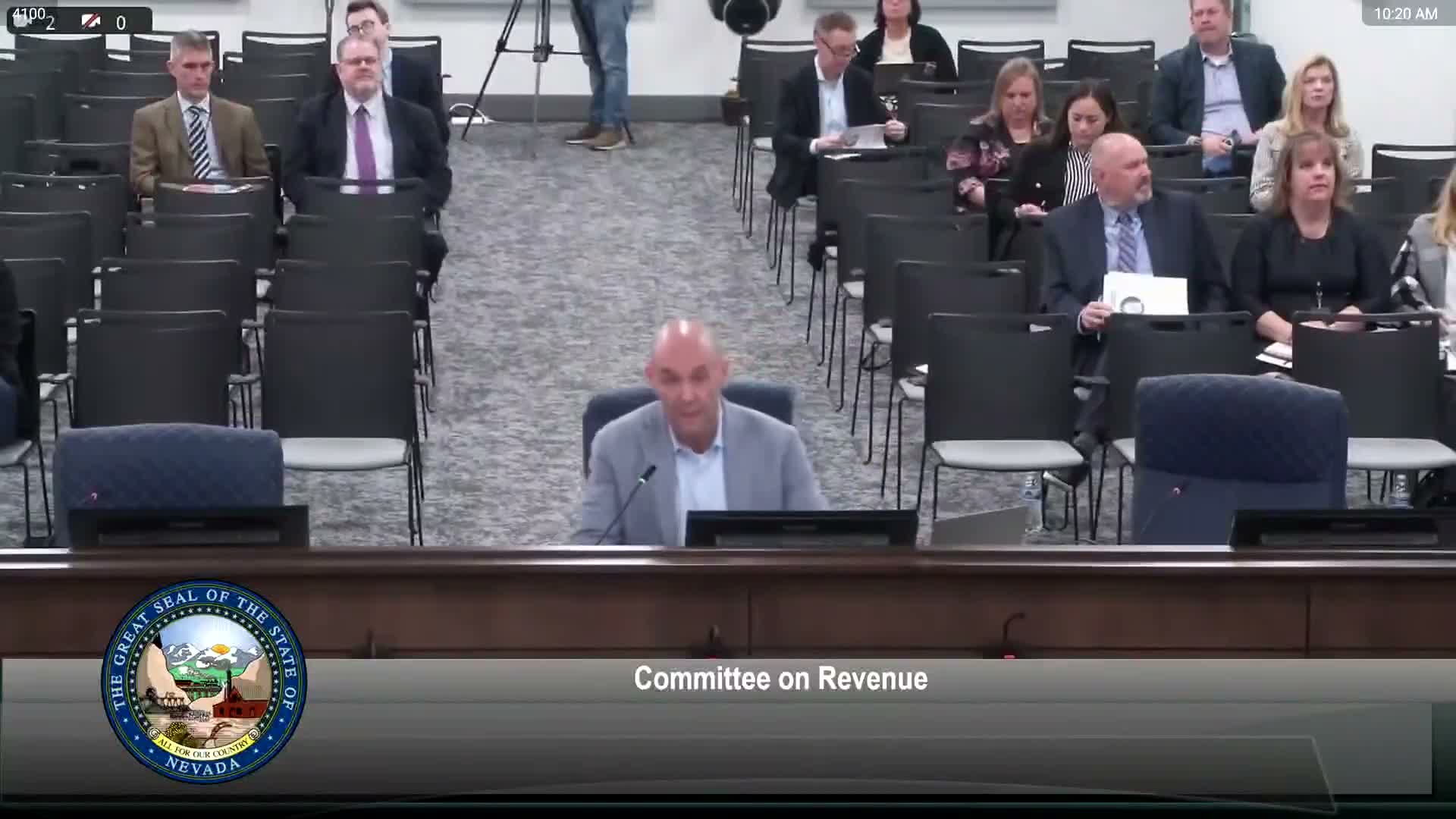
Summary
Lawmakers pressed LVCVA and the Nevada Transportation Authority on whether above-ground airport trips by the Vegas Loop should be treated as monorail, a limousine-style special service or a transportation network company — a classification with direct state tax implications and pending litigation that limits agency comment.
Chair Hazel Neal and members of the Joint Interim Standing Committee on Revenue spent the session’s key presentation probing whether the Vegas Loop’s temporary above-ground airport trips change its legal and tax status.
Ed Finger, chief strategy officer for the Las Vegas Convention and Visitors Authority, told the committee the Boring Company’s airport operation began limited service in the last days of December. “It’s been a fairly limited time measured in weeks or a few months,” Finger said, describing the convention-center portion of the system as tunnel-first and privately funded.
Nevada Transportation Authority Chair Vaughn Hartung said the NTA treats surface segments that use public right-of-way as a special-service, limousine-style operation, not a TNC. “It does not connect to passengers through a digital network,” Hartung said, adding the authority issued a limited certificate of public convenience and necessity (CPCN) with geo-fencing and per-capita fares that require the trip to “touch a tunnel.”
Committee members pressed whether that above-ground behavior triggers the 3% transportation-connection excise tax enacted in statute. Fiscal staff noted the excise is codified in separate sections of NRS chapter 372B for TNCs, AVNCs (autonomous vehicle network companies), common carriers and taxis; the department that administers tax policy (Department of Taxation) was not present to give a final interpretation.
The NTA’s administrative attorney, Yoni Wilburn, declined to discuss the agency’s application process or internal classification decisions because the matter is the subject of a pending district court judicial-review petition. “These questions seem to be getting into the application process we went through and how we approved the application,” Wilburn said, warning that discussing those details could affect the court process.
The exchange underscored a split in regulatory roles: the DMV handles autonomous-vehicle testing permits, the NTA authorizes surface passenger services when trips contact public streets, and Clark County’s franchise agreement governs underground tunnel infrastructure. Chair Neal told members she will request Department of Taxation and DMV briefings for future meetings to resolve whether any revenue is owed and if statutory changes are needed.
The committee did not take formal action; members signaled they plan follow-up briefings from tax and DMV officials and may consider statutory clarification during the interim.