Get Full Government Meeting Transcripts, Videos, & Alerts Forever!
Get email alerts on the Municipal Finance topic
No spam. Unsubscribe anytime.
Council approves code change allowing payment-processing fees to be passed to users; language to be refined before second reading
Summary
On first reading council approved Ordinance 48-20-25 to let the city pass payment-processing fees (e.g., $0.50 + 0.5% plus card-network charges) to the payer instead of the city; councilors and residents pressed for clearer consumer-facing language and fee caps before the ordinance's second reading.
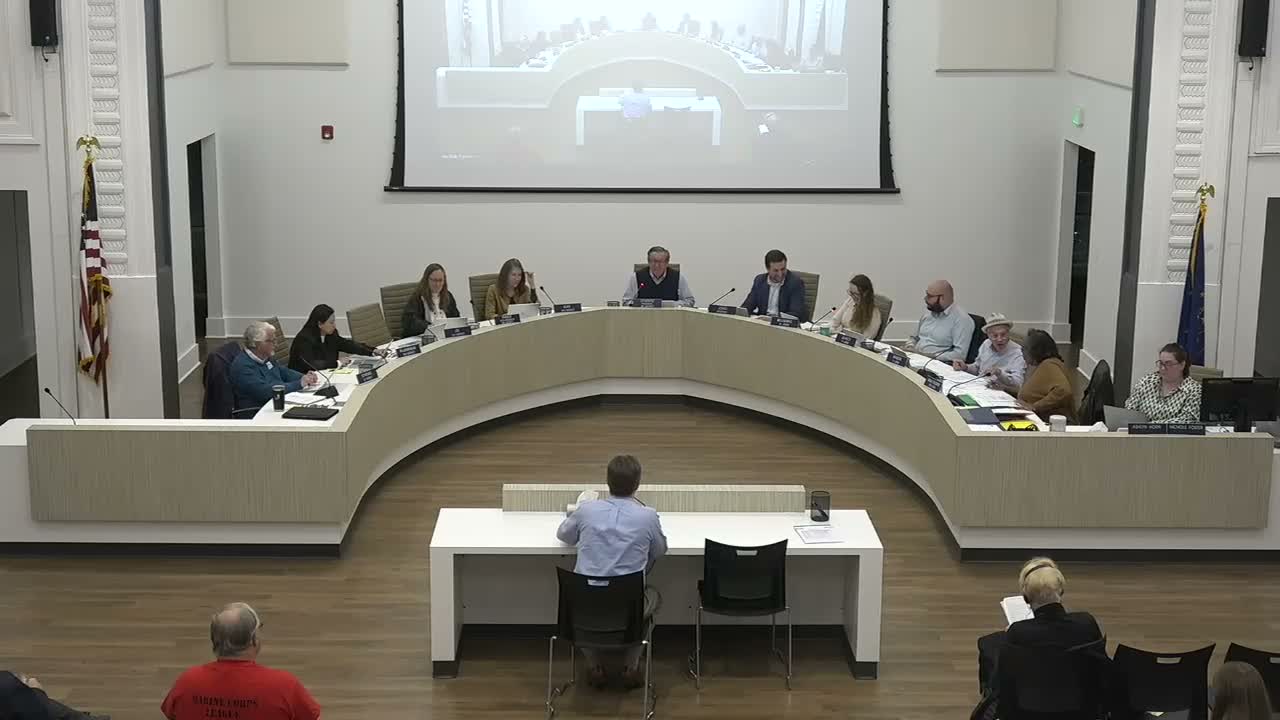
The council on Nov. 3 approved the first reading of Ordinance 48-20-25, which amends the city code to allow the city to pass payment-processing fees to the person using credit/debit cards or other electronic payment methods, and makes changes to trash-fee administration for residents away three months or longer.
City Controller (first introduced as Peter Grama) explained the driver for the change: rising card fees paid by the city. He said the city’s processor (Tyler Technologies/NIC) charges the city $0.50 per transaction plus 0.5% of the transaction, and that additional card-network charges can be passed through. “In 2024 ... we paid just over $177,000 in credit-card fees,” the controller said, and added that ACH debits and in-person cash/check payments would not carry extra fees.
Councilors and members of the public pressed for clearer language in the code so residents understand who pays fees and how those fees are calculated. Concerns included the potential burden on fixed-income residents and the need for online portal transparency showing exact fees at checkout. One resident warned that a large permit charged by credit card could yield a sizable fee, and urged the council to avoid surprising consumers.
Staff and council members agreed the item requires two readings and that language can be amended before the second reading; the council voted in favor on the first reading (roll call 8–0) and directed staff to refine the ordinance’s wording and public-communication plan ahead of the second reading.