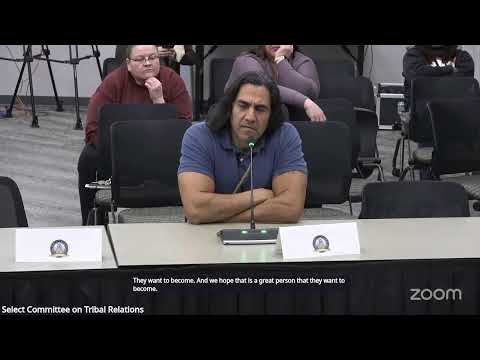
Fremont County juvenile services and tribal court urge investment in local prevention and treatment
Loading...
Summary
Juvenile-justice leaders from Fremont County and Northern Arapaho Department of Family Services described high volumes of youth drug-and-alcohol cases, limited in‑county treatment/detention capacity and the need for family‑focused, culturally grounded prevention and local facilities to avoid sending children far from home.
County and tribal juvenile‑justice officials told the Select Committee on Tribal Relations that drug‑ and alcohol‑related offenses account for a majority of juvenile citations and that local systems lack detention, treatment, and preventive programming to meet needs.
Hattie Calvert, assistant director of juvenile justice services for Fremont County, said youth services processed 258 misdemeanor citations in 2025, of which 147 were drug‑and‑alcohol citations, including five juvenile DUIs. Calvert described a diversion and day‑reporting system that can accommodate 12 students per semester and emphasizes supervision, urinalysis and case planning, but noted there is no local juvenile detention facility.
Sage Goff, director of treatment courts, said the county maintains adult and juvenile treatment courts but lacks a therapist position needed to run juvenile treatment programs; without adequate staffing, placements and local treatment, juveniles are sent to facilities many hours away. Northern Arapaho Department of Family Services representatives described tribal diversion programs, plans to introduce moral‑recognition therapy locally and to expand culturally relevant programming to engage families.
Judge Marie Muslam, interim chief judge of Wind River Tribal Court, urged holistic, family‑based approaches and culturally grounded healing rather than relying primarily on out‑of‑county placements. Panelists and multiple public commenters urged investment in prevention activities, recreation and programs to keep youth engaged locally.
What the committee heard: leaders asked for coordinated funding and collaboration across state, county and tribal systems to build local capacity — from early childhood supports to treatment‑court staffing, inpatient/outpatient placements closer to home and culturally tailored prevention programs.
Next steps: DFS and task‑force representatives offered technical assistance and encouraged continued cross‑jurisdictional planning to identify funding sources and program models to pilot local services and a potential youth‑wellness court.