
State regulator, tribal liaisons and committee discuss problem gambling, self-exclusion and cross-jurisdiction coordination
Get AI-powered insights, summaries, and transcripts
Subscribe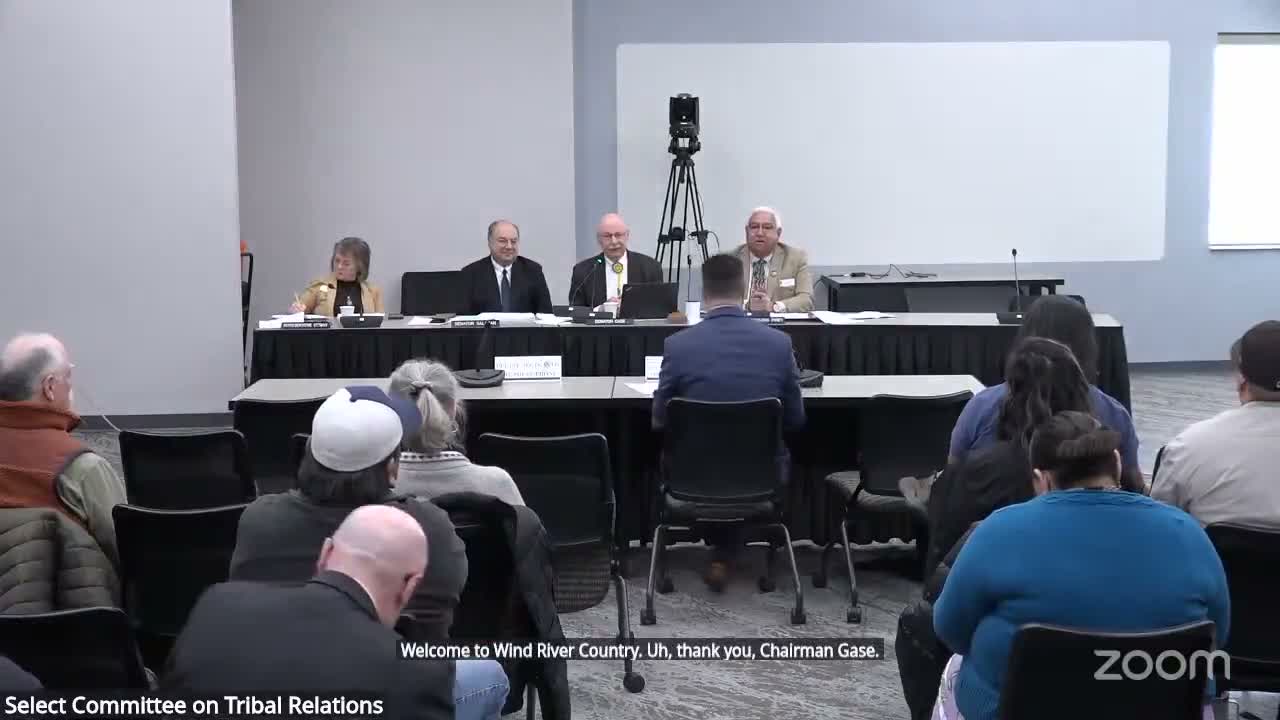
Summary
Wyoming Gaming Commission told the Select Committee that it does not regulate tribal gaming but offers problem-gambling resources for state-regulated facilities and participates in a national self-exclusion program; tribal leaders and committee members discussed local self-exclusion lists, confidentiality, and possible voluntary data-sharing with tribal gaming commissions to better protect problem gamblers.
The Wyoming Gaming Commission and tribal liaisons briefed the Select Committee on Tribal Relations on Feb. 2 about problem-gambling prevention, voluntary self-exclusion programs and limits to state jurisdiction over tribal gaming.
"The Wyoming Gaming Commission... we don't regulate or oversee any gaming that takes place on tribal on the tribal lands," Nick Laramendi, executive director of the Wyoming Gaming Commission, told the committee, underlining the jurisdictional boundary between state oversight and tribal-regulated gaming.
Laramendi said the commission regulates off-reservation gaming (historic-horse-racing terminals, skill-based amusement games, online sports wagering and charitable gaming) and enforces illegal-gaming statutes. He described problem-gaming resources required or encouraged at state-regulated locations: visible problem-gaming materials, QR codes that link to a responsible-gaming page, and Kindbridge, a telehealth service that provides a free intake and four clinical hours at no charge.
The commission has also joined the National Voluntary Self-Exclusion Program, Laramendi said, allowing individuals who opt in to be excluded across multiple jurisdictions and operators. "With the national voluntary self exclusion program... we can get people to self exclude from neighboring states," he said; the program shares lists across jurisdictions only when the person opts to permit sharing.
Tribal presenters and committee members described tribal casino practices: tribal gaming commissions maintain their own ban or flag lists and their security staff will ask flagged individuals to leave. Committee members asked whether self-exclusion lists could be shared voluntarily between the state and tribal gaming commissions to improve protection for individuals who travel across jurisdictions; Laramendi said he would explore working with tribal partners and the lottery office to expand voluntary alignment, while respecting confidentiality and the tribal commissions' regulatory independence.
Why it matters: legislators and tribal liaisons emphasized that problem gambling has tangible harms in families and communities. Committee members sought information on advertising and outreach to reach people who might not seek help, and asked whether probation or other judicial conditions could require exclusion in specific cases; Laramendi said that formality would be a judicial decision in probation conditions.
What happens next: the Gaming Commission offered to gather additional information for the committee and to explore voluntary options to make the national self-exclusion program more usable across state and tribal operators while preserving tribal regulatory autonomy and individual consent.