Get Full Government Meeting Transcripts, Videos, & Alerts Forever!
Get email alerts on the Economic Development topic
No spam. Unsubscribe anytime.
Wind River groups outline $36 million EDA plan and immediate projects to boost reservation economy
Summary
Wind River Development Fund and Wind River Sage Fund told the Select Committee on Tribal Relations they will use a $36 million federal EDA recompete grant, plus other grants and philanthropy, to fund two major facilities, outdoor-recreation upgrades, and lending to tribal entrepreneurs; presenters also described lending growth and operational challenges tied to trust land and reimbursement grants.
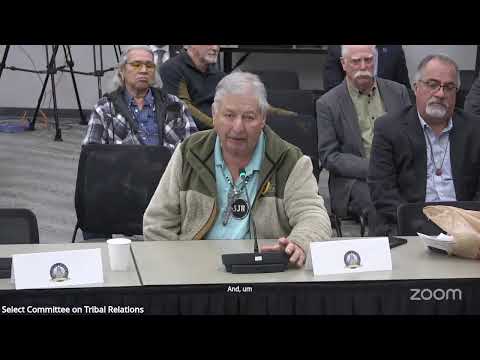
Wind River Development Fund leaders told the Select Committee on Tribal Relations on Feb. 2 that a $36 million Economic Development Administration (EDA) recompete award and other grants will fund a mix of capital projects and lending programs aimed at reviving the reservation economy.
"We were very, very fortunate to be 1 of only 6 in the country to be awarded a grant for $36,000,000," Paul Huberty, executive director of the Wind River Development Fund, said, describing the grant as a community-driven opportunity rather than a top-down plan.
The committee heard that the Wind River Sage Fund — a nonprofit controlled by WRDF and designated to implement the EDA award — will lead construction of two anchor facilities: a Tribal Buffalo Center and a Tribal Fish and Game ecotourism headquarters. Project staff said those facilities are in design and that construction is targeted for the third and fourth quarters of 2026.
Why it matters: committee members and tribal speakers said the reservation faces severe economic gaps — low per-capita income, lower educational attainment and health outcomes — and that coordinated investment could create local jobs and infrastructure. The WRDF presenters framed the EDA grant and complementary $4 million outdoor-recreation awards as a package of place-based investments tied to workforce, food sovereignty, and land-use planning.
Supporting details: Erica Yarber, chief operating officer of WRDF, gave specific lending and program figures: "Right now we have 31 small business loans. Our loan portfolio is $3,600,000, and our average loan size jumped from $70,000 last year to a $134,000 this year. Our average interest rate is 6.5%." WRDF said its technical-assistance work reached more than 300 individuals in the previous year and that its CDFI partners in the Mountain Plains Coalition have deployed substantial revolving capital across tribal communities.
Fund mechanics and risks: presenters repeatedly noted that many of the grants are cost-reimbursement awards. As Leslie Shakespeare, chief implementation officer, said, "the recompete $36,000,000 and the $4,000,000 (outdoor recreation) sounds nice, but it's all cost reimbursement. If we don't have the ability to spend money upfront, these grants are basically pointless." WRDF staff said philanthropy and foundation support have been used to bridge cash-flow needs while projects proceed.
Questions and constraints: legislators pressed WRDF on barriers for small startups, the difficulty of developing on trust land and whether businesses can find rentable spaces. Presenters acknowledged that fee-to-trust processes and infrastructure gaps increase cost and delay, and they recommended incubator spaces and business-ready infrastructure as ways to reduce startup friction. On the Buffalo Center, WRDF said the EDA grant funds construction and that they are not lending money for that specific facility.
Public input and governance: during public comment, Eastern Shoshone community member Diana Mitchell asked the committee and WRDF to prioritize restoration of Chief Washakie Hot Springs and requested $150,000 for demolition work. Mitchell also urged WRDF and partners to present project plans to the Shoshone General Council, noting the council’s legal authority over fishing and game, enrollment, attorney contracts and law-and-order code.
What happens next: WRDF said it will continue design work, begin procurement and prepare for groundbreakings in 2026 while coordinating with tribal partners on governance and site-selection. The committee reserved further discussion, including Wind River Development Fund oversight and the health-care agenda, for its afternoon session.