
Anderson council approves first readings of electric rate and bond ordinances after debate on timing and transparency
Get AI-powered insights, summaries, and transcripts
Subscribe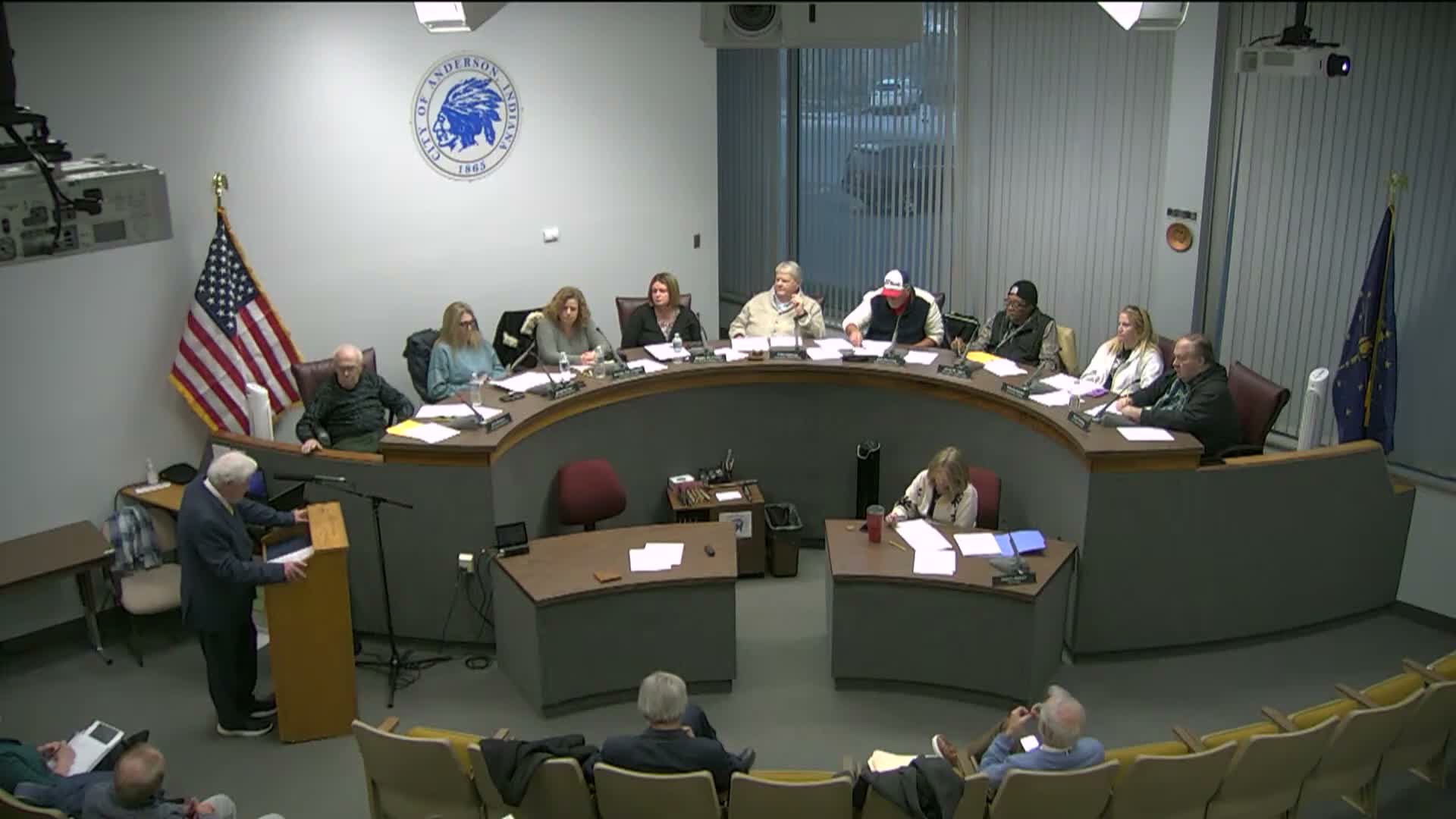
Summary
The Anderson City Council gave initial approval to an electric rate ordinance and an electric-bond ordinance, citing aging infrastructure and a need to shore up operations; proponents said the package would raise revenue by 12.58% overall (13.5% for many residential customers), while some council members and residents urged more long-term planning and protections for low-income customers.
The Anderson City Council gave initial approval Jan. 22 to an ordinance proposing a 12.58% increase in electric revenue and a bond ordinance authorizing up to $5.3 million in borrowing to fund capital improvements.
Mayor Tom Broderick told the council the package is intended to shore up the electric utility’s finances and reliability after nearly two decades without meaningful revenue increases, saying, “The overall total rate increase of that would be 12.58%… residential customers… would be 13.5%.” He said the revenue and the bond would repay a $7 million redevelopment loan and fund substation, transmission and equipment upgrades to reduce outages.
Why it matters: City staff and consultants told the council that prolonged underfunding has left substations, breakers and direct-buried cable at or past their expected lives, increasing outage risk. Jennifer Wilson, who prepared the revenue-requirement analysis, said the test year used for the filing was 2024 and that the study shows a need for a 12.58% revenue increase to restore operating coverage and fund capital. “We’re needing a 12.58% increase in revenue,” Wilson said in her presentation.
What was proposed and how it affects customers: The ordinance introduced as 2-26 would change rate design by class; staff said a typical residential customer using 800–1,000 kilowatt-hours would see a monthly bill rise in the range of roughly $12–$18, and the monthly facilities charge would rise from $9.86 to $12.50. Staff also described capital items for the electric utility totaling as much as $19.6 million in identified needs, including breakers, a second transmission feed, vehicles and meter and communications upgrades.
Debate and dissent: Several council members urged caution and asked for more transparency and a multiyear plan before voting. Councilor Turner read a prepared statement saying he “support[s] reliable utility services and [bond] compliance, but I cannot approve a rate increase brought forward under a last-minute bond related pressure without a documented multiyear financial and capital plan” and initially sought to abstain. The council’s attorney and clerk reviewed local rules and Robert’s Rules of Order, confirming that an abstention by a member present is permitted and does not count as a yes or a no.
Vote and next steps: The council conducted a first-reading vote on Ordinance 2-26 and, after a change of vote on the record by one councilor, the clerk recorded five affirmative votes and the council declared the ordinance passed its first reading. The bond ordinance (3-26) authorizing up to $5.3 million also passed initial reading by roll call. Chris Janek of Bose McKinney & Evans and council staff said the council’s action authorizes staff to proceed with required regulatory filings to the Indiana Utility Regulatory Commission (IURC); the IURC ultimately reviews and sets electric rates for utilities under its jurisdiction. Janek noted a local public hearing will be held as scheduled and that the IURC process for electric rates is separate and typically follows the city’s introduction and local hearings.
Voices from the public: Members of the public questioned how much of the increase would pay operating shortfalls versus capital improvements and asked what protections exist for fixed-income residents. One attendee asked bluntly whether most of the proposed increase was covering operating shortfalls rather than new equipment; staff responded that debt service tied to bonding would represent only a small portion (staff cited bonding representing an estimated ~2% of total revenues in the electric plan) and that a substantial portion of the increase restores operating reserves and funds capital needs.
What happens next: The electric ordinances proceed to a public hearing and subsequent second and third readings on the council’s announced schedule; the IURC review process for the electric rate filing will follow and can take many months. The council’s vote tonight was an initial reading and not a final adoption of rates.