
Delaware panel hears broad debate on bill to make PSC vet 100-MW-plus energy users
Get AI-powered insights, summaries, and transcripts
Subscribe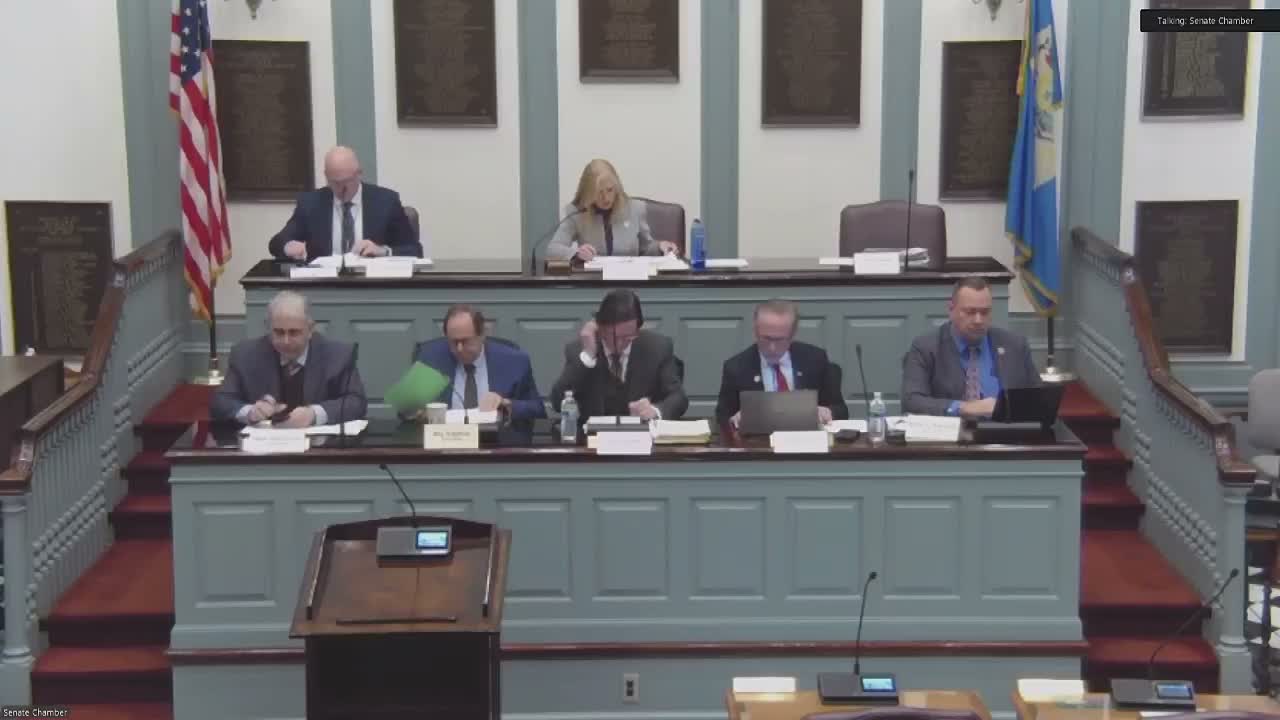
Summary
Senate Energy Committee sponsor Senator Stephanie Hansen presented SB 205 to require Public Service Commission certificates for projects that interconnect to Delaware's transmission system and use 100 megawatts or more; lawmakers and dozens of public commenters split between protecting ratepayers and concerns about job loss and competitiveness.
Senator Stephanie Hansen, chair of the Senate Energy Committee, opened a Jan. 28 hybrid hearing on Senate Bill 205, saying the measure would require an entity that wants to take 100 megawatts or more from Delaware's transmission system to obtain a certificate to operate from the Public Service Commission before interconnecting.
Hansen framed the bill as a response to "mega" projects that can move large amounts of power across the grid, noting Delaware's winter peak of about 2.3 gigawatts and summer peak of about 2.7 gigawatts and warning that large new loads can raise costs and threaten reliability for all ratepayers. "This is not a bill to stop economic development," she said, "this is a bill about protecting Delaware ratepayers from increasing electricity costs and decreasing electricity reliability." (Sen. Stephanie Hansen)
The sponsor described a 30-megawatt threshold originally in the draft that was raised to 100 megawatts in a recently released amendment after stakeholder feedback, and she explained the bill targets transmission-level interconnections (the state's high-voltage network, which she said is owned by Delmarva Power) rather than local distribution lines owned by municipal utilities or distribution companies. The bill would require applicants to submit studies and documentation showing transmission impacts, needed upgrades, anticipated lifespan, use of existing versus new generation, curtailment plans, backup power, and studies of projected costs and reliability impacts in Delaware.
Hansen said the PSC would have 90 days to act on a completed application (with a possible 90-day extension for good cause) and would have the authority to require financial commitments, contributions to grid modernization, or additional generation commitments to mitigate stranded transmission investment risks. The bill also lists 10 statutory factors for the commission to consider and would allow the PSC to revoke a certificate for material noncompliance.
The bill incorporates an amendment proposed by PJM Interconnection clarifying that PJM conducts studies but does not "assure adequate energy and capacity supply" or issue state-level approvals; Hansen said that language was added after PJM objected to earlier wording that could be read as assigning those powers to PJM.
Committee members asked technical and policy questions. Senator Patty John pressed the sponsor on clarity about where the 100-megawatt measurement is made; Hansen said she would refine the draft to make clear the metric applies at the point of interconnection. Matt Hartigan, executive director of the Public Service Commission, told the committee that the commission would probably rely on consultants for specialized studies and could implement the process within existing administrative structures with additional consulting resources.
Public comment stretched for more than an hour and reflected a clear division. Business groups and building-trades speakers warned the bill as written would inject uncertainty into multi-year, multi-billion-dollar projects and could cost construction and long-term jobs. "Delawareans need jobs and they need jobs now," said Sean Matthews of the Delaware Contractors Association. Several labor union speakers warned that regulatory uncertainty could send projects to neighboring states and deprive Delaware of construction jobs and local tax revenue.
Opponents pointed to Project Washington (which proponents and the public advocate said would be roughly 1,200 megawatts) and said the scale of demand raises complex regional questions; critics feared a state certificate process could act as a de facto moratorium unless carefully drafted.
Supporters included environmental and consumer advocates. Dustin Thompson of the Sierra Club said the bill would protect ratepayers from congestion costs and other PJM-region charges that can be concentrated in specific transmission areas; Jamieson Tweedy, the state public advocate, urged the committee to give the PSC a state-level process to weigh risks and rewards for projects that "have impact statewide." Members of municipal electric utilities and nonprofit groups asked for clarifying amendments and surety protections for municipal credit ratings.
No committee vote on SB 205 occurred. The committee approved minutes from Jan. 14 by voice vote and adjourned. The record shows the bill remains under consideration and that senators requested further drafting to clarify the point of interconnection, the threshold language, and appeals processes.
What's next: The sponsor said she will continue to refine the amendment language to address point-of-interconnection clarity and anti-avoidance concerns (for example, whether splitting legal entities could be used to evade the threshold). The PSC and other agencies identified potential needs for consultant analysis if the commission is tasked with conducting detailed system-impact reviews.