Get Full Government Meeting Transcripts, Videos, & Alerts Forever!
Get email alerts on the Agriculture Policy topic
No spam. Unsubscribe anytime.
Greene County AFD committee recommends edits to agricultural definitions, flags "subordinate" as problematic
Summary
The Agricultural and Forestal District committee reviewed definitions used to determine "bona fide" agriculture and advised staff to: update a resource-management reference, align the agricultural-products language with state code, and seek legal review to remove the word "subordinate" from agritourism rules if possible.
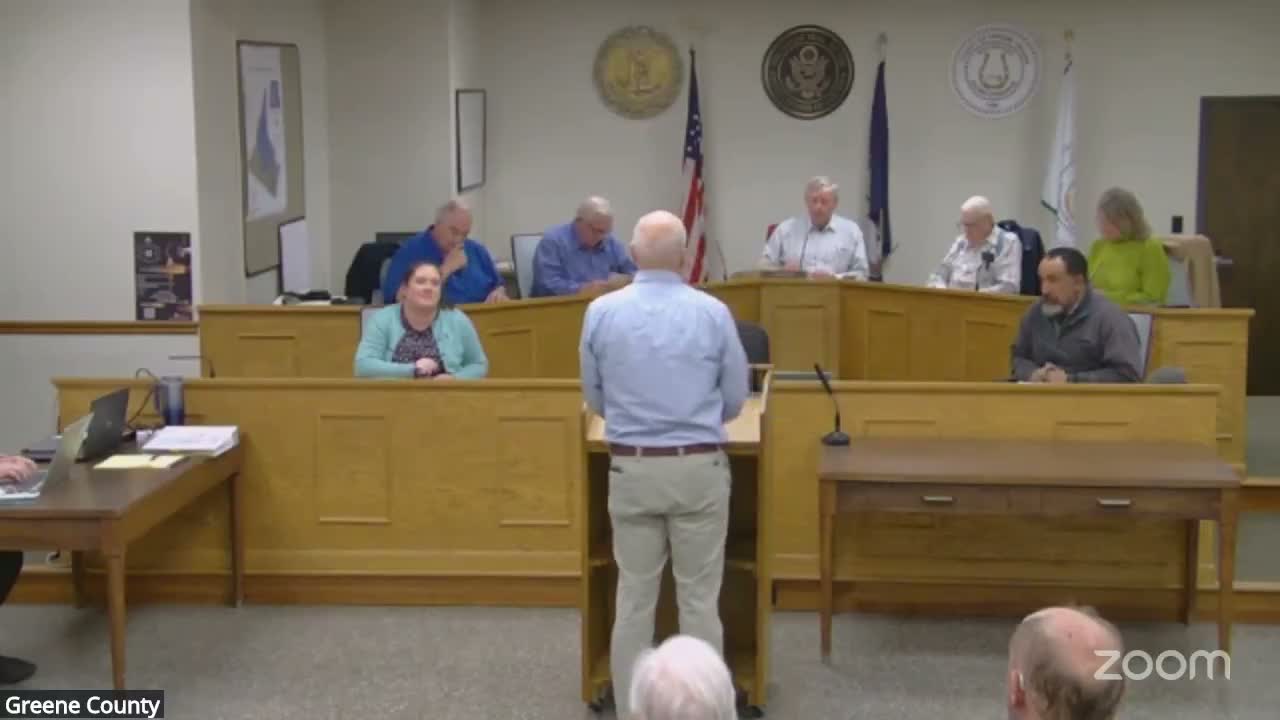
Greene County’s Agricultural and Forestal District (AFD) committee met in a special session to review local zoning definitions for "agricultural operation" and "devoted to bona fide production," and to advise the Board of Supervisors on clarifying language that members said affects farm viability.
Zoning staff opened the meeting by telling the committee the Board had asked for this review and advising members to focus on the secondary definition that is not verbatim state code. "So this is a special meeting, and I appreciate everybody making time to come out for this," the zoning staff said as he outlined the packet and the task for the group.
Members discussed multiple examples of operation types — from small diversified microfarms and boarding operations to large event centers — to illustrate where strict income or acreage thresholds could exclude legitimate agricultural operations. Committee member Laurie Chapman said, "I have 48 head of cattle," and described why allowing some agritourism or event activity can be essential to keeping family farms viable.
Extension agent Barbara Crowley urged flexibility. "As an extension agent, that is something that we preach to everybody who comes in that, you know, if you want if you do not have money and you want to buy a farm, you cannot sustain your farm on 50, 75, a 100 mama cows," she said, arguing that many farms must diversify income streams to survive.
The committee returned often to a single disputed word in current agritourism language: "subordinate." Several members said the term is difficult to measure and would penalize farms that legitimately rely on income from agritourism. A number of members urged removing that requirement, while staff said any change that might conflict with the Code of Virginia would require legal review.
The group also discussed administrative procedure and evidence used in determinations. Staff explained that the zoning administrator currently makes determinations using factors such as farm tax Schedule F filings, receipts, acreage and resource-management plans, and that sending routine determinations to the Board of Supervisors would convert an administrative action into a public hearing process.
On operational limits the committee noted local controls already in place: an event center that qualifies as an agricultural activity by right is limited to a 4,000-square-foot footprint; larger venues require a special-use permit and a public hearing.
At the meeting’s close staff summarized three recommendations to forward to the Board of Supervisors: update criterion wording to reference a "resource management plan or a forestry management plan" in place of "conservation farm management plan," align the county’s "agricultural products" definition to current Code language (including considering items such as beekeeping where appropriate), and, if legally permissible after county-attorney review, remove the word "subordinate" from agritourism-related allowances.
The committee did not take a formal roll-call vote on those recommendations; staff will draft the wording for the Board and conduct legal checks before the Board considers any ordinance changes. The meeting adjourned after staff noted two committee vacancies and asked members to suggest replacements.