Get Full Government Meeting Transcripts, Videos, & Alerts Forever!
Get email alerts on the Agritourism topic
No spam. Unsubscribe anytime.
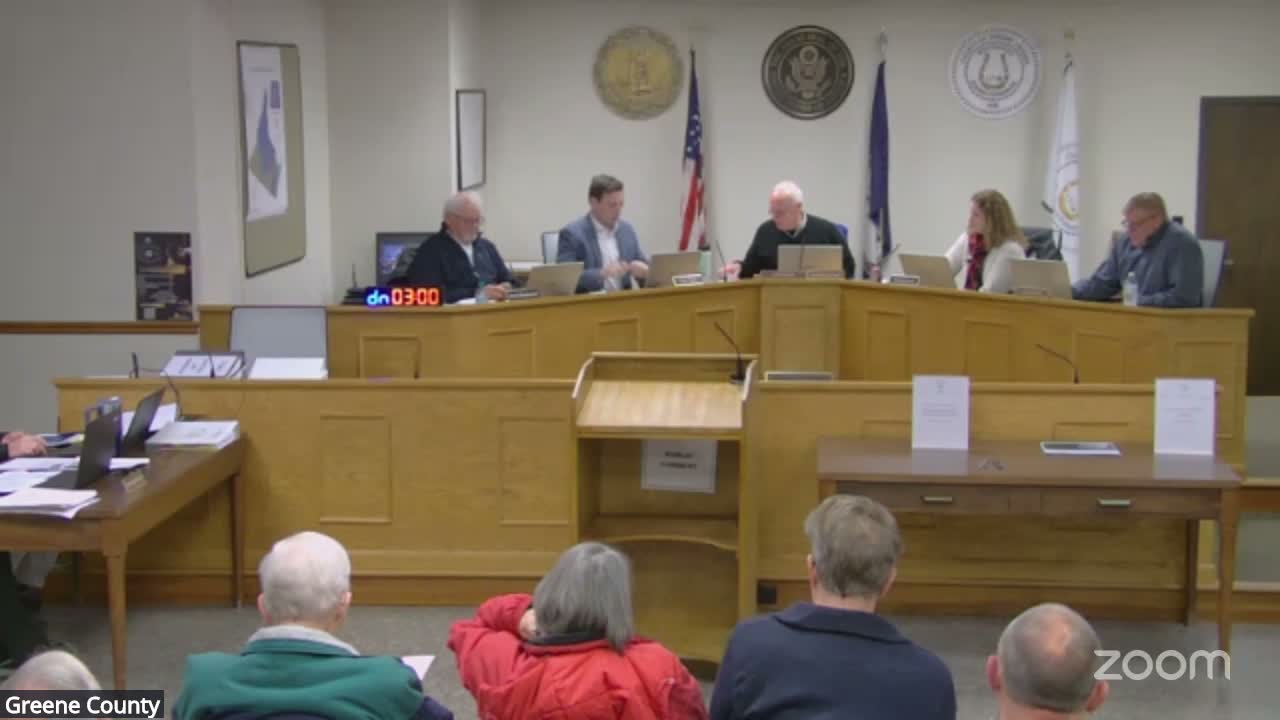
Greene County planning commission backs tighter agritourism rules after residents complain of noise, traffic and public‑safety strain
Summary
After months of review, the planning commission voted to recommend zoning amendments that cut the by‑right event size to 150 attendees, limit by‑right events to 30 per year and require permits or SUP review for larger or amplified outdoor events — changes proponents say protect neighbors while supporters say they help farm viability.
The Greene County Planning Commission on Dec. 17 voted to recommend ordinance changes intended to regulate agritourism operations — including wineries, breweries, distilleries and event venues — while preserving opportunities for farm businesses.
Planning staff recommended, and commissioners approved sending to the Board of Supervisors, a package that cuts the by‑right maximum attendance for agritourism events from 400 to 150 people, limits by‑right events to 30 per year, changes how building footprints are measured (4,000‑square‑foot footprint, no more than two stories) and requires a special use permit for outdoor amplified music in many cases.
County planner Peter Bridal outlined the staff view of the compromise. “The recommendation that the planning commission has come to … drops the maximum number of attendees to 150,” Bridal said in his presentation, adding that the package also tightens rules on parking, lighting, restrooms and emergency access.
Why it matters: residents who live near event venues said weeks of loud amplified music, concentrated traffic and insufficient enforcement have degraded their quality of life and may stress emergency services. Dave Johnson told commissioners the county’s existing noise standard (Greene County Code §38‑33) sets a 65 dBA maximum and described an event where amplified music could be heard inside his insulated home for hours. “The amplified sound intensity from Blossom Ridge was so loud on our deck that we could not comfortably sit back there,” Johnson said.
Several other neighbors urged clearer, enforceable standards and more proactive compliance tools. “There’s no limit whatsoever on the number of daily, weekly, monthly or annual activities involving 50 attendees,” one public commenter warned, arguing the draft left regulatory gaps and urging the commission to defer and adopt a locally drafted alternative.
Commissioners and staff responded by describing the mechanics the county has for enforcement and oversight. Staff and several commissioners noted that by‑right zoning certificates are administrative and that larger or atypical operations would go through the SUP process, where parcel‑specific conditions can be imposed. Commissioners also said the county attorney has raised concerns about writing time‑limited permits in a way that would survive legal review, and staff acknowledged the sheriff’s office does not currently maintain up‑to‑date calibrated sound meters for routine decibel enforcement.
Business owners and venue operators urged caution about over‑restricting agritourism. Scott Winslow, who operates a wedding venue, said agritourism helps farmers remain viable and called the draft a reasonable compromise that stays within state code. “This looks like a good compromise,” Winslow said.
Key elements adopted in the commission’s recommendation (to be reviewed by the Board of Supervisors): a by‑right attendee cap of 150; by‑right events limited to 30 per year (SUPs can authorize additional events or different limits); a 4,000‑square‑foot building footprint definition capped at two stories; a clear definition that an “event” is 50 people or more; additional standards addressing parking, lighting, restrooms, food service and stormwater; and a requirement that outdoor amplified music be allowed only under a specific permit/SUP in many circumstances.
On enforcement, staff reiterated existing paths: zoning inspections and court fines for code violations and SUP revocation authority for repeated violations. Bridal said zoning enforcement can result in court action and judges determine penalties; SUPs may be revoked after multiple violations under the local code and state law. He also said the board had asked staff to consider third‑party noise monitoring and other compliance tools during the drafting process.
What’s next: The Planning Commission’s recommendation (Ordinance No. 24‑004 as amended) will go to the Board of Supervisors for public hearings and final action. Commissioners noted that existing venues lawfully operating under prior approvals (grandfathered uses) are not retroactively required to comply with newly adopted by‑right limits unless they seek new approvals.
The public record for this item includes extensive written comments, technical input from the Extension Office and examples from neighboring counties; commissioners urged the board to consider targeted enforcement resources — including equipment or funding for sound‑level measurement — before final adoption.
If the Board of Supervisors adopts the recommended changes, landowners and operators who want to exceed the by‑right limits would pursue Special Use Permits, where parcel‑specific conditions — including restrictions on frequency, hours and noise mitigation — can be imposed.