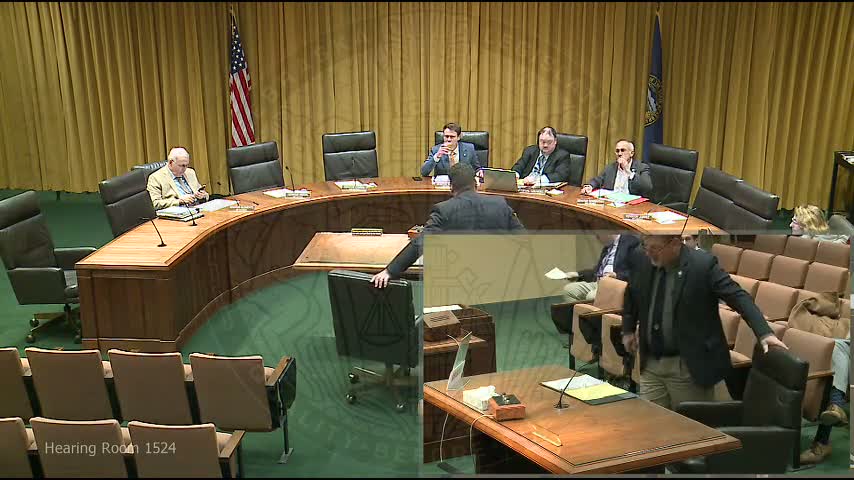
Nebraska committee hears bill to shorten teacher retirement break from 180 to 120 days
Loading...
Summary
Sen. Dan Lonowski told the Retirement Systems Committee that LB8 24 would replace Nebraska’s 180‑day break plus an intermittent 8‑day allowance with a uniform 120‑day bona fide separation for school retirement plans, aiming to reduce administrative burdens and expand the substitute teacher pool.
Senator Dan Lonowski introduced LB8 24 to the Nebraska Retirement Systems Committee, proposing to shorten the statutory “bona fide separation” period for school retirement plans from 180 days to 120 days and to eliminate the current intermittent substitute allowance of up to eight days per month during that separation.
"LB8 24 helps address" the teacher shortage, Lonowski said, arguing the bill provides "uniformity and consistency with Nebraska's other public plans" and eases burdens on districts and retirees. He asked the committee to advance the bill to general file.
Supporters told the committee the change would simplify administration and expand the pool of available substitute teachers. Tim Royers, president of the Nebraska State Education Association, said LB8 24 "replaces that complexity with a straightforward standard that is easy to understand, communicate, and administer." John Heineman, a retired teacher and NSEA‑Retired leader, described the bill as a "practical, common sense solution" that allows experienced educators to return to classrooms sooner.
Morgan Kreyser, representing Omaha Public Schools and an employee‑benefits attorney, gave the committee the federal tax context. He explained that Internal Revenue Service guidance treats bona fide separation as a facts‑and‑circumstances determination, and that Nebraska adopted a bright‑line rule (180 days) to ease administration. Kreyser testified that the bill's 120‑day standard should be compatible with IRS practice "as long as there's no return‑to‑work schemes involved," but emphasized that prearranged reemployment could jeopardize plan qualification.
Tag Herbeck, legal counsel for the Nebraska Public Employees Retirement Systems (NPERS), spoke in a neutral capacity and reiterated the core legal risk: a qualified retirement plan requires a bona fide separation from service. He warned that if a retiree provides service during the separation period in violation of the rule, they "may be required to repay all retirement benefits received," underscoring the administrative and compliance stakes.
Committee staff recorded eight written proponents, no opponents and no neutral written commenters on LB8 24. The committee closed the public hearing; no formal committee vote occurred during the session.