Get Full Government Meeting Transcripts, Videos, & Alerts Forever!
Get email alerts on the Behavioral Health topic
No spam. Unsubscribe anytime.
Stakeholders debate whether statute or administration should coordinate care for youth with complex behavioral health needs
Summary
LB860 would direct DHHS to create a coordinated behavioral health program for youth under 21 with complex needs. Proponents said statutory authority would improve coordination and fund services to prevent institutionalization; DHHS and managed‑care representatives warned the bill duplicates existing programs and creates unclear roles for regions and MCOs.
LB860 drew sharply divided testimony on whether Nebraska needs a new statutory program to coordinate care for children and young adults with complex behavioral health needs.
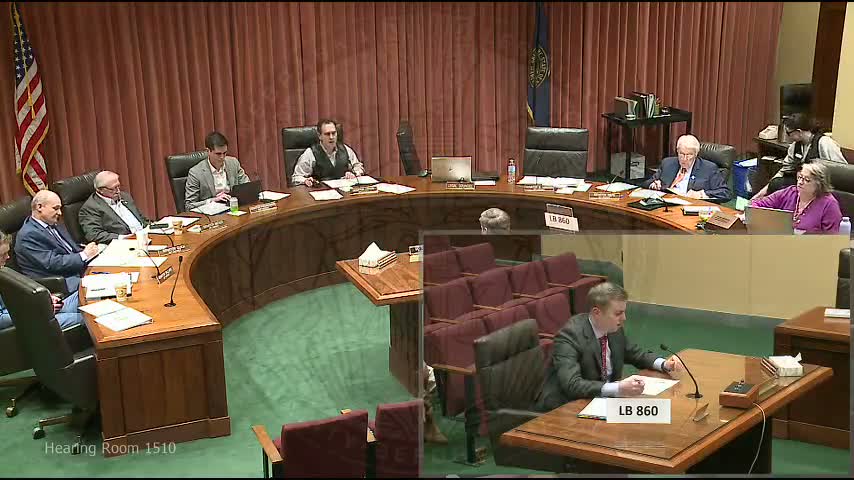
Nathan Janjalewicz introduced the bill for Sen. Elliot Bostar, saying the goal is to support families navigating multiple systems and to prevent unnecessary institutionalization and out‑of‑home placements. Local officials and providers described gaps in services and urged legislative action to improve coordination and expand community‑based crisis services.
Proponents, including Lancaster County human‑services director Sarah Hoyle and clinicians, said services such as crisis mobile response, stabilization, intensive home‑based treatment and coordinated psychiatric care are necessary to keep families together and to reduce costly and traumatic institutional placements. Testimony described local innovations such as a 24/7 youth crisis and resource center (Square 1) and cited long waiting lists for intensive family services.
Dr. Thomas Janousek, director of the Division of Behavioral Health at DHHS, testified in opposition. He said DHHS already delivers many of the services named in the bill through separate divisions and that the statute as drafted risks duplicating programming, creating conflicting responsibilities among behavioral‑health regions, managed‑care organizations (MCOs) and service coordinators, and producing multiple care coordinators for a single youth. MCO representatives echoed concerns and recommended stakeholder discussions to align roles administratively before moving to statute.
Committee members asked whether administrative options could achieve the goals without new law and pressed for clarity about MCO responsibilities and federal funding opportunities that proponents referenced (including possible CMS waivers). No final committee action was recorded at the hearing.
Proponents argued statutory authority would help secure federal approvals and long‑term funding; opponents asked for language fixes and more stakeholder negotiation to avoid operational conflicts.