Get Full Government Meeting Transcripts, Videos, & Alerts Forever!
Get email alerts on the Drug Detection topic
No spam. Unsubscribe anytime.
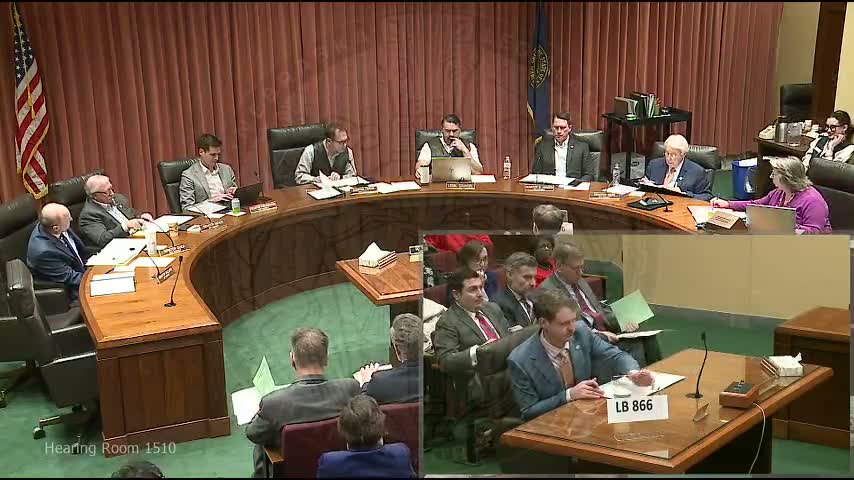
Nebraska committee hears support for bill to fund wastewater drug detection as prevention tool
Summary
Proponents told the Health and Human Services Committee LB866 would create an Attorney General‑administered cash fund to support wastewater testing and other detection tools to identify fentanyl, nitazenes and xylazine trends quickly. Witnesses said testing is an early‑warning prevention tool; senators pressed on funding sources, contracting and privacy safeguards.
Senators on the Health and Human Services Committee spent more than two hours on LB866, a proposal from Sen. Beau Ballard to create a Drug Detection and Prevention Cash Fund administered by the Nebraska Attorney General that supporters say would pay for wastewater testing and other detection tools to identify emerging illicit drug threats.
Ballard told the committee the fund would help law enforcement and public‑health partners detect and respond to illicit fentanyl and other synthetic opioids and that using settlement or abatement dollars for detection is an appropriate legislative choice. “This will be a valuable tool in the toolbox for law enforcement across our state,” he said in his opening remarks.
Timothy Shea, a former administrator of the U.S. Drug Enforcement Administration, told senators wastewater analysis can supply near‑real‑time intelligence on drug trends that often appear before overdoses or hospital data. Shea warned of emerging threats including nitazenes and xylazine — the latter does not respond to naloxone — and said the technology can help target prevention and outreach in specific communities or schools.
Ben Rendo of Stercus Bioanalytics described how his company deploys samplers at the outgoing sewage pipes of high schools, builds a 90‑day baseline and then looks for spikes. He offered an example in which a high school’s methamphetamine signal rose sharply during a PSAT administration; after coordinated outreach, testing showed the usage rate declined. Rendo emphasized that the technique measures aggregated wastewater and does not identify individuals.
Committee members focused questions on three issues: whether opioid settlement or abatement dollars can be used for such testing; how the program would be procured and whether the bill creates a preference for a single vendor; and how results would be shared with schools, parents and public‑health partners. Ballard and witnesses said settlement language has been written broadly in many cases to permit prevention, and that appropriation levels and procurement requirements would be clarified in follow‑up work.
Costs cited by witnesses varied: Rendo said other states have appropriated multimillion‑dollar sums (he cited $7 million in one state and $3 million in another) to support statewide programs combining school testing and law‑enforcement uses. Senators pressed for fiscal details and asked whether an appropriation to run a program would jeopardize other uses of opioid settlement dollars such as treatment and facility development.
Ballard said he would work with stakeholders on technical language and provide the committee with details about fund amounts and sustainability. The committee heard no formal opponents and took no vote during the hearing.
A next step would be a fiscal note and draft amendments to address procurement, data‑sharing protocols and the specific source and flow of funds if the committee advances LB866 to general file.