Lifetime Citizen Portal Access — AI Briefings, Alerts & Unlimited Follows
Legislature advances LB548 to let cities use federal prepaid tax‑exempt transactions to serve large industrial gas users
Loading...
Summary
Lawmakers advanced LB548 after adopting a committee amendment that allows municipalities owning gas systems to use federal tax‑exempt prepaid transactions to offer discounted wholesale gas to large industrial consumers (limited eligibility; a 200‑mile radius and other guardrails apply). Floor debate focused on municipal risk, competition with private suppliers and trade‑area guardrails.
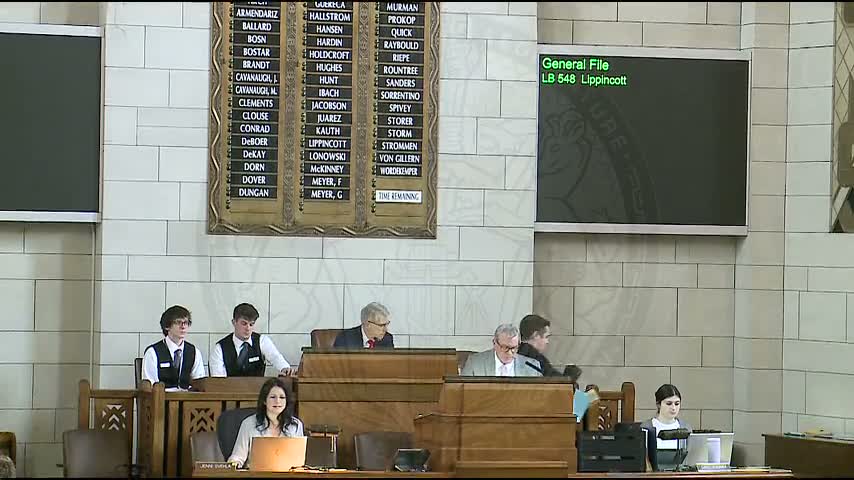
Legislators voted to advance LB548, a bill sponsored by Senator Lippincott that would enable political subdivisions that own natural‑gas distribution systems to participate in federal tax‑exempt prepaid transactions for large industrial customers.
Sponsor Senator Lippincott said the measure is a "win, win, win": municipalities would capture new revenue without raising property taxes, and large industrial users (for example, ethanol plants) would receive discounted gas. Lippincott said the bill is narrowly tailored to industries that use at least 3,000,000,000 BTUs and to customers who are not already served by investor‑owned utilities such as Black Hills, and that municipalities must determine that contracts do not pose an unreasonable financial risk.
Floor debate was extensive. Senators raised recurring concerns about underwriting and receivable risk for small municipal utilities, potential trade‑area overlap among municipal providers, and whether the 200‑mile radius could effectively export municipal tax benefits outside a city’s local market. Senator Jacobson warned that such financial arrangements are "riddled with risk" for small cities, while proponents including Senator Raybould and Senator Hallstrom urged careful contract guardrails, outside bond counsel and the prospect of revenue for infrastructure projects.
The chamber adopted the committee amendment AM664, which clarifies the bill's purpose, sets the 200‑mile radius limit and requires governing boards to determine that contracts do not pose an unreasonable financial risk. The amendment passed on the floor by a recorded vote. The bill was then advanced to E & R initial for enrollment and further amendment activity between general and select files.
Supporters pointed to Central City's illustrative deal, which the sponsor said could yield up to $500,000 annually for local infrastructure projects, while opponents pressed for stronger safeguards, trade‑area mapping and possible sunsets to avoid long‑term budget reliance on transactional revenue streams.
The bill moves forward with adoption of the committee amendment but with clear floor direction that additional guardrails and technical work be considered before final passage.