
Nebraska Judiciary Committee hears bill to cap private guardians’ caseloads at 20
Get AI-powered insights, summaries, and transcripts
Subscribe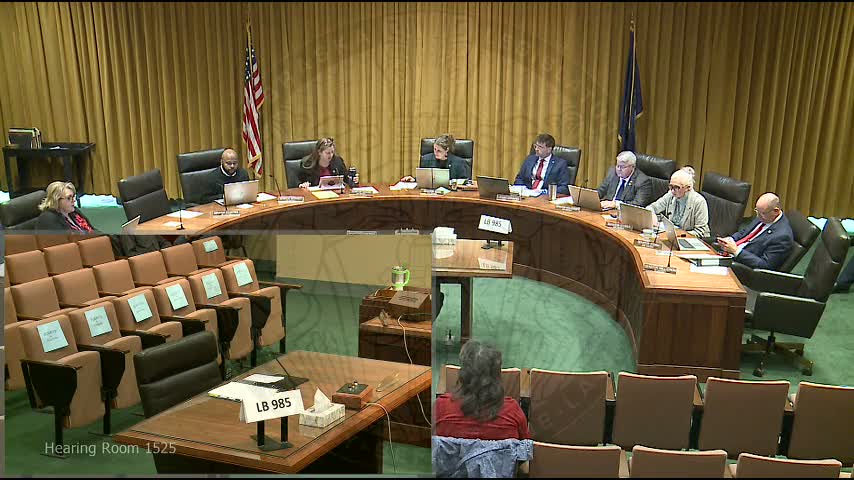
Summary
Sen. Wendy DeBoer told the Judiciary Committee LB 985 would limit the number of individuals a private guardian may serve to 20, matching the Office of Public Guardian cap, to reduce opportunities for fraud; disability advocates backed the measure while the State Bar warned a flat cap could worsen shortages in rural areas.
Sen. Wendy DeBoer, the bill’s introducer, told the Judiciary Committee that LB 985 would cap the number of wards a private guardian or conservator may serve at 20, mirroring the limit used by the Office of Public Guardian. “LB 985 caps the amount of individuals a guardian or conservator can serve at 20,” DeBoer said, arguing the limit would reduce the opportunity for financial exploitation and improve oversight.
Disability Rights Nebraska attorney Amy Miller told the committee her organization’s review of court files showed repeated examples of guardians who failed to visit wards, missed medical needs, or mismanaged funds; she said Nebraska currently has roughly 10,000 people under guardianship and urged a caseload limit to protect vulnerable Nebraskans. AARP Nebraska’s Gina Ragland emphasized that older adults rely on guardians for medical and financial decisions and that “without limits on caseloads, some guardians may oversee dozens of individuals, making it nearly impossible to provide the attention” needed.
The Nebraska State Bar Association, represented by Tim Heruza, urged caution. He said judges and attorneys report difficulty finding qualified guardians in some communities and warned that a strict 20‑case cap could push more duties onto appointed counsel or force consolidation of cases in a few professional guardians. Heruza said he was open to continuing conversations about exceptions—such as temporary or court‑appointed guardians—or alternative accountability measures.
Committee members asked about data and oversight. DeBoer said the judicial branch provided a manual count showing only two guardians currently hold more than 20 wards, and proponents acknowledged the need to refine language so the cap would apply to individuals, not corporate or institutional guardians.
No formal action or vote was taken during the hearing. The bill remains under committee consideration; sponsors said they would work with stakeholders on technical fixes and possible carve‑outs for identified court‑appointed roles.