
Frederick County tightens rules for electrical substations, requires berms for large transmission sites
Get AI-powered insights, summaries, and transcripts
Subscribe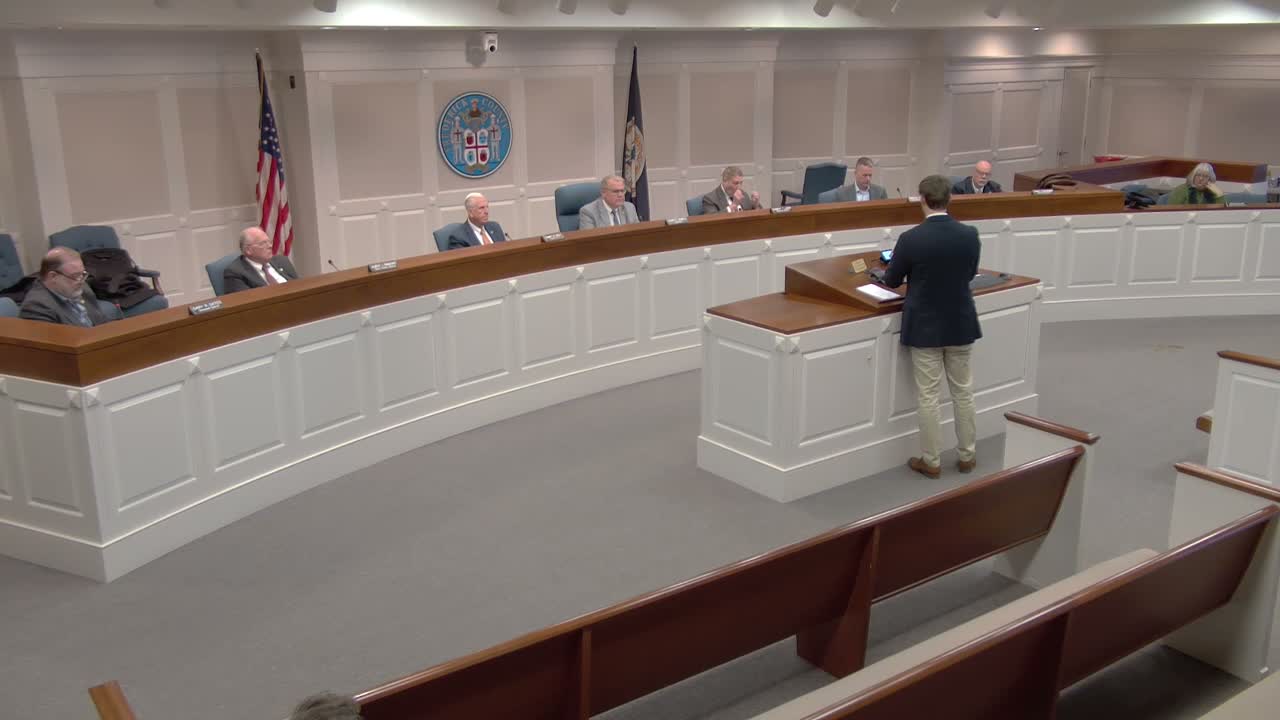
Summary
The Board of Supervisors approved a zoning amendment that splits substations into transmission and distribution types, adds screening and setback standards and requires an 8-foot berm (removing fence/wall options) for transmission-voltage substations after public concern about visibility and long-term impacts.
Frederick County supervisors on Jan. 28 adopted a revision to the county’s zoning ordinance that separates electrical substations into transmission- and distribution-voltage categories and adds specific performance standards for setbacks, screening and buffers.
Planning staff presented the amendment as a way to add clear, enforceable requirements for landscaping, opaque screening and minimum setbacks. The draft ordinance reflected feedback from local utilities including Shenandoah Valley Electric and Rappahannock Electric Cooperative and sought to balance utility needs with landscape and community protections.
Residents and local advocates urged stronger review. “Substations are permanent, highly visible facilities. And once built, their impacts are locked in for generations,” Leslie Spencer Gainsborough told the board during the public hearing, urging the county to require conditional use permits and dark-sky lighting standards.
Board members focused debate on the type of buffer required for large transmission substations. Supervisor Oates said a chain-link fence with slats or a simple wood fence was insufficient for larger transmission facilities and proposed removing fence or wall options in favor of a single required treatment. The board adopted a motion to approve the staff proposal with one modification: for transmission-voltage electrical substations the ordinance will require an 8-foot berm as the buffering standard rather than allowing an opaque fence or masonry wall alternative.
Staff emphasized the county’s legal limits on regulating transmission lines themselves while noting full authority to regulate substation siting and associated site elements. The amendment preserves the county’s 2232 site-review notice process while adding objective standards that staff said should reduce the need to decide individual siting cases through conditional use permits.
The ordinance was approved by roll call following discussion. The change applies to the RA zoning district where most utilities of this scale are likely to locate and is intended to provide a clearer, consistent standard for screening and community compatibility.
The board’s action now sends the amended text to county staff for final ordinance preparation and posting. The revised code language will be part of the county zoning ordinance update available through planning staff when the ordinance is codified.